7 Reasons You Shouldn’t Invest Like Warren Buffett
Warren Buffett's investing wisdom is legendary, but his strategies may not suit everyday investors seeking steady wealth building.
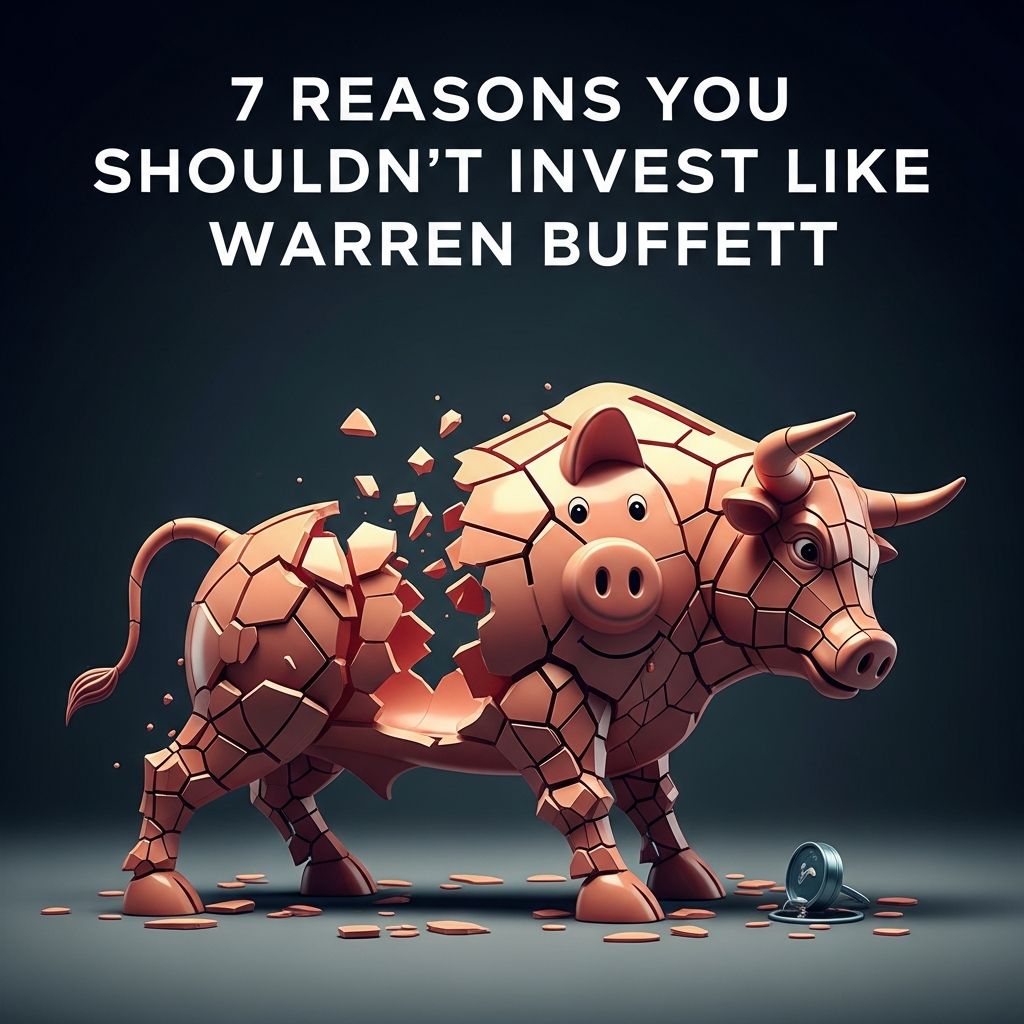
Warren Buffett, the Oracle of Omaha, has built a fortune through his unique investment philosophy at Berkshire Hathaway. His approach—buying quality businesses at fair prices and holding them indefinitely—has delivered extraordinary returns over decades. However, while Buffett’s success inspires millions, blindly imitating his strategies can be detrimental for most individual investors. This article outlines
seven compelling reasons
why you shouldn’t invest like Warren Buffett, drawing on financial research, historical data, and practical realities of personal investing.Buffett’s methods rely on unparalleled access, experience, and risk tolerance that few can match. For the average person saving for retirement or financial independence, safer, more diversified approaches often yield better risk-adjusted returns. Let’s dive into the key pitfalls.
1. You Don’t Have Buffett’s Time Horizon
Buffett’s legendary patience allows him to hold investments for decades, ignoring short-term market noise. He famously quipped that his favorite holding period is “forever.” This works for him because Berkshire Hathaway manages permanent capital without redemption pressures, enabling multi-decade bets on companies like Coca-Cola, which he bought in 1988 and still holds today.
But most investors face real-life constraints: retirement in 20-30 years, college funding in 10-15 years, or emergencies requiring liquidity. A 2025 Fortune analysis notes that Buffett’s value investing demands ‘time and patience’ to identify undervalued firms and wait for market correction, a luxury few possess in an era of instant gratification and day-trading apps. Jeff Bezos once asked Buffett why few copy him; Buffett replied, “Because no one wants to get rich slow.”
Implication: Tying up funds indefinitely exposes you to life uncertainties.
Alternative
: Use target-date funds that automatically adjust risk as your horizon shortens.2. You Lack Buffett’s Business Acumen and Circle of Competence
Buffett only invests in businesses he deeply understands—his ‘circle of competence.’ He avoids tech until Apple in 2016, sticking to consumer brands like Coke and insurance like Geico. He claims he can assess opportunities in ‘five minutes’ due to decades of experience.
Average investors overestimate their knowledge, leading to poor picks. Allied Wealth highlights how people chase hot tech stocks or time markets, ignoring underlying value—exactly what Buffett avoids. Without Buffett’s analytical edge, you’re likely buying at peak hype.
**Key differences in a table:**
| Aspect | Buffett | Average Investor |
|---|---|---|
| Experience | 70+ years analyzing businesses | Limited part-time research |
| Access | Private meetings, insider networks | Public filings, news |
| Focus | Simple, predictable moats | Trendy sectors like AI/crypto |
**Solution**: Stick to broad index funds; Vanguard’s 60/40 portfolio often outperforms high-fee active strategies.
3. Portfolio Concentration Is Risky for Individuals
Buffett advocates concentrated portfolios: “If you find three wonderful businesses… you’ll get very rich.” He scoffs at diversification as ‘protection against ignorance’. Yet Acadian Asset Management calls this ‘spectacularly wrong,’ citing studies showing concentrated bets amplify losses from overconfidence and illusion of control.
- Goetzmann and Kumar (2008): Underdiversified retail investors earn lower returns due to overconfidence.
- Coca-Cola example: Buffett’s massive stake underperformed the market since 1996.
- ARK Innovation: Concentrated funds like Cathie Wood’s collapsed 27.9% annually post-2021 peak due to flow-chasing feedback loops.
Frazzini et al. (2018) praise Buffett’s stock-picking alpha but note his leverage and timing amplified returns—unreplicable for individuals. Bill Hwang’s Archegos imploded from concentrated, leveraged bets mimicking Buffett.
Takeaway: Diversification reduces volatility; S&P 500 has historically beaten most concentrated funds over 10+ years.
4. Buffett Benefits from Massive Scale and Permanent Capital
Berkshire’s $1 trillion+ size lets Buffett buy entire companies or huge stakes without moving markets. Morningstar reports he admits smaller portfolios are easier to outperform, as tiny undervalued firms are irrelevant to Berkshire.
Individuals can’t deploy $100 million into micro-caps without illiquidity risks. Buffett’s insurance ‘float’ provides cheap, permanent leverage—unavailable to retail. Net Net Hunter warns emulating his ‘wonderful companies at fair prices’ skips Graham’s margin of safety, risking losses like Buffett’s Coke.
5. Behavioral Biases Derail Amateur Buffett Wannabes
Buffett’s discipline ignores hype, but humans chase returns. Allied notes investors panic-sell downturns, pay high fees, and ignore portfolios. Concentration fuels overconfidence: ‘I picked winners before, so bad things won’t happen’.
Social transmission bias hides failures; only winners brag. Result: Lower returns for underdiversified retail investors.
6. Market Efficiency Makes Buffett-Style Alpha Rare Today
Buffett thrived in less efficient markets. Today, algorithms and institutions price in information faster. His 5.4% alpha relied on leverage and timing, per Frazzini. Most can’t replicate; even Buffett struggles with scale.
Value investing labels scare growth-obsessed firms.
7. Opportunity Costs and Life Goals Differ
Buffett reinvests everything; you need income, liquidity. ‘Wonderful companies at fair prices’ often means no margin of safety. Index funds match market returns with lower risk/effort.
Frequently Asked Questions (FAQs)
Q: Can anyone beat the market like Buffett?
A: Rarely. Buffett’s edge is unique; most active strategies underperform indexes after fees. Focus on low-cost diversification.
Q: Is diversification really better than concentration?
A: Yes for risk-adjusted returns. Studies show concentrated portfolios increase volatility and failure risk.
Q: What should average investors do instead?
A: Invest in low-fee S&P 500 or total market ETFs, dollar-cost average, and hold long-term. Buffett bets $1M on this vs. hedge funds.
Q: Has Buffett’s strategy changed over time?
A: Yes, from Graham’s bargains to quality at fair prices, but core patience remains. Still, scale limits replication.
Q: Why does Buffett criticize diversification?
A: For experts with superior picks. But research shows even pros benefit from it; it’s not ‘ignorance protection’ alone.
Ready to invest smarter? Prioritize diversification, patience, and low costs over heroics. Your portfolio—and sanity—will thank you.
References
- Buffett’s bad advice — Acadian Asset Management. 2024. https://www.acadian-asset.com/investment-insights/owenomics/buffetts-bad-advice
- The Truth About Warren Buffett’s Strategy — Allied Wealth. 2025. https://alliedwealth.com/warren-buffetts-strategy/
- Few investors copy Warren Buffett’s investment strategy — Fortune. 2025-11-26. https://fortune.com/2025/11/26/warren-buffett-investment-strategy-get-rich-slow/
- Even Warren Buffett couldn’t keep beating the market without fail — Morningstar/MarketWatch. 2026-01-10. https://www.morningstar.com/news/marketwatch/20260110168/even-warren-buffett-couldnt-keep-beating-the-market-without-fail-heres-why
- Have You Been Sucked Into the Warren Buffett Trap? — Net Net Hunter. 2024. https://www.netnethunter.com/have-you-been-sucked-into-the-warren-buffett-trap/
Similar Articles








Read full bio of Sneha Tete