7 Frugal Living Skills You Should Be Teaching Your Children
Equip your kids with essential frugal habits early to build lifelong financial wisdom and independence.

In today’s consumer-driven world, imparting frugal living skills to children is more crucial than ever. These habits not only help kids make smarter financial decisions but also build resilience, creativity, and a sense of accomplishment. Starting early—around age 5 or 6—allows children to internalize these lessons before peer pressure and advertising take hold. Research from the St. Louis Federal Reserve emphasizes that early financial education leads to responsible adulthood, with kids learning to earn, spend, save, and donate income wisely. This article outlines seven key skills, complete with practical teaching strategies, to set your children on a path to financial independence.
1. Budgeting Basics: Teach Them to Track and Allocate Money
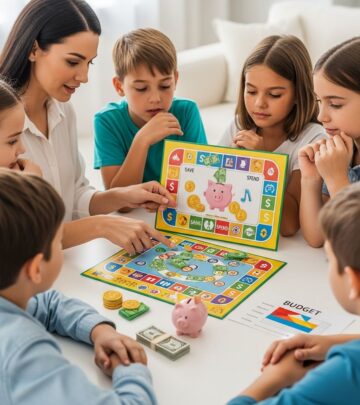
The foundation of frugality is budgeting. Children as young as 7 can grasp the concept of dividing money into categories like spending, saving, and giving. Introduce a simple allowance system where kids earn money through chores, then use three jars labeled ‘Spend,’ ‘Save,’ and ‘Share.’ For every dollar earned, allocate 50 cents to spend, 40 to save, and 10 to donate. This mirrors real-life financial planning and teaches delayed gratification.
Make it hands-on: Use play money or apps like Greenlight for digital tracking. Discuss family budgets during grocery shopping, showing how needs trump wants. According to financial educators, children who budget early prioritize better and avoid impulse buys. Over time, review their jars together, celebrating savings milestones with non-monetary rewards like extra playtime.
- Age to start: 5-7 years
- Pro tip: Match their savings to incentivize, e.g., add 10% interest like a bank.
- Outcome: Builds habit of living within means.
2. The Power of Saving: From Piggy Banks to Goals
Saving isn’t just stashing cash; it’s goal-setting with purpose. Teach kids that saving compounds over time—$1 week 1, $2 week 2, up to $52 weeks yields over $1,300 annually. Piggy banks evolve into savings accounts; visit a bank together to open one, explaining interest as ‘money making money.’
St. Louis Fed experts recommend incentives: Match contributions to piggy banks, reinforcing that saving is rewarding. Set tangible goals like a bike or game, tracking progress on a chart. This teaches opportunity cost—what they forgo by spending now. For teens, introduce high-yield savings via kid-friendly credit unions. Hands-on activities like painting a see-through piggy bank visualize growth.
| Goal Amount | Weeks to Save ($5/week) | With 5% Match |
|---|---|---|
| $100 | 20 | 19 |
| $500 | 100 | 95 |
| $1,300 (52-week challenge) | 52 | 49 |
This table illustrates how matching accelerates goals, motivating persistence.
3. Smart Shopping: Needs vs. Wants and Comparison Techniques
Children must learn to distinguish needs (food, shelter) from wants (toys, gadgets). Take them shopping with a fixed amount; let them choose, experiencing the sting of insufficient funds for extras. Teach comparison shopping: Visit multiple stores or use ads to find deals, emphasizing coupons and sales.
Role-play scenarios: ‘Do you need new sneakers if yours fit?’ This fosters critical thinking. Financial literacy resources highlight that by age 7, spending habits solidify, making early intervention key. Encourage waiting 24 hours before non-essential buys to curb impulses.
- Practice with wish lists: Rank items by priority.
- Discuss advertising tricks to build skepticism.
4. The Value of Earning: Chores, Jobs, and Work Ethic
Money doesn’t grow on trees—teach earning through age-appropriate chores. Pay per task: $0.25 for making bed, $1 for washing dishes. This instills work ethic and income understanding. For older kids, lemonade stands or mowing lawns teach entrepreneurship.
Link earnings to goals, showing effort yields rewards. St. Louis Fed notes explicit work-income explanations prevent entitlement. Avoid handouts; tie allowance to completed jobs for responsibility.
5. Frugal Fun: Creativity Over Costly Entertainment
Entertainment needn’t be expensive. Teach DIY fun: Homemade forts, park picnics, library books. Host game nights with household items. This shifts focus from screen-based spending to imagination.
Examples: Turn cardboard into castles, host talent shows. Kids learn joy from free activities, reducing demands for paid outings. Tie to budgeting: Allocate ‘fun money’ sparingly.
6. Mending and Making Do: Resourcefulness and Repair Skills
Throwaway culture is anti-frugal. Teach mending: Sew buttons, patch clothes. Upcycle jars into storage. Garden scraps for meals. These skills save money and reduce waste.
Start small: Fix toys with tape/glue. Involve in home repairs like tightening screws. Builds self-reliance; kids appreciate items more when repaired.
- Projects: Clothing patches, toy fixes, recipe tweaks.
- Benefit: Extends item life, teaches sustainability.
7. Giving Back: The Joy of Generosity and Sharing
Frugality includes philanthropy. The ‘Share’ jar donates to causes, teaching empathy. Volunteer together at food banks, showing money’s societal impact. Kids learn abundance mindset—giving multiplies joy.
Match donations; discuss choices. Fosters gratitude, countering consumerism.
Frequently Asked Questions (FAQs)
Q: At what age should I start teaching frugal skills?
A: Begin at 5-7 years with simple concepts like jars; deepen by 10-12 with accounts and budgeting.
Q: What if my child resists saving?
A: Use visuals like growth charts and matches; let natural consequences teach, like missing a toy.
Q: How do I handle requests for expensive items?
A: Introduce earning requirements or wish lists; emphasize needs vs. wants.
Q: Are allowances effective?
A: Yes, when tied to chores, teaching earning and management.
Q: How to make money talks fun?
A: Games, field trips to banks, crafts like piggy banks.
Why These Skills Matter Long-Term
Equipping kids with these skills combats debt cycles, promotes wealth-building. Studies show early learners become responsible adults. Expand with games like Lights, Camera, Budget! for teens. Consistency is key—model frugality daily.
Frugal living isn’t deprivation; it’s empowerment. By teaching these seven skills, parents gift children tools for a prosperous, stress-free future. Start today: Grab jars, assign chores, and watch habits form.
References
- 7 Frugal Living Skills You Should Be Teaching Your Children — Wise Bread. 2011-approx. https://www.wisebread.com/7-frugal-living-skills-you-should-be-teaching-your-children
- How to Teach Kids about Money: 6 Key Lessons — St. Louis Federal Reserve. 2019-04-15. https://www.stlouisfed.org/open-vault/2019/april/how-teach-kids-money
- Develop Kids’ Financial Awareness With Tips for Smart Spending — Mountain Lake PBS. Recent (post-2020). https://mountainlake.org/develop-kids-financial-awareness-with-tips-for-smart-spending-saving/
- Money Monday: Saving, spending and budgeting for kids — CBS Pittsburgh (YouTube). 2025-04-07. https://www.youtube.com/watch?v=XsKAe40y5AQ
Similar Articles








Read full bio of Sneha Tete