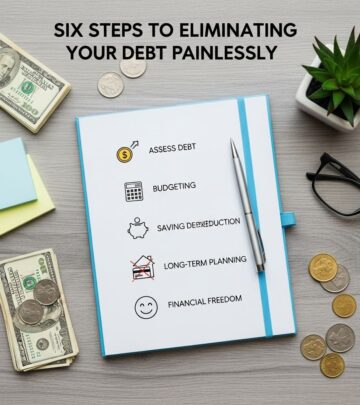
Paying Off Debt: 7 Easy First Steps To Get Started
Discover seven straightforward initial steps to tackle your debt effectively and regain control of your financial future with proven strategies.

Facing debt can feel overwhelming, but it’s a challenge you can overcome with a structured approach. These seven initial steps provide clarity, momentum, and a clear path forward, helping you reduce balances faster and save on interest.
Step 1: Get a Complete Picture of Your Debt
The foundation of debt repayment begins with full transparency. Many people avoid this step because it’s uncomfortable, but knowledge empowers action. Start by gathering all financial statements from credit cards, mortgages, student loans, car loans, lines of credit, and home equity loans. Log into online portals or request paper statements if needed.
Create a simple spreadsheet or table with key details for each debt:
| Debt Type | Amount Owed | Minimum Monthly Payment | Interest Rate |
|---|---|---|---|
| Credit Card A | $5,000 | $150 | 18.9% |
| Student Loan | $20,000 | $250 | 5.5% |
| Car Loan | $12,000 | $300 | 4.2% |
| Total | $37,000 | $700 | – |
Pull your free annual credit report from AnnualCreditReport.com to uncover any forgotten debts and verify balances against your records. This total overview might be shocking, but it’s the clarity needed to reclaim control. According to the Federal Reserve, average household debt exceeds $100,000, making this step universal.
Step 2: Identify Your Highest-Interest Debt
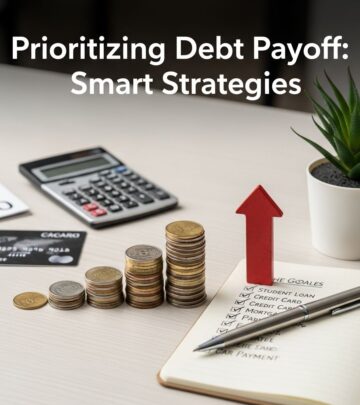
Once listed, sort debts by interest rate from highest to lowest. This is the core of the debt avalanche method, which targets high-interest debts first to minimize total interest paid over time.
High-interest debts, like credit cards averaging 20-25% APR, grow fastest, compounding your balance if only minimums are paid. For example, a $10,000 credit card at 20% APR with $200 minimum payments could take over 30 years to pay off, accruing $26,000+ in interest. Prioritizing it saves thousands.
- Continue minimum payments on all debts.
- Direct extra funds to the highest-interest debt until eliminated.
- Roll that payment into the next highest upon payoff, accelerating progress.
Alternative: Debt snowball focuses on smallest balances for quick wins and motivation, though it may cost more in interest. Choose based on your psychology—avalanche for math efficiency, snowball for behavioral momentum.
Step 3: Calculate Your Total Minimum Debt Payment
Add up minimum payments across all debts, including the high-interest one. This is your non-negotiable baseline that must fit your budget.
If totals exceed disposable income, adjustments are critical:
- Cut expenses: Review subscriptions, dining out, and discretionary spending. The 50/30/20 rule allocates 50% to needs, 30% to wants, 20% to debt/savings.
- Boost income: Side gigs, overtime, or selling unused items can bridge gaps.
- Example: If minimums total $700 but budget allows $500, trim $200 from non-essentials immediately.
Tools like budgeting apps (e.g., Mint or YNAB) automate tracking, ensuring payments fit without derailing life.
Step 4: Calculate How Much You Need to Pay Off Your Highest-Interest Debt
Minimum payments prolong high-interest debt. Set a realistic target timeline, like 6-12 months, and calculate the required payment.
Use free online calculators:
- Input: Balance, APR, minimum payment.
- View default payoff time (often decades).
- Adjust to target months; get ideal payment (e.g., $10,000 at 20% needs ~$950/month for 12 months vs. $200 minimum over 47 years).
This step reveals urgency: Doubling payments can halve payoff time, slashing interest dramatically. Factor in budget from Step 3 to ensure feasibility.
Step 5: Negotiate Lower Interest Rates or Consolidate
With numbers in hand, reduce costs. Contact each creditor:
- Ask for rate reductions: Cite payment history; credit cards may drop from 20% to 12-15%.
- Refinance: Mortgages, auto, or student loans at lower rates via banks.
- Consolidate: Combine into one lower-rate loan (e.g., personal loan at 7-10%). Compare rates/fees first; use calculators to confirm savings.
Pros of consolidation: Simplified payments, lower rates. Cons: Fees, temptation to accrue new debt. Only pursue if new terms save money.
Additional Strategies to Accelerate Payoff
Enhance the core steps with these tactics:
- Round up payments: $150 minimum to $200 shaves months off.
- Automate payments: Avoid late fees, ensure consistency.
- Build emergency fund: $1,000 buffer prevents new debt from surprises.
- Increase income: Side hustles add $200-500/month to debt.
- Sell assets: Unused gadgets/clothes fund lump sums.
Debt Repayment Methods Comparison
| Method | Focus | Pros | Cons | Best For |
|---|---|---|---|---|
| Avalanche | Highest interest | Saves most money | Slower initial wins | Math-focused |
| Snowball | Smallest balance | Quick motivation | Higher total interest | Motivation-driven |
| Consolidation | Combine debts | Lower rates, simplicity | Fees, eligibility | Multiple high-rate debts |
Frequently Asked Questions (FAQs)
Q: What if I live paycheck to paycheck?
A: Start small—cut $10-20 expenses weekly, track daily spending, seek community aid, and consult a bank for rate reviews. Build gap savings from high-earning periods.
Q: Is debt consolidation always better?
A: No—only if new rate/terms save money overall. Compare total costs; avoid extending terms that increase lifetime interest.
Q: How do I stay motivated?
A: Celebrate milestones (e.g., one debt paid), visualize debt-free life, use apps for progress visuals, and pair with snowball for quick wins.
Q: Should I pay off debt or save first?
A: Build $1,000 emergency fund first, then aggressive debt payoff. High-interest debt (>7%) outperforms savings rates.
Q: What about balance transfers?
A: Useful for 0% intro APR (12-21 months), but watch fees (3-5%) and pay off before promo ends to avoid spikes.
These steps, when followed consistently, transform debt from a burden to a conquered challenge. Track progress monthly, adjust as needed, and watch balances shrink. Financial freedom awaits with discipline and strategy.
References
- 7 Simple Strategies to Pay Off Debt — Centier Bank. 2023-05-15. https://www.centier.com/resources/articles/article-details/7-simple-strategies-to-pay-off-debt
- 7 Easy First Steps to Paying Off Debt — Wise Bread. 2015-08-20. https://www.wisebread.com/7-easy-first-steps-to-paying-off-debt
- 7 Strategies for Paying Off Debt When Living on a Variable Income — Wise Bread. 2018-03-12. https://www.wisebread.com/7-strategies-for-paying-off-debt-when-living-on-a-variable-income
- 6 Strategies for Paying Down Debt and Building Savings — eMarquette Bank. 2024-02-10. https://emarquettebank.com/financial-education/articles-insights-for-you/6-strategies-for-paying-down-debt-and-building-sav
- Report on the Economic Well-Being of U.S. Households — Federal Reserve Board (via USAFacts summary). 2024-05-23. https://usafacts.org/answers/how-much-debt-does-the-average-american-owe/state/indiana/
Similar Articles








Read full bio of medha deb