680 vs 740 Credit Score: Real Cost Impact
Discover how a 60-point credit score gap from 680 to 740 can save thousands on loans, cards, and more over time.

A credit score of 680 falls into the “good” range according to FICO models, while 740 enters the “very good” category, unlocking superior borrowing terms and lower costs. This 60-point difference can translate to thousands in savings over the life of major loans like mortgages or auto financing.
Understanding Credit Score Ranges
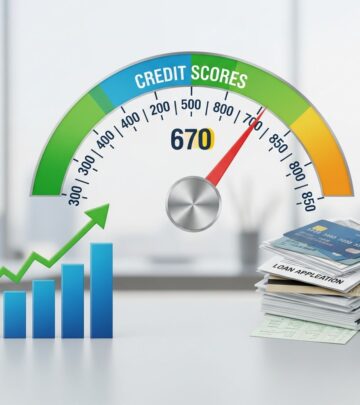
Credit scores provide lenders with a snapshot of your creditworthiness, ranging from 300 to 850 in most models like FICO and VantageScore. The ranges are standardized as follows: poor (300-579), fair (580-669), good (670-739), very good (740-799), and exceptional (800-850).
- Good (670-739): Lenders see you as reliable, but not top-tier, often leading to slightly higher rates.
- Very Good (740-799): Demonstrates strong credit habits, qualifying for prime rates and premium products.
The national average FICO score hovers around 715, placing 680 slightly below average yet still in prime territory for many approvals. However, crossing into 740 territory aligns you with super-prime borrowers who enjoy the lowest advertised rates.
Key Factors Differentiating 680 and 740 Scores
Scores are calculated based on payment history (35%), amounts owed (30%), length of credit history (15%), new credit (10%), and credit mix (10%). A 680 might reflect occasional late payments or high utilization, while 740 indicates consistent on-time payments and low debt levels.
| Factor | Impact on 680 | Impact on 740 |
|---|---|---|
| Payment History | Mostly on-time, minor lapses | Perfect or near-perfect record |
| Utilization Ratio | 20-30% of limits | Under 10% |
| Average Age of Accounts | 5-7 years | 10+ years |
| New Inquiries | Recent applications | Fewer hard pulls |
Maintaining low balances and avoiding new debt can push a 680 toward 740 within months.
Loan Approval Odds: 680 vs 740
Both scores qualify for most credit products, but 740 opens doors to exclusive offers. For auto loans, prime borrowers (661-780) like those with 680 received 35.19% of new loans in recent data, compared to higher shares for super-prime (781+). A 740 score positions you for even better access and rates averaging 6.78% versus 13.38% for subprime.
Credit cards follow suit: 680 unlocks good rewards cards, but 740 qualifies for premium travel and cash-back options with superior perks.
Interest Rate Differences and Lifetime Costs
The real gap shines in interest rates. Super-prime auto borrowers pay around 5.27%, while good-range scores like 680 average higher. On a $30,000 car loan over 60 months:
- 680 score: ~7.5% APR, total interest ~$5,200
- 740 score: ~6.0% APR, total interest ~$4,100
- Savings: $1,100 over 5 years
For mortgages, the spread widens. A 740 score might secure 0.5-1% lower rates on a $300,000 30-year loan, saving over $50,000 in interest. Credit card APRs also differ: good scores face 18-22%, very good drop to 15-18%, compounding savings on revolving debt.
Everyday Financial Perks of a 740 Score
Beyond loans, higher scores yield indirect benefits:
- Insurance Premiums: Auto and home insurers often check scores; 740 can lower rates by 20-30%.
- Rentals and Jobs: Landlords and employers favor strong scores for approvals.
- Utility Deposits: Rarely required with 740, unlike borderline good scores.
A 680 provides a solid foundation, but 740 enhances overall financial flexibility.
Strategies to Boost from 680 to 740
Improving takes consistent effort. Key steps include:
- Pay Bills On Time: Set autopay for 100% compliance.
- Reduce Utilization: Keep balances under 10% of limits; pay down cards aggressively.
- Retain Old Accounts: Avoid closing long-standing cards.
- Limit Applications: Space out new credit requests by 6 months.
- Add Positive History: Use secured cards or become an authorized user.
Many see 20-60 point gains in 3-6 months with discipline.
Common Myths About Credit Scores
Myth 1: Closing cards boosts scores. Reality: It shortens history and raises utilization.
Myth 2: 680 is ‘bad.’ Reality: It’s prime and qualifies for most products.
Myth 3: Scores are fixed. Reality: They update monthly based on behavior.
Long-Term Planning: Why Aim Higher
Projecting 10-20 years, a 740 score compounds savings across multiple loans. For serial homebuyers or refi candidates, the edge is substantial. Track progress via free weekly reports from AnnualCreditReport.com and scoring apps.
Frequently Asked Questions
Is 680 a good credit score?
Yes, 680 is ‘good’ (670-739) per FICO, qualifying for prime loans and cards, though not the best rates.
Can I get a mortgage with 680?
Absolutely, but expect 0.5-1% higher rates than 740; shop multiple lenders.
How long to improve from 680 to 740?
3-12 months with on-time payments and low utilization.
Does checking my score hurt it?
Soft pulls don’t; hard inquiries do temporarily (5-10 points).
What’s the average US credit score?
Around 715 per recent Experian data.
Monitoring and Maintaining Your Score
Use free tools from credit bureaus for alerts on changes. Apps like Credit Karma provide VantageScore estimates, while official FICO sites offer precise readings for a fee. Annual reviews prevent surprises.
References
- 680 Credit Score: Is it Good or Bad? — SoFi. 2025. https://www.sofi.com/680-credit-score/
- What are the Different Ranges of Credit Scores? — Equifax. 2025. https://www.equifax.com/personal/education/credit/score/articles/-/learn/credit-score-ranges/
- What Are the Different Credit Score Ranges? — Experian. 2025. https://www.experian.com/blogs/ask-experian/infographic-what-are-the-different-scoring-ranges/
- 680 Credit Score: A Guide to Credit Scores — Chase. 2025. https://www.chase.com/personal/credit-cards/education/credit-score/680-credit-score
- What Is A Good Credit Score? — Equifax. 2025. https://www.equifax.com/personal/education/credit/score/articles/-/learn/what-is-a-good-credit-score/
- Is a 680 Credit Score Good or Bad? What You Should Know — Credit.com. 2025. https://credit.com/blog/680-credit-score
Similar Articles








Read full bio of Sneha Tete