672 Credit Score: 5 Practical Steps To Raise Your Score
Discover what a 672 credit score means for your finances, how lenders view it, and proven strategies to boost it toward excellent territory.

A 672 credit score positions you in the fair range according to major models like FICO, signaling moderate creditworthiness to lenders. This score opens doors to various credit products but often comes with elevated costs compared to higher ranges.
Decoding Credit Score Fundamentals
Credit scores serve as numerical summaries of your credit history, ranging from 300 to 850 across models such as FICO and VantageScore. These scores help lenders assess risk when you apply for loans, credit cards, or mortgages. A score like 672 reflects a blend of positive habits and potential areas needing attention, influencing everything from interest rates to approval odds.
Understanding the mechanics behind scores empowers better financial decisions. FICO, developed by Fair Isaac Corporation, dominates lending decisions, while VantageScore, created by the three major bureaus—Equifax, Experian, and TransUnion—offers an alternative view.
Where Does 672 Fit in Standard Ranges?
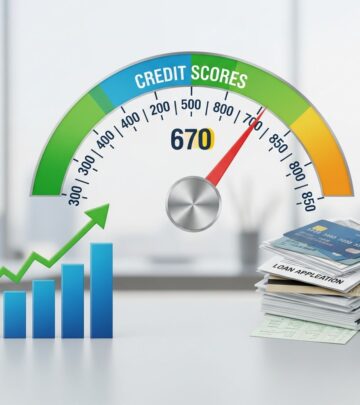
Credit scores are categorized into tiers that guide lender expectations. Here’s how 672 aligns:
| Model | Range Category | Score Range |
|---|---|---|
| FICO Score 8 | Fair | 580-669 |
| VantageScore 3.0 | Prime | 661-780 |
| FICO Score 8 | Good | 670-739 |
A 672 falls squarely in FICO’s fair category but edges into VantageScore’s prime range, which is more favorable. This discrepancy highlights why checking scores from both models matters—lenders may use either.
- Fair (FICO): Indicates some credit responsibility but higher risk, leading to stricter terms.
- Prime (VantageScore): Suggests reliability, potentially unlocking better rates.
Lender Perspectives on a 672 Score
Lenders evaluate 672 as acceptable for many products, but not ideal. You might qualify for auto loans, credit cards, or personal loans, yet expect:
- Higher annual percentage rates (APRs) to offset perceived risk.
- Lower credit limits on new accounts.
- Requirements for cosigners or larger down payments on big purchases like homes.
For mortgages, a 672 could work for FHA loans, which tolerate fair scores, but conventional options prefer 620+ with stronger profiles. Credit cards in the secured or fair-credit segments become accessible, aiding score improvement.
Core Factors Shaping Your 672 Score
Scores derive from analyzed credit report data. VantageScore 3.0 weights them as follows:
- Payment History (40%): Timeliness of payments is paramount. Late payments drag scores down significantly.
- Credit Depth (21%): Duration of accounts; longer histories boost scores.
- Utilization (20%): Debt versus available credit; aim under 30%.
- Balances (11%): Total owed across accounts.
- Recent Activity (5%): New inquiries and accounts.
- Available Credit (3%): Unused limits signal control.
FICO adjusts slightly: payment history (35%), amounts owed (30%), history length (15%), mix (10%), new credit (10%). A 672 likely shows solid payments but elevated utilization or short history.
Real-World Impacts of a 672 Credit Score
Beyond approvals, your score affects daily finances:
| Financial Product | Typical Terms with 672 | Compared to 740+ |
|---|---|---|
| Credit Cards | 15-25% APR, $500-2000 limits | 10-15% APR, higher limits |
| Auto Loans | 6-9% APR, 10-20% down | 4-6% APR, minimal down |
| Mortgages | FHA viable, 7-8% rates | Conventional, 6-7% rates |
| Rentals/Insurance | Higher deposits, premiums | Standard terms |
Over time, these compound: a 1% APR difference on a $20,000 loan adds $2,000+ in interest. Improving to good territory (670+) yields substantial savings.
Strategic Steps to Elevate from 672
Boosting your score requires targeted actions. Prioritize high-impact factors:
- Perfect Payment Habits: Automate bills; use calendar reminders. Even one late payment can drop scores 100+ points.
- Slash Utilization: Pay down balances to under 30% of limits. Request limit increases cautiously.
- Retain Old Accounts: Closing old cards shortens history and spikes utilization.
- Diversify Credit Mix: Add installment loans if revolving dominates, but avoid unnecessary debt.
- Limit New Applications: Space inquiries 6+ months apart.
Monitor via free weekly reports from AnnualCreditReport.com. Dispute errors promptly—25% of reports contain inaccuracies.
Tools and Resources for Credit Monitoring
Stay proactive with these:
- Free bureau sites for VantageScore/FICO views.
- Credit journey trackers from banks.
- Apps alerting to changes.
Track progress monthly; improvements appear in 1-3 months.
Long-Term Credit Building Blueprint
Aim for 740+ (very good) for prime terms. Combine habits:
- Budget to prevent overspending.
- Build emergency funds to avoid debt cycles.
- Educate on fraud protection via freezes.
Consistent effort over 6-12 months can shift fair to good, unlocking rewards cards and low rates.
Frequently Asked Questions
Is 672 a good credit score?
It qualifies as fair in FICO (580-669) and prime in VantageScore (661-780), decent but improvable for optimal terms.
How long to improve from 672 to 700?
3-6 months with on-time payments and low utilization; longer if history is short.
Does a 672 score affect job applications?
Some employers check credit for finance roles; otherwise, minimal impact.
Can I get a mortgage with 672?
Yes, FHA loans start at 580; expect higher rates and scrutiny.
What if my score drops below 672?
Review reports for errors, focus on payments; subprime options exist but cost more.
References
- Credit Score Accuracy — Chase. 2023. https://www.chase.com/personal/credit-cards/education/credit-score/most-accurate-score
- 615 Credit Score: A Guide to Credit Scores — Chase Bank. 2023. https://www.chase.com/personal/credit-cards/education/credit-score/615-credit-score
- What Affects Your Credit Scores? — Chase Bank. 2023. https://www.chase.com/personal/credit-cards/education/credit-score/what-affects-your-credit-scores
- What is considered a good credit score? — Chase Bank. 2023. https://www.chase.com/personal/credit-cards/education/credit-score/what-is-a-good-credit-score
- Credit Score Ranges & What They Mean — Chase Bank. 2023. https://www.chase.com/personal/credit-cards/education/credit-score/credit-score-ranges-and-what-they-mean
Similar Articles








Read full bio of Sneha Tete