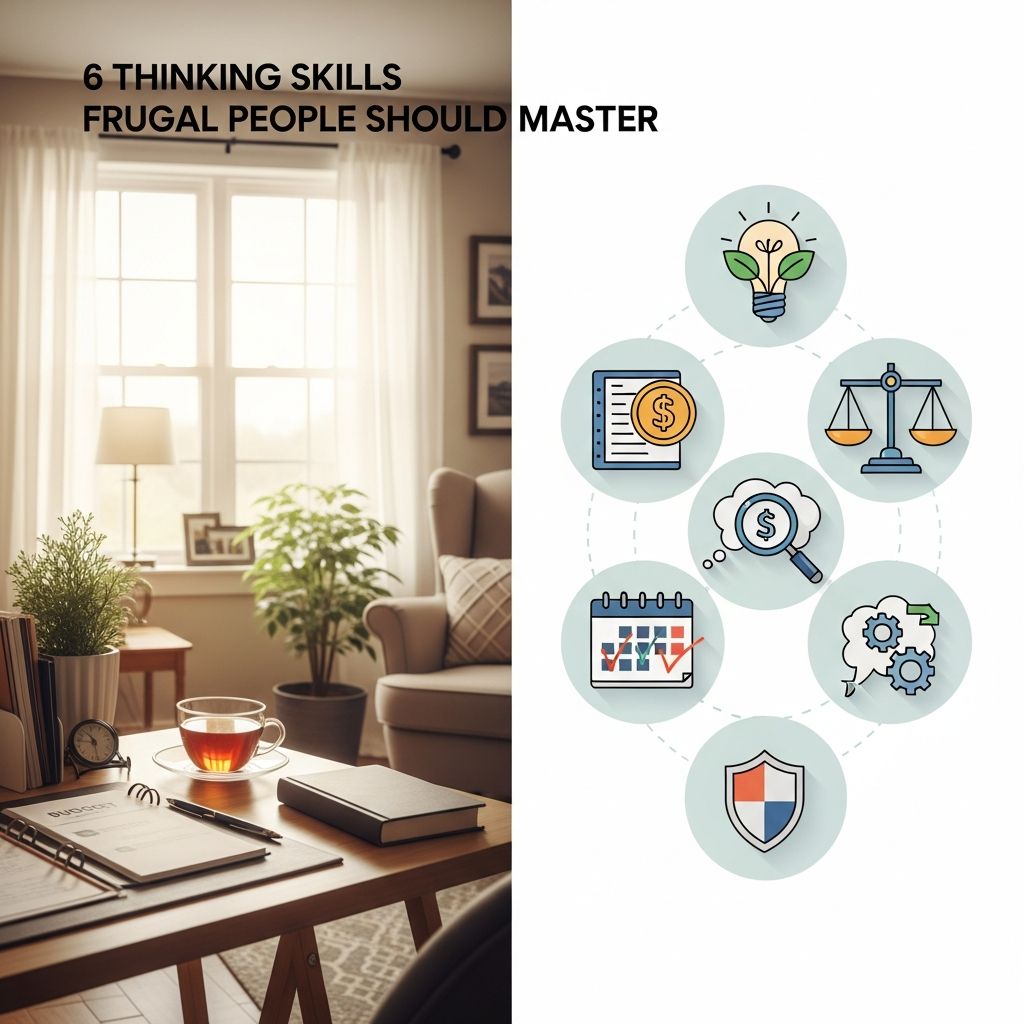
6 Thinking Skills Frugal People Should Master
Master these essential thinking skills to enhance frugality, make smarter financial decisions, and achieve lasting wealth without sacrifice.
“Think before you speak” is a timeless lesson we’ve all internalized. Yet, “think before you buy” holds equal—if not greater—importance for the frugal shopper. Frugality isn’t merely about pinching pennies; it’s a sophisticated mental discipline. Frugal people excel at specific thinking skills that enable them to stretch every dollar, sidestep financial traps, and cultivate abundance from scarcity. This article explores the
six essential thinking skills
that define masterful frugality, drawing from proven strategies to help you rethink your relationship with money.By honing these skills, you’ll transform reactive spending into intentional wealth-building. Whether you’re battling impulse buys, optimizing daily choices, or planning for the future, these cognitive tools empower sustainable frugality. Let’s dive into each one, with practical tips and real-world applications to integrate them into your life today.
1. Opportunity Cost Analysis
The cornerstone of frugal thinking is
opportunity cost analysis
—the mental exercise of weighing what you give up when choosing to spend. Every purchase isn’t isolated; it diverts resources from alternatives like savings, investments, or experiences. Frugal masters instinctively calculate: “If I buy this $5 coffee daily, that’s $1,825 yearly—enough for a family vacation or emergency fund boost.”Consider this: Purchasing a $200 gadget means forgoing $200 toward debt repayment or stock investments. Over time, compound interest amplifies this gap. According to financial principles, opportunity cost extends beyond money to time and energy. That hour scrolling e-commerce sites? It could yield productive work or family time.
- Apply it daily: Before buying, ask, “What else could this money do?” Use a quick mental ledger: Cost vs. alternatives.
- Pro tip: Track spends in a 30-day delay list for non-essentials, revealing true costs.
- Advanced: Factor in depreciation—electronics lose 20-30% value immediately, eroding your investment.
Mastering this skill shifts you from consumer to strategist, ensuring every dollar serves your goals.
2. Long-Term Perspective
Frugal thinkers shun instant gratification for
long-term perspective
, prioritizing future benefits over fleeting pleasures. This involves projecting outcomes: Will this purchase deliver joy in a week, a year, or a decade? Studies show hedonic adaptation—our thrill from new items fades quickly, yet the financial dent lingers.Envision a $50 dining out splurge. Short-term: Tasty meal. Long-term: Missed contribution to retirement, where $50 monthly at 7% return grows to $100,000+ over 40 years. Frugal people set 1-, 5-, and 10-year goals, aligning spends accordingly. They question: “Does this add lasting value?” Often, the answer is no, freeing resources for high-impact choices like education or health.
| Short-Term Thinking | Long-Term Frugal Thinking |
|---|---|
| Buy trendy clothes on impulse | Invest in quality basics that last years |
| Eat out weekly for convenience | Batch-cook and freeze meals, saving $2,000/year |
| Upgrade phone annually | Keep it 3+ years, redirect funds to savings |
Practice by reflecting weekly: Review purchases against goals. Tools like goal-setting journals reinforce this mindset, turning frugality into a rewarding habit.
3. Marginal Analysis
**Marginal analysis** evaluates the additional benefit of one more unit—key for frugal optimization. It’s why thrifty shoppers buy bulk only when usage justifies it, or stop at the point of diminishing returns. Example: Adding a second car? Analyze marginal costs (insurance, maintenance) against benefits (convenience). Often, rideshares or public transit win.
In daily life, apply to subscriptions: Is the marginal value of premium Netflix worth $15/month when free alternatives suffice? Frugal pros audit regularly, cutting where utility drops. This skill maximizes utility per dollar, embodying efficiency.
- Grocery hack: Buy one extra of staples only if storage and consumption match—avoid waste.
- Energy savings: Dim lights marginally; full switch-off yields better ROI.
- Skill builder: Use spreadsheets to quantify: Benefit gained vs. cost incurred.
This analytical edge separates spenders from savers, ensuring incremental decisions compound positively.
4. Sunk Cost Fallacy Avoidance
Frugal minds master ignoring
sunk costs
—past expenditures that shouldn’t influence future decisions. Bought ill-fitting shoes? Don’t wear them out of ‘guilt’; sell or donate. Continued a bad gym membership? Cancel, regardless of prepaid months.Psychologically tough, as loss aversion biases us. Yet, true frugality focuses forward: “What maximizes value now?” During wardrobe purges, frugalists sell clutter via garage sales or online, recouping funds rather than clinging.
Real-world: A failing investment? Cut losses early. This preserves capital for better opportunities, a hallmark of financial wisdom.
5. Delayed Gratification
The power of
delayed gratification
—resisting now for greater later rewards—defines frugal elite. Marshmallow experiments prove delayers achieve more wealth and success. Implement via 30-day lists: Non-essentials wait, curbing 80% of impulses.Strategies: Automate savings first, shop with cash-only, or visualize goals (e.g., debt-free freedom). Pair with minimalism: Fewer items mean less temptation, more mental space. Results? Higher savings rates, lower stress, profound freedom.
6. Systems Thinking
**Systems thinking** views finances holistically—budgets, habits, goals as interconnected. Frugal masters design systems: Weekly meal plans prevent eating out; auto-transfers build emergency funds. This anticipates pitfalls, like planning gifts ahead for sales.
Examples: Pantry audits before shopping; multi-use items (parchment paper reused 2-3x). Build resilience: Reuse/repurpose, grow food, buy quality over cheap.
Frequently Asked Questions (FAQs)
Q: Isn’t frugality about being cheap, not thinking skills?
A: No—frugality is strategic mindset mastery, maximizing value and joy without excess spending.
Q: How do I start opportunity cost analysis?
A: For every purchase, list 3 alternatives (e.g., save, invest, experience). Practice daily for habit formation.
Q: What if delayed gratification feels impossible?
A: Start small—30-day lists work wonders. Track wins to build momentum.
Q: Can these skills help beyond money?
A: Yes—they enhance decision-making in health, relationships, career for holistic life optimization.
Q: How much can I save mastering these?
A: Thousands annually—e.g., 30-day lists alone curb major impulses; systems save on meals/utilities.
Integrate one skill weekly for transformation. Frugality unlocks freedom—think smarter, live richer.
References
- The Cheapskate Guide: 50 Tips for Frugal Living — Zen Habits. 2007-10-15. https://zenhabits.net/the-cheapskate-guide-50-tips-for-frugal-living/
- 10 Frugal Living Ideas To Save More Money — She Dreams All Day. 2023-05-12. https://shedreamsallday.com/10-frugal-living-ideas-save-more-money/
- Save Money and Live Frugally (Tips from the Great Depression) — Melissa K Norris. 2024-08-20. https://melissaknorris.com/16-ways-from-1913-to-save-money-live-frugally/
- 6 Thinking Skills Frugal People Should Master — Wise Bread. 2010-03-05. https://www.wisebread.com/6-thinking-skills-frugal-people-should-master
Similar Articles








Read full bio of Sneha Tete