5 Reasons To Take The City Bus For Big Savings & Less Stress
Discover five compelling reasons why switching to the city bus can save you money, reduce stress, and benefit the environment.
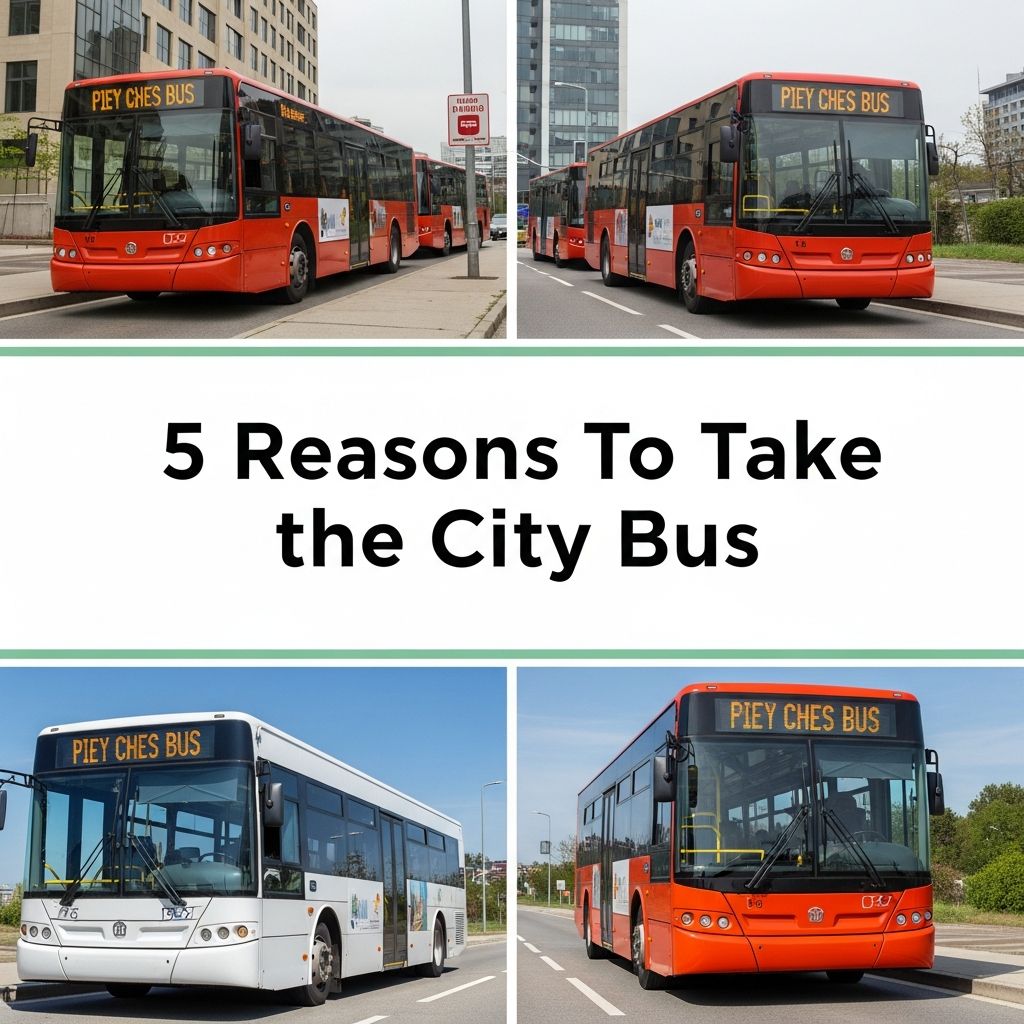
I’ve recently started taking the city bus to work. Some of my co-workers were surprised to learn this because they know I have a car and could easily drive. However, after doing the math and considering all the factors, I realized that hopping on the bus makes a lot more sense. Here are five great reasons why you should consider taking the city bus, too.
The Money It Saves
One of the most obvious benefits of taking the city bus is the substantial amount of money it saves. Driving a car comes with a host of expenses that quickly add up, including gas, maintenance, insurance, registration fees, and depreciation. According to the American Public Transportation Association (APTA), the average household can save over $10,000 per year by ditching one car and relying on public transit instead.
Consider gas alone: with average fuel prices fluctuating but often hovering around $3.50 per gallon, a daily commute of 20 miles round-trip at 25 miles per gallon costs about $140 per month just for fuel. Add in oil changes, tire replacements, and unexpected repairs, and the figure climbs higher. Public bus fares, by contrast, are typically $2-3 per ride or less with monthly passes, often costing under $100 monthly for unlimited access.
Beyond direct costs, parking fees in urban areas can be exorbitant—sometimes $20-50 per day in city centers. Transit users avoid these entirely. A study by the U.S. Department of Transportation highlights that for every $10 million invested in transit, it generates $30 million in business sales, indirectly benefiting riders through economic growth. Households switching to buses also reduce insurance premiums since personal vehicles see less use.
| Expense Category | Driving (Monthly) | Bus (Monthly) | Savings |
|---|---|---|---|
| Gas/Fuel | $140 | $0 | $140 |
| Parking | $400 | $0 | $400 |
| Maintenance | $100 | $0 | $100 |
| Insurance Adjustment | $50 | $30 | $20 |
| Total | $690 | $30 | $660 |
This table illustrates approximate monthly savings for a typical urban commuter, totaling over $7,900 annually. These funds can be redirected to savings, investments, or leisure, improving overall financial health.
It Keeps the Air Beautiful
Public transportation plays a crucial role in reducing air pollution and combating climate change. Buses, even diesel ones, emit far less pollution per passenger mile than single-occupancy vehicles. The U.S. Environmental Protection Agency (EPA) reports that public transit use in America avoids burning 450 million gallons of gasoline annually, equivalent to removing millions of cars from roads.
Electric and hybrid buses are increasingly common, further slashing emissions. In cities like those adopting smart transit systems, data-driven routing optimizes paths to minimize idling and fuel waste. For instance, transit reduces greenhouse gases by carrying many passengers in one vehicle, with efficiency rates up to 10 times better than cars.
Individual riders contribute meaningfully: by choosing the bus, you prevent hundreds of pounds of CO2 emissions yearly. Health benefits extend to cleaner air, lowering risks of respiratory issues. Copenhagen’s studies link transit-oriented lifestyles to healthier populations with lower mortality rates. Urban areas with robust bus systems see improved air quality, benefiting everyone from children to the elderly.
- Reduces gas consumption by 450 million gallons yearly nationwide.
- Lowers CO2 emissions per passenger mile dramatically.
- Supports shift to zero-emission buses in progressive cities.
- Enhances community health through reduced pollution exposure.
Less Car Crashes
Safety is a paramount advantage of city buses. Professional drivers undergo rigorous training and adhere to strict protocols, resulting in far fewer accidents per mile than private vehicles. The National Highway Traffic Safety Administration (NHTSA) data shows transit fatalities are minimal compared to cars, where over 30,000 deaths occur annually.
Buses’ size and height improve visibility, and they follow predictable routes, reducing collision risks. Passengers avoid the dangers of distracted driving, drunk drivers, or aggressive maneuvers. In fact, public transit is one of the safest travel modes, with injury rates under 0.1 per 100 million passenger miles versus 1.3 for cars.
For vulnerable groups like seniors or teens without licenses, buses provide secure mobility. Cities investing in transit see overall road congestion drop, further enhancing safety by minimizing high-speed crashes. Riders gain peace of mind, focusing on their day rather than road hazards.
I Get to Chill Out On My Way to Work
One underrated perk is the relaxation and productivity boost from bus commutes. Unlike driving, where you must concentrate on traffic, buses let you unwind, read, work, or nap. This ‘third space’—neither home nor office—recharges you, arriving refreshed.
Surveys show commuters using transit report higher productivity; they can review emails, listen to podcasts, or plan their day. Robert Putnam’s research in Bowling Alone notes that extra car time reduces social connections, while transit fosters interactions. Millennials favor this lifestyle, with ridership among 16-34-year-olds up 40% in the 2000s.
In congested cities, bus time saved from driving stress equals hours weekly. Apps for real-time tracking add convenience, turning commutes into valuable personal time.
I Can’t Afford the Parking (and Neither Can You)
Parking in urban cores is notoriously expensive and scarce. Daily rates often exceed bus passes, with garages charging $20-60/day. Street parking involves hunting, tickets, or towing risks. Buses eliminate this hassle, dropping you near destinations.
Property near high-frequency transit is 42% more valuable, per studies, signaling demand for car-free living. For businesses, fewer parking needs free up land for revenue-generating uses. Riders save time and money, avoiding the frustration of circling blocks.
Many cities offer free or discounted parking at park-and-ride lots, combining car savings with bus efficiency.
Additional Benefits of City Buses
Beyond the core five, buses reduce congestion by 865 million hours yearly. They promote equity, providing mobility to non-drivers like low-income families or the disabled. Voter support is strong, with 77% of transit funding initiatives passing. Smart city integrations, like Boston’s apps and sensors, enhance reliability.
Frequently Asked Questions (FAQs)
Q: Is taking the bus really cheaper than driving?
A: Yes, households save over $10,000 yearly by replacing a car with transit, covering gas, parking, and maintenance.
Q: Are city buses safe?
Q: Are city buses safe?
A: Extremely—far safer than cars, with professional drivers and low accident rates per mile.
Q: How does the bus help the environment?
A: It cuts gas use by millions of gallons and reduces emissions per passenger dramatically.
Q: Can I be productive on the bus?
A: Absolutely—read, work, or relax without driving stress.
Q: What about parking issues?
A: Buses bypass expensive, scarce urban parking entirely.
Conclusion: Make the Switch Today
Switching to the city bus transforms your commute into a smarter, greener, and more affordable routine. With savings, safety, and serenity, it’s a no-brainer for urban dwellers.
References
- 5 Reasons To Take the City Bus — SmartAsset. 2023-09-07. https://smartasset.com/personal-finance/5-reasons-to-take-the-city-bus
- The Top 10 Benefits of Public Transportation — Smart Cities Dive. 2016-02-29. https://www.smartcitiesdive.com/ex/sustainablecitiescollective/top-10-benefits-public-transportation/1063096/
- Transit Oriented Development Across Connecticut — CT Insider. 2025-01-01. https://www.ctinsider.com/connecticut/article/ct-transit-oriented-development-tod-metro-north-21277004.php
- Why Do Cities Get Smarter? — Masabi. 2017-07-05. https://www.masabi.com/2017/07/05/why-do-cities-get-smarter-learn-from-these-smart-city-examples-2/
- Omaha Smart City Challenge — U.S. Department of Transportation. 2016-01-01. https://www.transportation.gov/sites/dot.gov/files/docs/NE%20Omaha.pdf
Similar Articles








Read full bio of medha deb