5 Personal Loan Fees You Should Never Ever Pay
Avoid these hidden personal loan fees that can inflate your costs and undermine the benefits of borrowing with good credit.
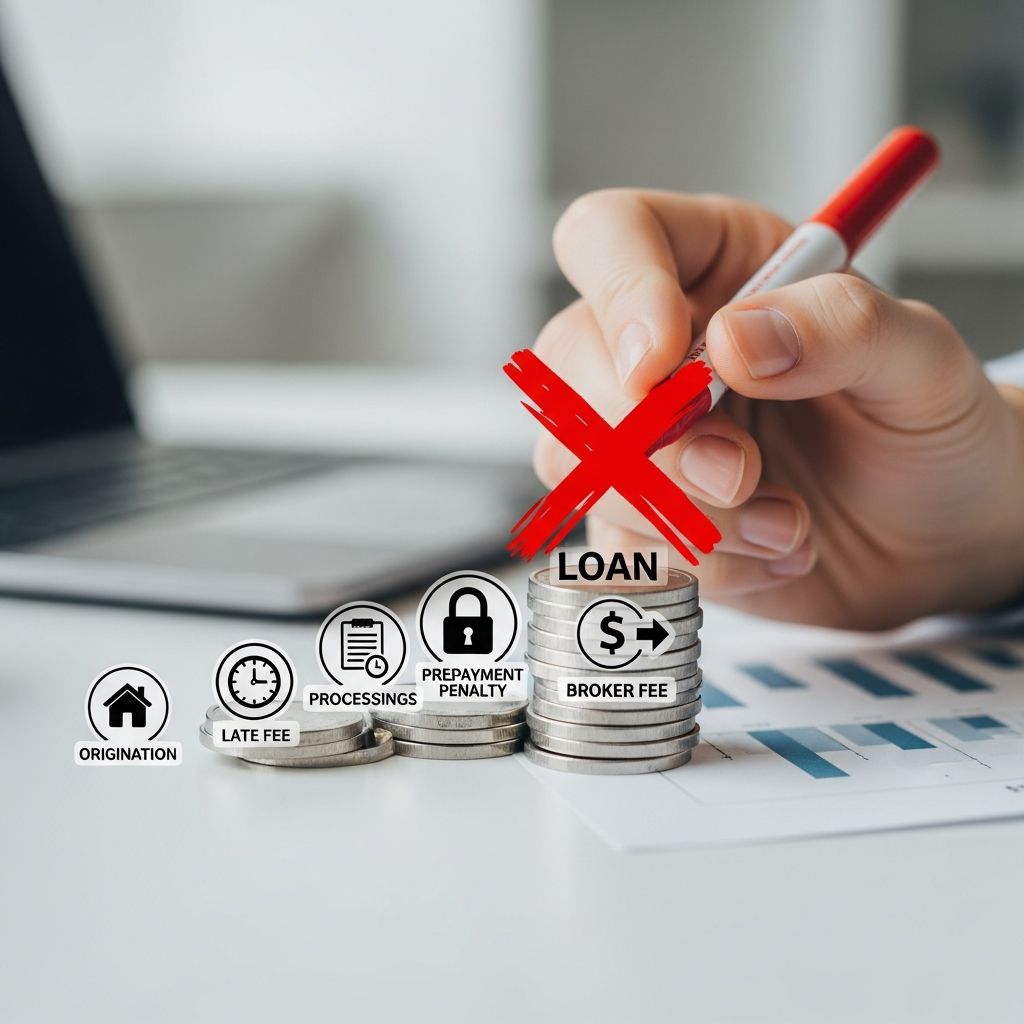
Personal loans offer a predictable way to borrow money for needs like home repairs, debt consolidation, or emergencies, featuring fixed interest rates and monthly payments that don’t fluctuate like credit cards. With strong credit—typically a FICO score above 670, and ideally over 740—you can access loans without unnecessary fees that drive up costs. This guide details the five key fees to avoid entirely, empowering you to shop confidently for the best deals.
Why Personal Loans Make Sense (Sometimes)
Even if borrowing isn’t your first choice, personal loans shine in specific scenarios. They help cover major expenses such as urgent home repairs to prevent further damage, orthodontic work for your child, or a reliable car for commuting. Their popularity for debt consolidation stems from lower interest rates compared to credit cards, which often exceed 20% APR.
A standout advantage is predictability: fixed rates, set repayment terms, and unchanging monthly payments simplify budgeting. Unlike variable-rate credit cards, you know exactly what to expect. Lenders like those offering no-fee options reward excellent credit, making these loans cost-effective for qualified borrowers.
Before diving into fees, understand eligibility. Consumers with good to exceptional credit avoid the high costs that plague subprime borrowers. Pre-qualifying without a hard credit inquiry lets you test the waters risk-free.
1. Application Fees
Some lenders charge application fees to process your request and set up the loan, often non-refundable and ranging from $25 to $100. These cover administrative costs but add unnecessary expense upfront.
Reputable providers skip this entirely. Prioritize those offering free applications, especially with pre-qualification options using soft credit checks. This preserves your credit score while revealing potential rates and terms. Avoid paying to simply apply—plenty of fee-free alternatives exist for strong-credit applicants.
- Typical cost: $40–$100, non-refundable.
- Why avoid: Pure profit for lenders; doesn’t guarantee approval.
- Smart move: Compare multiple lenders online for zero-fee pre-approvals.
By skipping application fees, you keep more money in your pocket from day one, aligning with the goal of affordable borrowing.
2. Origination Fees
Origination fees are charged for creating the loan, deducted from proceeds or added to the balance. They vary by lender, credit score, and loan details, hitting as high as 8% of the borrowed amount. For a $10,000 loan, that’s $800 gone before you start.
Peer-to-peer platforms like Lending Club exemplify this, with fees from 1% to 6% based on your profile. However, many online lenders and banks waive them for top-tier borrowers. If your FICO exceeds 740, demand no-origination options—it’s a sign of competitive terms.
| Loan Amount | 1% Fee | 6% Fee | 8% Fee |
|---|---|---|---|
| $5,000 | $50 | $300 | $400 |
| $10,000 | $100 | $600 | $800 |
| $20,000 | $200 | $1,200 | $1,600 |
This table illustrates the impact: higher fees erode your funds significantly. Always negotiate or switch to no-fee lenders to maximize value.
3. Prepayment Penalties
Never accept a loan with prepayment penalties, which punish you for paying off early. These fees—often 1-5% of the remaining balance—discourage responsible behavior like refinancing at lower rates or using windfalls to reduce debt.
Financial wisdom dictates flexibility: pay extra or settle ahead without penalty. Even with average credit, fee-free prepayment is standard among ethical lenders. Signing for penalized early payoff locks you into higher costs longer—walk away from such offers.
- Common structure: 2% in year 1, declining over time.
- Risk: Blocks savings from better rates or bonuses.
- Pro tip: Confirm “no prepayment penalty” in writing.
Opting out preserves your freedom to manage debt aggressively.
4. Late Fees
Late fees kick in if payments miss the due date or grace period, typically $25–$40 each time. Frequent lapses compound quickly, inflating your loan’s true cost.
While unavoidable if you pay late, prevention is key. Set up autopay, reminders, or align payments with your cash flow. Late marks also ding your credit—30+ days delayed drops scores by 100+ points. Good credit earners should never face these by planning ahead.
Grace periods vary (5–15 days), but don’t rely on them. Online payments post faster, dodging mail delays.
5. Returned Check (NSF) Fees
Lenders impose returned check fees ($15–$35) if your payment bounces due to insufficient funds. This doubles pain with your bank’s NSF fee.
Avoid by verifying balances before mailing checks. Better: switch to electronic transfers for instant posting and no postal risks. Digital payments are reliable, fee-proof options.
- Average fee: $20–$25 per incident.
- Combined cost: Lender + bank fees = $50+.
- Solution: Autopay or app-based transfers.
How to Find Fee-Free Personal Loans
Shop diligently: compare rates, terms, and fees across lenders. Use tools filtering for no-fee, pre-qualifiable loans matching your credit and state. Online marketplaces reveal top matches quickly.
Key criteria:
- No application/origination fees.
- No prepayment penalties.
- Competitive APRs under 12% for good credit.
- Fixed terms (2–7 years).
- Pre-qualify sans hard pull.
Real-world uses reinforce value: consolidate 18% card debt into 10% loan, saving thousands; fund $5,000 car repair vs. high-interest alternatives.
Frequently Asked Questions (FAQs)
Q: Who qualifies for no-fee personal loans?
A: Borrowers with FICO scores over 670, especially 740+, from lenders like online banks and credit unions offering competitive terms without fees.
Q: Are personal loans better than credit cards for debt consolidation?
A: Yes, if the loan’s rate is lower (e.g., 10% vs. 20% card APR), providing fixed payments and savings, but avoid re-accumulating card debt.
Q: What if my credit is fair—can I still avoid fees?
A: Options exist, but expect higher rates or some fees; improve credit first or explore credit unions for better deals.
Q: How do I confirm no prepayment penalties?
A: Review loan docs explicitly; ask during pre-qualification: “Is there a fee for early payoff?” Reputable lenders disclose upfront.
Q: What’s the average personal loan interest rate in 2026?
A: For excellent credit, 8–12%; fair credit up to 20%+. Always compare personalized offers.
Final Tips for Smart Borrowing
Armed with this knowledge, prioritize fee-free loans to harness personal loans’ full benefits. Calculate total costs: APR plus any fees over the term. For a $15,000 loan at 9% over 5 years, no fees mean ~$318/month; a 5% origination adds $750 upfront.
Build habits: autopay, budget for payments, monitor credit. Personal loans aren’t for luxuries—reserve for high-value needs yielding long-term gains.
Expand uses wisely: medical bills, vehicle financing if auto loans fail, even weddings (average $30K+), but only if rates beat alternatives.
References
- 5 Personal Loan Fees You Should Never, Ever Pay — Wise Bread. 2016. https://www.wisebread.com/5-personal-loan-fees-you-should-never-ever-pay
- What Are Personal Loans Used For? A Complete Guide — Quicken Loans. 2023-10-01. https://www.quickenloans.com/learn/personal-loan-uses
- Personal Loans Interest Rates — Federal Reserve Board (via FICO data). 2025-01. https://www.federalreserve.gov/publications.htm
- Consumer Credit Protection: Loan Disclosures — Consumer Financial Protection Bureau. 2024-06-15. https://www.consumerfinance.gov/rules-policy/regulations/1026/
- FICO Score Factors and Loan Qualification — myFICO (Fair Isaac Corporation). 2025. https://www.myfico.com/credit-education/whats-in-your-credit-score
Similar Articles








Read full bio of medha deb