5 Kinds of Insurance Every Retiree Should Consider
Protect your golden years with these essential insurance types tailored for retirees' unique needs and risks.

Your insurance needs evolve throughout life, and retirement marks a pivotal shift. With a fixed income, increased leisure time, and heightened health risks, retirees face unique vulnerabilities that demand tailored coverage. This article outlines five indispensable insurance types to protect your nest egg, ensuring peace of mind as you enjoy your golden years.
Medicare provides a baseline, but gaps remain. Housing choices change, travel increases, and longevity means potential decades of expenses. Properly selected policies mitigate these risks without over-insuring. We’ll break down each category, highlighting why it’s essential, what to look for, and cost-saving tips.
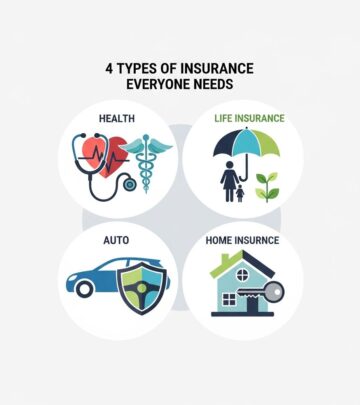
1. Health Insurance
Health insurance tops the list for retirees. Without employer-sponsored plans, you’re likely turning to Medicare, but it doesn’t cover everything. Original Medicare (Parts A and B) handles hospital and medical services, yet leaves substantial out-of-pocket costs, especially for extended care or prescriptions.
Enroll during your Initial Enrollment Period to avoid penalties. Most retirees pair Original Medicare with a Medigap policy to cover deductibles, copays, and coinsurance. Medigap Plans G and N offer robust protection at reasonable premiums. Alternatively, Medicare Advantage (Part C) bundles extras like dental and vision, though networks can limit choices.
Prescription Drug Coverage (Part D) is crucial as medication costs rise with age. Compare plans annually via Medicare’s Plan Finder tool. In 2026, average Part D premiums hover around $40-60 monthly, but high-deductible options save upfront if you’re healthy.
- Key Benefits: Prevents medical bankruptcy; covers 80-100% of costs post-deductible.
- Costs: Part B premium ~$185/month (income-adjusted); Medigap $100-300/month.
- Tip: Shop during Open Enrollment (Oct 15-Dec 7).
Neglecting health insurance risks depleting savings. A single hospital stay can exceed $50,000, per federal data. Secure comprehensive coverage to focus on wellness, not bills.
2. Homeowners or Renters Insurance
Will you own a paid-off home, downsize to a condo, or rent in a vibrant community? Your housing choice dictates the policy. Homeowners insurance protects against fire, theft, storms, and liability, vital as retirees spend more time at home.
A standard policy includes dwelling coverage (rebuild cost), personal property (belongings), liability (lawsuits), and loss of use (temporary housing). Retirees often overlook inflation—rebuild costs rise 3-5% yearly. Update coverage annually and consider replacement cost value over actual cash value.
For renters, policies cover possessions and liability, excluding the structure. Premiums start at $15/month. Condo owners need HO-6 policies for interior improvements and assessments.
| Policy Type | Average Annual Cost | Coverage Highlights |
|---|---|---|
| Homeowners (HO-3) | $1,200-$2,500 | Comprehensive dwelling, contents, liability up to $300k |
| Renters (HO-4) | $150-$300 | Personal property $20k-$50k, liability $100k |
| Condo (HO-6) | $400-$800 | Interiors, improvements, loss assessment |
Discounts abound: bundle with auto (10-25% off), install alarms, or claim-free history. Flood and earthquake insurance are separate—essential in prone areas. As home values appreciate, ensure adequate liability limits to shield retirement assets from slip-and-fall suits.
3. Auto Insurance
Retirees drive less but face higher per-mile risk due to age-related factors. Minimum liability meets legal requirements, but comprehensive coverage guards against theft, accidents, and repairs on potentially older vehicles.
Key components: liability (bodily injury/property damage), collision/comprehensive (vehicle damage), uninsured motorist, and medical payments. With fixed incomes, higher deductibles ($1,000+) lower premiums 20-30%. Usage-based programs track safe driving for discounts up to 40%.
Seniors qualify for mature driver discounts after safe driving courses (e.g., AARP). Average full coverage costs $1,800/year, but retirees average $1,200 with adjustments. Multi-car or bundling saves more.
- Risks: Medical bills from at-fault accidents; vehicle replacement.
- Tip: Drop collision if car value < $4,000.
- 2026 Update: Telematics apps reward low-mileage retirees.
Maintain good credit and shop biennially—rates fluctuate. Non-owners policies suit those using spouse’s car occasionally.
4. Long-Term Care Insurance
Longevity is a double-edged sword. Average retiree outlives savings projections, with 70% needing long-term care (LTC) costing $100,000+/year for nursing homes. LTC insurance covers assisted living, home health, and adult daycare.
Buy in your 50s-60s for affordability; premiums rise 50% post-70. Hybrid policies combine life insurance with LTC benefits. Benefits vest after elimination periods (90-180 days), reimbursing $150-400/day.
Factors inflating costs: inflation protection (5% compound), shared policies for couples. Per U.S. Dept. of Health, a 65-year-old couple’s annual premium ~$3,500. Tax deductions apply for qualified policies.
Alternatives: Self-insure via HSAs or annuities, but insurance spreads risk.
- Why Now? Medicaid asset limits impoverish spouses.
- Partnership Programs: Protect $100k+ assets in 40+ states.
LTC preserves independence and inheritance. Assess family history—Alzheimer’s triples odds.
5. Umbrella Insurance
Umbrella policies provide excess liability over auto/home limits, crucial for asset-rich retirees. A $1M+ policy costs $150-300/year, covering defamation, libel, and dog bites.
Triggers after primary policies exhaust (e.g., $300k auto liability). Protects rentals, boats, and worldwide incidents. With net worth growth, lawsuits target savings.
Stackable in $1M increments. Requires underlying limits: $250k/$500k auto, $300k home. Legal defense pays regardless of liability.
Real Scenario: Tenants sue landlord-retiree for $750k injury—umbrella covers excess.
Frequently Asked Questions (FAQs)
Q: When should retirees review insurance?
A: Annually, plus life changes like moving or health shifts. Open Enrollment for health is key.
Q: Can I bundle all policies?
A: Yes, multi-line discounts save 20%+. One agent simplifies management.
Q: Is long-term care worth it if I’m healthy?
A: Yes—future costs are unpredictable. Early purchase locks lower rates.
Q: How much umbrella coverage?
A: Match net worth; $2M for most retirees.
Q: Does Medicare cover dental/vision?
A: No—supplement or Advantage plans often do.
Final Thoughts
These five insurances form a retiree’s safety net. Assess needs with a fiduciary advisor, compare quotes, and avoid lapses. Protection enables worry-free travel, hobbies, and legacy-building. Invest time now for security later.
References
- Annual Statistical Supplement to Medicare My Health Indicator — Centers for Medicare & Medicaid Services (CMS). 2025. https://www.cms.gov/data-research/statistics-trends-and-reports/medicare-medicaid-statistical-supplement
- Long-Term Care Insurance: 2024 Update — U.S. Department of Health and Human Services (HHS), Assistant Secretary for Planning and Evaluation. 2024-06-15. https://aspe.hhs.gov/reports/long-term-care-insurance-2024
- Insurance Information Institute: Umbrella Policies — Insurance Information Institute (III). 2025-01-10. https://www.iii.org/article/umbrella-policies
- NAIC Homeowners Insurance Report — National Association of Insurance Commissioners (NAIC). 2025. https://content.naic.org/sites/default/files/inline-files/2025_Homeowners_Report.pdf
- Federal Reserve Survey of Consumer Finances — Board of Governors of the Federal Reserve System. 2024-10-20. https://www.federalreserve.gov/publications/files/scf23.pdf
Similar Articles








Read full bio of Sneha Tete