5 Crucial Things You Should Know About Bonds
Unlock the essentials of bond investing: from basics and risks to strategies for building a balanced portfolio with fixed-income securities.
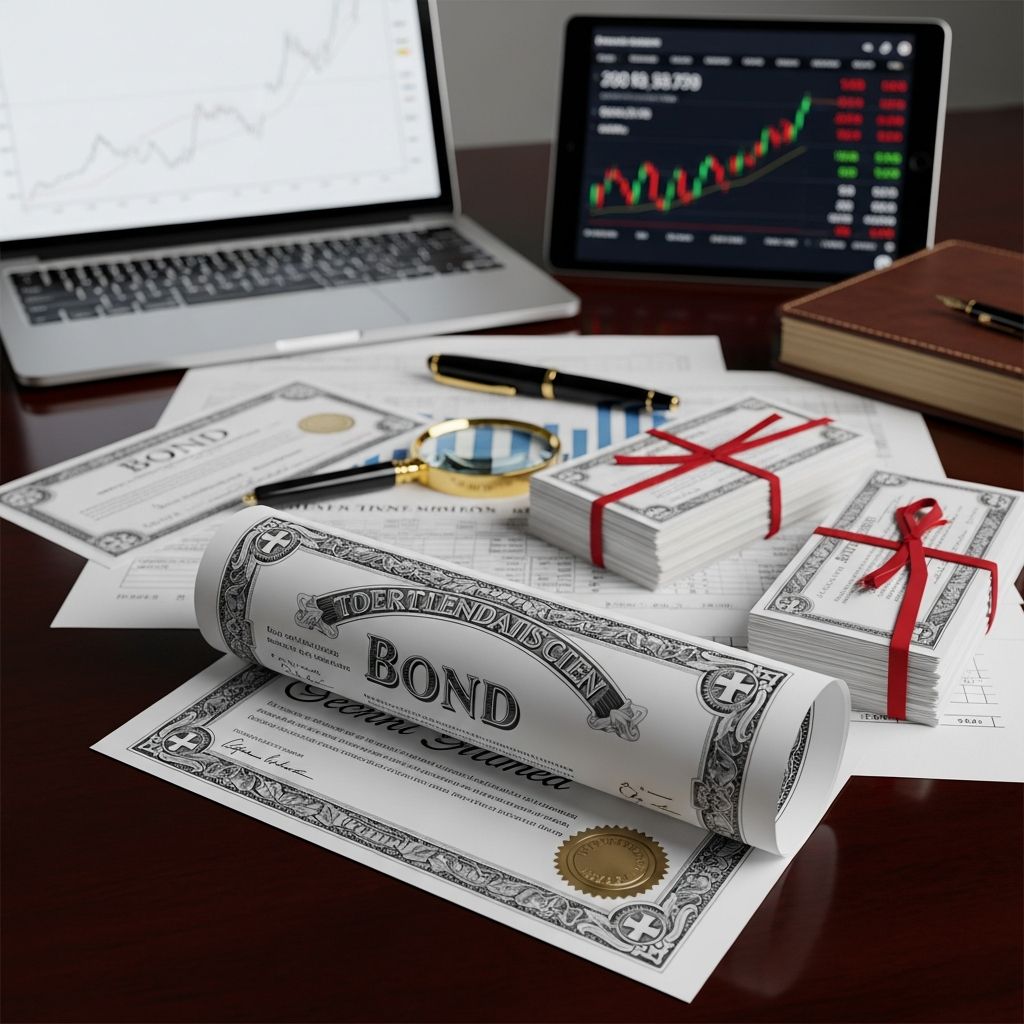
Bonds are often viewed as the steady, unglamorous counterpart to volatile stocks in an investment portfolio. Despite their reputation for being “boring,” bonds play a
crucial role
in risk management, income generation, and long-term financial stability. Understanding these fixed-income instruments is essential for any investor aiming to build a resilient portfolio. This article breaks down the five most important concepts you need to grasp before diving into bond investing.1. Bonds Are Essentially Loans to Governments or Companies
At their core,
bonds
function like formalized loans. When you purchase a bond, you lend money to an issuer—such as a government, municipality, or corporation—in exchange for periodic interest payments and the return of the principal at maturity. This simple mechanic underpins all bond investments, making them accessible even for novice investors.The key terms defining a bond include:
- Par Value (Face Value): The amount borrowed and repaid at maturity, typically $1,000 per bond. This is the principal you lend and expect back.
- Coupon Rate: The fixed interest rate paid on the par value, often semiannually. For a 5% coupon on a $1,000 bond, you’d receive $50 annually ($25 every six months).
- Maturity Date: The date when the issuer repays the par value. Bonds range from short-term (under 1 year) to long-term (30+ years).
- Yield: The effective return, factoring in purchase price, coupons, and time to maturity.
Government bonds, like U.S. Treasuries, are backed by the full faith and credit of the issuing authority, making them nearly risk-free. Corporate bonds, issued to fund expansions or acquisitions, offer higher yields to compensate for added risk. Municipal bonds finance public projects and often provide tax benefits. Each type suits different risk tolerances and goals.
For example, if a corporation issues a 10-year bond at par with a 4% coupon, investors receive steady interest while awaiting principal repayment. This predictability appeals to conservative investors seeking reliable income over stock market swings.
2. Bond Prices and Yields Have an Inverse Relationship
One of the most counterintuitive aspects of bonds is the
inverse relationship
between prices and yields. When interest rates rise, existing bond prices fall, and vice versa. This dynamic is pivotal for understanding market behavior and timing investments.Consider this scenario: You buy a $1,000 bond with a 3% coupon yielding $30 yearly. If new bonds offer 4% ($40 yearly), your bond becomes less attractive. To compete, its market price drops—say to $900—boosting the effective yield to 4% ($30 / $900 ≈ 3.33%, plus potential capital gain at maturity).
| Interest Rate Environment | Impact on Existing Bond Prices | Yield Change | Example |
|---|---|---|---|
| Rising Rates | Prices Fall | Yields Rise | 3% bond price drops from $1,000 to $900 |
| Falling Rates | Prices Rise | Yields Fall | 3% bond price rises to $1,100 |
| Stable Rates | Prices Stable | Yields Match Coupon | Holds at par value |
This relationship explains bond sensitivity to Federal Reserve policies. Rate hikes, aimed at curbing inflation, hurt bond prices, while cuts boost them. Longer-maturity bonds amplify this effect due to greater price volatility (duration risk).
Investors must monitor the
yield curve
, a graph plotting yields against maturities. An upward-sloping curve indicates higher yields for longer terms, reflecting time premium. Inversions signal economic slowdowns, prompting portfolio adjustments.3. Not All Bonds Are Created Equal: Credit Risk Matters
A bond’s safety hinges on the issuer’s
creditworthiness
. Ratings from agencies like Moody’s and S&P classify bonds: AAA (prime) to D (default). U.S. Treasuries earn top marks as “risk-free,” while corporate bonds span investment-grade (BBB+ or higher) and high-yield (“junk”) categories.Investment-grade corporates offer ~1% extra yield over Treasuries, balancing moderate risk with reliability. High-yield bonds yield 3-5% more but carry higher default rates—compensation for elevated risk. Diversified firms with stable cash flows rate higher; debt-heavy companies lower.
- Low/Moderate Risk (Investment-Grade): Strong earnings, low default odds. Ideal for conservative portfolios.
- High Risk (Junk Bonds): Higher spreads but frequent defaults. Suited for aggressive investors.
Credit spreads—the yield premium over Treasuries—widen in uncertainty, reflecting perceived risk. In 2022-2023 rate hikes, spreads expanded as investors fled riskier bonds.
4. Bonds Offer Tax Advantages and Portfolio Diversification
Beyond yields, bonds provide
tax perks
and diversification. Municipal bonds’ interest is often federal tax-exempt (and state-exempt if in-state), appealing to high earners. Treasury interest avoids state/local taxes.In portfolios, bonds counter stock volatility. During equity bull markets, bonds stabilize; in downturns, they preserve capital. Historical data shows balanced portfolios (60/40 stocks/bonds) outperforming pure equity over decades with less risk.
Mortgage-backed securities (MBS) and international bonds add variety. MBS yield 4.5-5%, blending principal/interest like homeowner payments, though prepayment risks apply. Global bonds hedge currency fluctuations.
5. Interest Rate Risk and Fed Policy Drive Bond Performance
**Interest rate risk** dominates bonds. Rising rates erode prices, especially for long-duration holdings. The Fed’s dual mandate—employment and inflation—dictates policy: hikes combat inflation, cuts spur growth.
U.S. debt growth (from $28T to $29.7T in months) pressures yields to attract buyers, including foreign central banks. Yet, no direct debt-yield correlation exists historically. Inflation-protected securities (TIPS) adjust for CPI, guaranteeing real returns.
Bond funds vs. individuals: Funds offer diversification but no maturity guarantee; ladders mitigate rate risk by staggering maturities.
Frequently Asked Questions (FAQs)
Q: Are bonds a good investment in a rising rate environment?
A: Short-term bonds or funds fare better as they mature quickly, allowing reinvestment at higher rates. Avoid long-term if rates keep climbing.
Q: How do I calculate bond yield?
A: Yield to Maturity (YTM) factors price, coupon, par, and time. Use online calculators or formulas: approximate YTM = [Coupon + (Par – Price)/Years] / [(Par + Price)/2].
Q: What’s safer: bond funds or individual bonds?
A: Individual bonds guarantee par at maturity if held; funds fluctuate with NAV, offering liquidity but interest rate/credit risks.
Q: Do all municipal bonds offer tax-free income?
A: Generally federal tax-free; some private activity bonds are taxable. Check AMT status.
Q: How has Fed policy impacted bonds recently?
A: Post-2022 hikes, yields rose (attractive income), but prices fell. Cuts could reverse this, lifting prices.
In summary, mastering these five bond essentials—loans mechanics, price-yield inverse, credit tiers, tax/diversification benefits, and rate risks—equips you for informed investing. Bonds aren’t exciting, but their stability anchors portfolios against uncertainty. Consult a financial advisor for personalized strategies.
References
- Considering Bonds? What to Know Before You Buy — Charles Schwab (YouTube Transcript). 2023. https://www.youtube.com/watch?v=Y1YvTILoxcY
- Using Bonds Wisely in a Bull Market for Equities — Charles Schwab (YouTube Transcript). 2024. https://www.youtube.com/watch?v=4wmsYPGHFco
- U.S. Department of the Treasury: About Treasury Securities — U.S. Department of the Treasury. 2025-01-10. https://home.treasury.gov/policy-issues/financing-the-government/interest-rate-statistics
- 5 Crucial Things You Should Know About Bonds — Wise Bread. Accessed 2026. https://www.wisebread.com/5-crucial-things-you-should-know-about-bonds
- Investor Bulletin: Bond Funds — U.S. Securities and Exchange Commission (SEC). 2024-06-15. https://www.investor.gov/introduction-investing/general-resources/news-alerts/alerts-bulletins/investor-bulletins/bond
Similar Articles








Read full bio of Sneha Tete