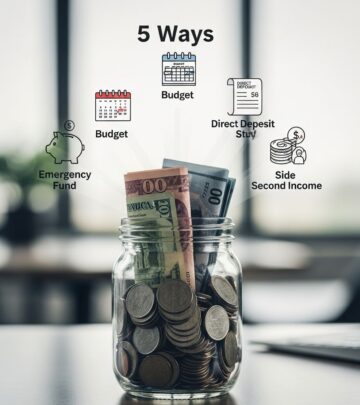
5 Brilliant Money Moves You Should Make on January 1
Kick off the new year with these five smart, achievable financial moves that build wealth without overwhelming resolutions.

January 1 marks the perfect opportunity to reset your finances without the pressure of lofty New Year’s resolutions. Instead of vague promises, focus on these five brilliant, actionable money moves that require minimal time but deliver maximum impact. By implementing them early in the year, you’ll build a stronger financial foundation that lasts all year long and beyond. These steps draw from timeless personal finance principles, emphasizing automation, preparedness, and mindful spending to help you save more, stress less, and grow your wealth steadily.
1. Start Building an Emergency Fund
An
emergency fund
is your financial safety net, covering unexpected expenses like medical bills, car repairs, or job loss without derailing your budget. Financial experts universally recommend having 3-6 months of living expenses saved, as this buffer prevents reliance on high-interest credit cards or loans during crises. Without it, a single $1,000 emergency can lead to thousands in debt over time due to compounded interest.Begin on January 1 by opening a high-yield savings account if you don’t have one. Aim to deposit your first $1,000 as a starter fund—known as the ‘starter emergency fund.’ This amount covers most immediate surprises. Once achieved, expand it gradually. For example, calculate your monthly essentials (rent, food, utilities) and multiply by 3 for your target.
- Step 1: Assess your monthly expenses—track the last three months’ spending to get an accurate figure.
- Step 2: Choose a dedicated savings account with competitive interest rates, separate from checking to avoid temptation.
- Step 3: Commit to $25-50 weekly transfers until you hit $1,000, then scale up.
Real-world impact: According to the Federal Reserve, 40% of Americans can’t cover a $400 emergency, leading to debt cycles. Building this fund first breaks that cycle, providing peace of mind and financial flexibility.
2. Automate Your Savings Deposits
Automation is the secret weapon against procrastination and spending temptations. By setting up automatic transfers from checking to savings on payday, you ‘pay yourself first’ before bills or discretionary spending kicks in. Studies show automated savers are three times more likely to maintain the habit long-term because it bypasses willpower.
Start small to ensure success: Transfer $25 per paycheck initially, then increase by $25 every few months. For a bi-weekly earner, this could yield $1,200 by year-end with minimal notice. Use bank apps to schedule recurring transfers—many offer round-ups on purchases for effortless micro-savings.
| Pay Frequency | Initial Amount | Monthly Savings | Annual Projection |
|---|---|---|---|
| Weekly | $20 | $80 | $960 |
| Bi-weekly | $25 | $50 | $1,200 |
| Monthly | $50 | $50 | $600 |
This table illustrates how modest automation compounds. Pro tip: Align transfers with direct deposit to make savings invisible and sustainable. Banks like those offering mobile apps simplify setup in under 15 minutes.
3. Make a Budget
A budget isn’t a restrictive list—it’s a spending plan that aligns your money with your goals. January 1 is ideal for creating one, as fresh calendars and bank statements provide clean data. Review the prior year’s spending to identify leaks like dining out or subscriptions, then allocate funds to priorities like debt payoff or vacations.
Popular methods include the 50/30/20 rule: 50% needs, 30% wants, 20% savings/debt. Or zero-based budgeting, where every dollar is assigned a job. Tools like spreadsheets or apps track progress effortlessly.
- Needs: Housing, groceries, utilities (50%).
- Wants: Entertainment, hobbies (30%).
- Savings/Debt: Emergency fund, retirement, loans (20%).
Commit to one focus area, like reducing coffee runs by $100/month, redirecting to savings. This targeted approach boosts adherence over vague overhauls. Track weekly for the first month to refine.
4. Order Your Free Credit Reports and Scores
Your credit score gates access to favorable loans, rentals, and jobs. On January 1, order free annual reports from AnnualCreditReport.com (weekly access authorized by law) to spot errors, fraud, or high utilization hurting your score.
Check for inaccuracies like old debts or unrecognized accounts—dispute them promptly. Aim for under 30% credit utilization and pay down balances. A 100-point score improvement can save thousands on mortgages (e.g., 6.5% vs. 7.5% on $300K loan saves $50K+ over 30 years).
- Action steps: Visit AnnualCreditReport.com, download Equifax/TransUnion/Experian reports.
- Review: Utilization, payment history, inquiries.
- Improve: Pay down cards, avoid new applications.
High scores unlock lower rates, per Federal Reserve data on borrowing costs.
5. Create a Plan to Pay Off Debt
Debt freedom accelerates wealth-building. List all debts (credit cards, loans) with balances and rates. Choose snowball (smallest first for momentum) or avalanche (highest interest first for savings).
For holiday balances, automate extra payments. Example: $5K at 20% APR—minimum payments cost $9K+ in interest; aggressive payoff saves $4K. Combine with budgeting to free cash flow.
| Method | Pros | Cons | Best For |
|---|---|---|---|
| Snowball | Quick wins, motivation | Higher interest cost | Behavior change |
| Avalanche | Max savings | Slower visible progress | Math-focused |
Integrate with automation: Post-bills, transfer surplus to debt. Celebrate milestones to stay motivated.
Frequently Asked Questions (FAQs)
Q: How much should I save in an emergency fund?
A: Target 3-6 months of essential expenses. Start with $1,000 for immediate protection.
Q: What’s the best way to automate savings?
A: Set recurring transfers post-payday via bank app, starting small like $25/paycheck.
Q: Do I need a fancy app for budgeting?
A: No—spreadsheets work; focus on 50/30/20 or zero-based for simplicity.
Q: How often should I check my credit?
A: Weekly free reports via AnnualCreditReport.com; monitor scores monthly.
Q: Which debt payoff method is better?
A: Snowball for motivation, avalanche for savings—pick what sustains you.
Why January 1? Your Two-Week Action Plan
These moves take under two hours total but compound yearly. Week 1: Emergency fund, automate savings, budget. Week 2: Credit check, debt plan. Systems beat resolutions—expect $1,500+ savings in year one.
References
- 5 Brilliant Money Moves You Should Make on January 1 — Wise Bread. 2010-01-01 (evergreen advice). https://www.wisebread.com/5-brilliant-money-moves-you-should-make-on-january-1
- 5 Smart Money Moves to Make in the New Year — Achieva Life. 2025-12-01. https://achievalife.com/5-money-moves-newyear-2026/
- Start 2026 Strong: 5 Simple Money Moves — Educational Community Alliance CU. 2025-12-15. https://www.educacu.com/start-2026-strong-5-simple-money-moves-to-make-before-january/
Similar Articles








Read full bio of medha deb