401(K) Vs 403(B): Key Differences And Limits For 2025
Discover the core differences between 401(k) and 403(b) retirement plans to optimize your savings strategy for long-term financial security.

Employer-sponsored retirement plans like the 401(k) and 403(b) provide powerful tools for building wealth over time through tax advantages and potential employer contributions. While they share many similarities, understanding their unique features helps individuals make informed decisions about their savings strategy.
Understanding Eligibility and Plan Availability
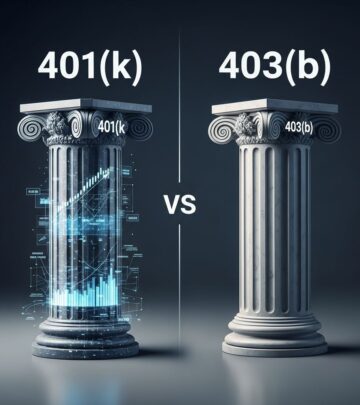
The primary distinction between these plans lies in who can offer them. 401(k) plans are typically available to employees of for-profit businesses, making them a staple in private sector workplaces. In contrast, 403(b) plans are designed for nonprofit organizations, public schools, churches, and certain tax-exempt entities. Tax-exempt employers have the flexibility to offer either plan type, but private companies cannot provide 403(b) accounts.
This eligibility structure reflects federal tax laws aimed at supporting retirement savings across different sectors. For workers in nonprofits or education, a 403(b) might be the default option, while corporate employees rely on 401(k)s. Job changes between sectors could mean managing both types of accounts, requiring awareness of rollover options and combined contribution limits.
Contribution Mechanics and Annual Limits
Both plans allow pre-tax contributions via payroll deductions, reducing taxable income in the contribution year. For 2025, the employee elective deferral limit stands at $23,500 for each plan. Individuals aged 50 and older qualify for catch-up contributions of $7,500, with those aged 60-63 potentially adding up to $11,250 if the plan permits.
A standout feature of 403(b) plans is the 15-year service catch-up, enabling an extra $3,000 annually for long-tenured employees, up to a $15,000 lifetime cap. This provision rewards loyalty in eligible nonprofits but requires plan-specific inclusion and administrative tracking. Employer contributions, such as matches, push total limits higher—up to $70,000 combined for 401(k) and 403(b) in 2025, far exceeding the $23,500 cap for 457(b) plans.
| Feature | 401(k) | 403(b) |
|---|---|---|
| 2025 Employee Limit | $23,500 | $23,500 |
| Age 50+ Catch-Up | $7,500 | $7,500 |
| Age 60-63 Super Catch-Up | $11,250 (if allowed) | $11,250 (if allowed) |
| 15-Year Service Catch-Up | Not available | $3,000/year (up to $15,000 lifetime) |
| Total Limit (incl. employer) | Up to $70,000 | Up to $70,000 |
Tax Treatment and Roth Options
Traditional versions of both plans defer taxes on contributions and earnings until withdrawal, ideal for those expecting a lower tax bracket in retirement. Roth variants, available in both, use after-tax dollars for tax-free qualified withdrawals, suiting higher current earners anticipating tax rate increases. Withdrawals before age 59½ generally incur a 10% penalty plus taxes, with exceptions for hardships or specific circumstances.
Required Minimum Distributions (RMDs) begin at age 73 for most, though some legacy 403(b)s may start at 75. Still-working exceptions apply, and Roth accounts follow similar rules post-conversion. These tax structures make both plans “qualified” under ERISA, ensuring nondiscriminatory benefits and regular reporting.
Investment Choices and Diversification
401(k) plans often provide broader investment menus, including stocks, bonds, mutual funds, and ETFs, especially with self-directed brokerage windows. This flexibility appeals to investors seeking customization. 403(b) plans, historically tied to annuities and mutual funds, offer fewer options, though modern plans are expanding.
- 401(k) Advantages: Diverse assets for potential higher returns; brokerage options in advanced plans.
- 403(b) Focus: Cost-effective mutual funds and annuities suited to conservative savers.
Plan quality varies by provider; reviewing fees and performance is crucial for long-term growth.
Employer Matching and Vesting Schedules
Employer matches amplify savings—common in 401(k)s as dollar-for-dollar or percentage boosts up to a limit. 403(b)s offer similar matches, sometimes paired with 401(a) contributions to maximize employee deferrals. Vesting determines ownership: immediate for employee contributions, graded or cliff schedules for employer portions.
Example: A 6% match on $100,000 salary adds $6,000 if fully matched, vesting over time. Nonprofits may use matches to compete for talent despite lower base pay.
Withdrawals, Loans, and Rollovers
Access rules align closely: penalties before 59½, except loans (up to $50,000 or 50% of balance), hardships, or separation from service. 403(b)s mirror 401(k)s here, unlike 457(b)s with stricter limits. Rollovers to IRAs or other employer plans preserve tax advantages during transitions.
Early withdrawals trigger taxes and penalties, emphasizing the importance of emergency funds outside retirement accounts.
Strategic Tips for Maximizing Benefits
Prioritize employer matches as “free money,” then max contributions. If eligible for both plans (rare), total employee deferrals cannot exceed $23,500 across them. Long-term 403(b) employees should verify 15-year catch-up availability.
- Review plan fees annually to minimize drag on returns.
- Diversify investments based on age and risk tolerance.
- Consider Roth conversions for tax diversification.
- Coordinate with other savings like IRAs or 457(b)s.
Plan Comparisons with Other Options
Compared to 457(b) plans for government/nonprofits, 401(k)/403(b) allow higher total contributions but share deferral limits. SIMPLE IRAs suit smaller firms with lower caps. Choosing depends on employer offerings and career path.
Frequently Asked Questions
Can I have both a 401(k) and 403(b)?
Yes, if switching jobs between sectors, but combined employee contributions max at $23,500.
What happens to my plan if I leave my job?
Roll over to an IRA or new employer’s plan to avoid taxes/penalties.
Are Roth options available in both?
Yes, allowing after-tax contributions for tax-free growth.
Do employer matches vest immediately?
No, often on a schedule; check your plan document.
How do contribution limits change yearly?
IRS adjusts for inflation; 2025 is $23,500 with catch-ups.
Building a Robust Retirement Portfolio
Integrate these plans with Social Security, pensions, and personal savings for comprehensive security. Regular reviews ensure alignment with goals, leveraging compound growth over decades.
References
- 401(k) vs 403(b): What’s the difference? — Fidelity Investments. 2025. https://www.fidelity.com/learning-center/smart-money/401k-vs-403b
- Navigating the Number Jumble: A 403(b), 401(k), and 457(b) Comparison — CAPTRUST. 2025. https://www.captrust.com/resources/navigating-the-number-jumble-403b-401k-457b-comparison/
- What are the Differences Between 401(k) and 403(b) Plans? — National Council on Aging. 2024. https://www.ncoa.org/article/what-are-the-differences-between-401-k-and-403-b-plans/
- 401(k) vs. 403(b) Plans: Key Differences for Employers — J.P. Morgan. 2025. https://www.jpmorgan.com/insights/retirement/401k-vs-403b-plans-key-differences-for-employers
- Choosing a Retirement Saving Plan when 401(k), 403(b) and 457 Plans are an Option — TIAA Institute. 2017-05. https://www.tiaa.org/content/dam/tiaa/institute/pdf/insights-report/2017-05/clark-insights-report-choosingretirementsavingplan-may2017.pdf
- Types of Retirement Plans — Internal Revenue Service. 2025. https://www.irs.gov/retirement-plans/plan-sponsor/types-of-retirement-plans
Similar Articles








Read full bio of Sneha Tete