401(k) Vesting When Changing Jobs: An Essential Guide
Understand 401(k) vesting schedules and options to maximize retirement savings when switching jobs.
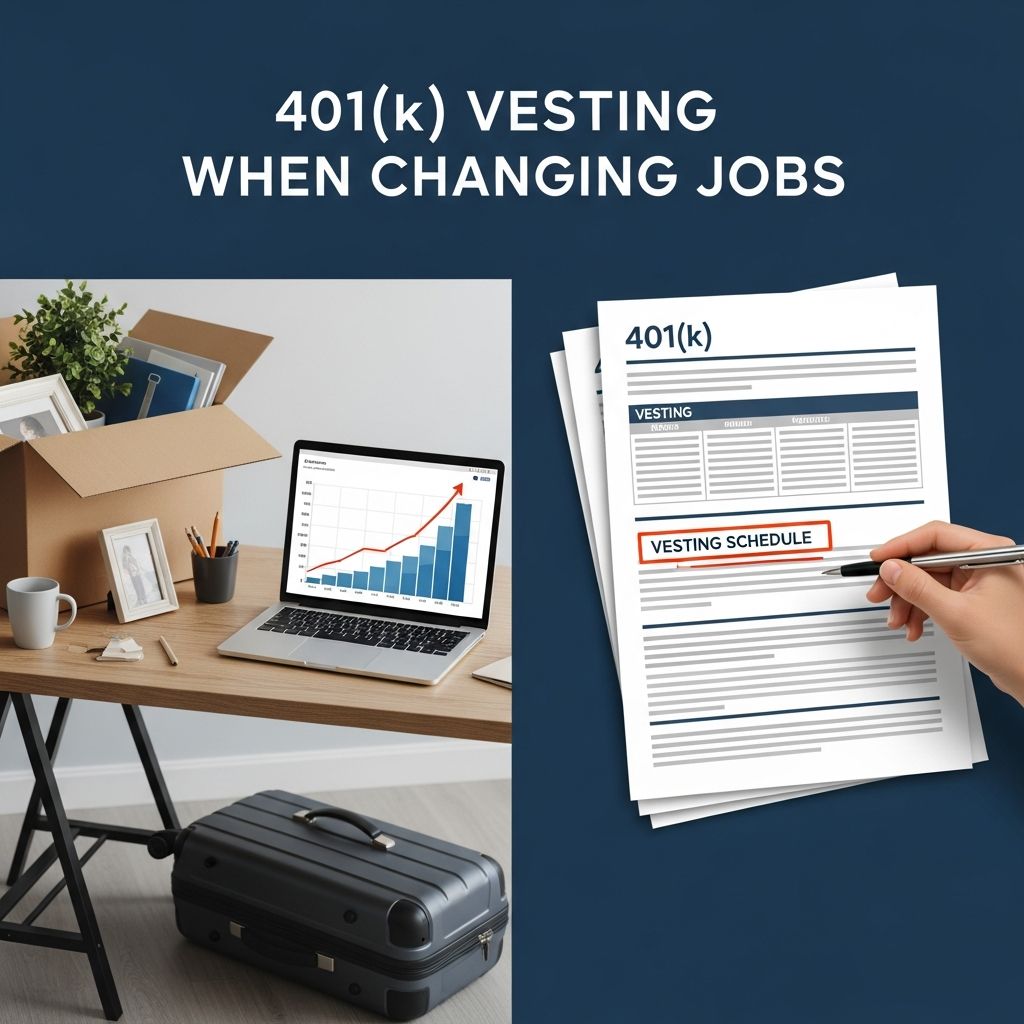
In an employer-sponsored retirement plan like a
401(k)
,vesting
refers to the percentage of contributions that the accountholder owns outright. Your own contributions are always 100% vested, but employer matching funds vest based on your tenure with the company. When switching jobs, understanding vesting ensures you retain maximum savings.Highlights
- **Vesting basics**: Employee contributions vest immediately; employer matches follow a schedule.
- **Common schedules**: Cliff (3 years full) or graded (up to 6 years incremental).
- **Job change impact**: Unvested funds are forfeited; time your exit for full vesting.
- **Options post-job**: Leave in plan (if >$7,000), rollover to IRA, or new 401(k).
- **Avoid pitfalls**: Cashing out triggers taxes and penalties; opt for direct rollovers.
How does 401(k) vesting work?
Any contributions you make to your
401(k)
—pre-tax, Roth, or after-tax—are automatically100% vested
, meaning you own them fully from day one, along with any earnings on those amounts. Employer contributions, such as matching funds, are subject to a vesting schedule designed to encourage employee retention.Vesting schedules vary by employer but follow federal guidelines. You must be
100% vested
in employer contributions after3 years
(cliff vesting) or gradually at20% per year
over6 years
(graded vesting). Some plans offer faster vesting, includingimmediate vesting
where you own 100% right away. You also become fully vested upon reaching the plan’s normal retirement age, typically 65.For example, under cliff vesting, if you leave after 2 years and 11 months, you forfeit all employer matches. With graded vesting over 6 years: 0% after 1 year, 20% after 2, 40% after 3, 60% after 4, 80% after 5, and 100% after 6.
| Vesting Type | Schedule | Example After 3 Years |
|---|---|---|
| Cliff | 0% until year 3, then 100% | 100% if stayed 3 years; 0% otherwise |
| Graded | 20% per year over 6 years | 60% vested |
| Immediate | 100% from day 1 | 100% |
Check your plan’s
Summary Plan Description (SPD)
or contact HR/plan administrator for specifics. This is crucial before resigning, as unvested portions are forfeited permanently.Types of 401(k) vesting schedules
Immediate vesting
**Immediate vesting** grants
100% ownership
of employer contributions instantly. This employee-friendly approach is increasingly common in competitive job markets, allowing full portability from day one.Cliff vesting
In
cliff vesting
, you receive nothing until the cliff date—typically3 years
—then 100%. It’s all-or-nothing, incentivizing longer stays. Federal law caps cliff at 3 years.Graded vesting
**Graded vesting** provides incremental ownership, e.g., 20% after 2 years, rising to 100% after 6. It’s more forgiving than cliff but still ties rewards to loyalty. Law requires 100% by year 6.
Plans may accelerate vesting upon events like company sale or your retirement age. Always verify: a Fidelity example shows graded vesting yielding 60% after 3 years on $1,000 match ($600 kept).
What to do with a 401(k) account after you leave a job
When changing jobs, your
vested balance
—your contributions, earnings, and vested employer funds—stays yours. Unvested employer matches revert to the plan. Options depend on balance size (threshold: $7,000 in 2024+).If balance is $1,000 or less
Employers may cash it out, sending a check (taxes/penalties apply if under 59½).
If $1,001–$7,000
Automatic rollover to an IRA, often low-cost.
If over $7,000
Choices include:
- Leave in old plan: Until retirement age; simple but limited control/investments.
- Rollover to IRA: Broader investments, potential lower fees; ideal if no new 401(k).
- Roll to new 401(k): Consolidate; check new plan’s rules/fees.
Avoid cashing out: 10% penalty + income taxes erode growth. A $10,000 cash-out at age 35 could cost $50,000+ in lost compound growth.
Direct vs. 60-day rollover
Opt for
direct rollover
: Funds transfer trustee-to-trustee, no withholding.60-day rollover
: Check arrives, 20% withheld (recover on taxes, but replace out-of-pocket).Timing your job departure around vesting
If nearing full vesting, delay resignation. For instance, wait weeks for cliff vesting to secure 100%. Review statements; ask HR for exact dates. Postponing maximizes take-home savings without job risk.
Other considerations when changing jobs
- Fees: Old 401(k) fees may drag returns; rollovers often reduce costs.
- Loans: Outstanding 401(k) loans become due; default treats as distribution (taxes/penalties).
- Protection: 401(k)s/rollover IRAs are creditor-protected; review new plan.
- New employer match: Compare; some vest faster.
- Taxes: Roth conversions possible but taxable; consult advisor.
Frequently Asked Questions (FAQs)
What is 401(k) vesting?
Vesting determines ownership of employer contributions over time via schedules like cliff or graded.
Are my 401(k) contributions always vested?
Yes, your pre-tax/Roth/after-tax contributions and earnings vest 100% immediately.
What happens to unvested funds when I quit?
Forfeited back to the plan; check schedule to avoid loss.
Can I leave my 401(k) with old employer?
Yes, if vested balance >$7,000; until age 65 typically.
What’s better: IRA or new 401(k) rollover?
IRA offers more options; 401(k) for consolidation/creditor protection—assess fees/investments.
Does cashing out make sense?
Rarely; taxes + 10% penalty + lost growth hurt long-term.
Protecting Your Retirement Savings
Job changes are common—average tenure ~4 years—but vesting protects long-term wealth. Review SPD annually, track vesting progress, and plan rollovers strategically. Consolidating old 401(k)s prevents ‘forgotten’ accounts losing value to fees. Tools like DOL’s retirement savings lost/prevented calculator highlight cash-out costs.
For personalized advice, consult a fiduciary advisor. Secure your financial future by mastering vesting nuances today.
References
- When Changing Jobs Know Your 401(k) Options — Community First Credit Union. 2024-03. https://www.communityfirstcu.org/cfcu-you/blog/2024/3/when-changing-jobs-know-your-401(k)-options
- What To Do About Your 401(k) When Changing Jobs — First Business Bank. N/A. https://firstbusiness.bank/resource-center/what-to-do-about-401k-when-changing-jobs/
- What to Know About 401(k) Vesting When Changing Jobs — Equifax. N/A. https://www.equifax.com/personal/education/personal-finance/articles/-/learn/401k-vesting-changing-jobs/
- Changing Jobs? Know Your 401k Options — Minster Bank. N/A. https://www.minsterbank.com/resources/learn/blog/wealth/changing-jobs-401k/
- What to do with your old 401(k) when switching jobs? — Ameriprise Financial. N/A. https://www.ameriprise.com/financial-goals-priorities/retirement/what-to-do-with-your-401k-plan-when-you-change-jobs
Similar Articles








Read full bio of Sneha Tete