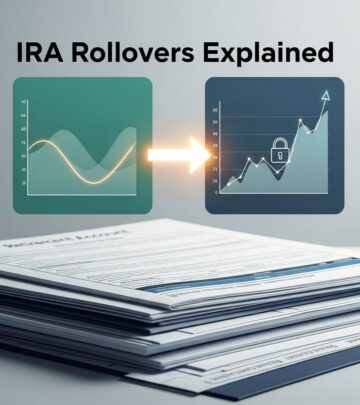
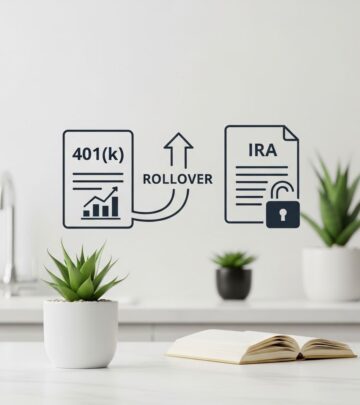
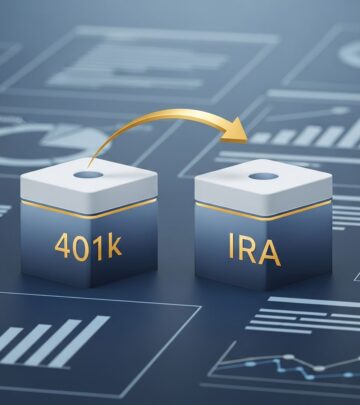
401(k) To IRA Rollover: Step-By-Step Guide
Master the rules, methods, and strategies for seamlessly transferring your 401(k) to an IRA to optimize your retirement savings.
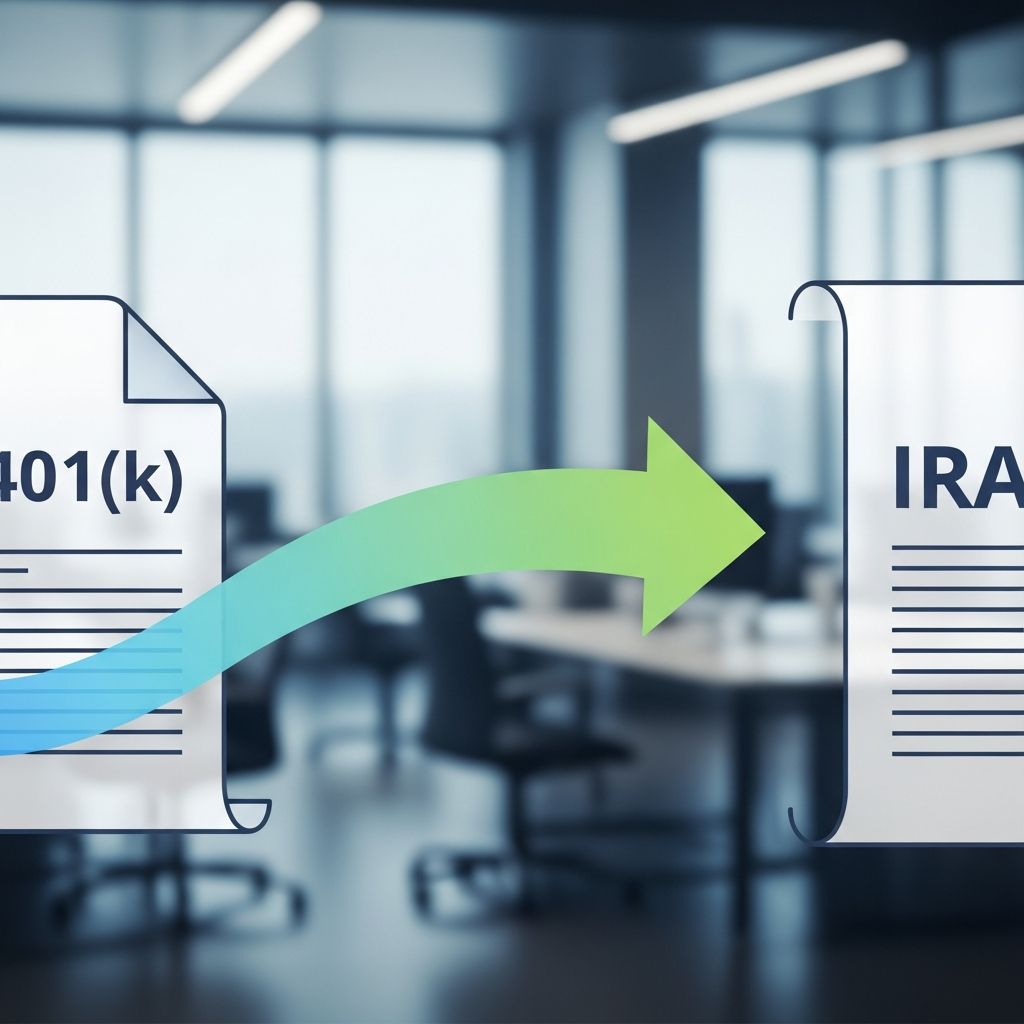
Transferring funds from a 401(k) to an Individual Retirement Account (IRA) offers greater control over investments and potential cost savings. This process, known as a rollover, preserves tax-deferred growth while expanding options beyond employer plans.
Why Consider a 401(k) Rollover to IRA?
Employer-sponsored plans like 401(k)s often limit investment choices to a select menu. Rolling over to an IRA unlocks thousands of options, including stocks, bonds, ETFs, and mutual funds tailored to personal risk levels.
Additional benefits include lower fees, consolidated accounts for easier management, and enhanced creditor protection in many states. Unlike 401(k)s, IRAs allow penalty-free withdrawals for specific needs after age 59½, with Roth conversions offering tax-free income later.
- Investment Flexibility: Choose from diverse assets not available in most 401(k) menus.
- Cost Efficiency: Avoid high administrative fees common in employer plans.
- Simplified Oversight: Manage all retirement assets in one account.
- Future Planning: Enable Roth conversions for tax diversification.
Eligibility Requirements for Rollovers
Most individuals qualify for a 401(k) to IRA rollover upon job change, retirement, or plan termination. Pre-tax 401(k) funds transfer to Traditional IRAs tax-free, while Roth 401(k) assets go to Roth IRAs.
After-tax contributions can roll to Roth IRAs, but pre-tax earnings may trigger taxes. No age restriction applies before 59½, unlike distributions. Employer plans must permit rollovers; contact administrators to confirm.
| Account Type | Eligible Destination | Tax Impact |
|---|---|---|
| Pre-tax 401(k) | Traditional IRA | None if direct |
| Roth 401(k) | Roth IRA | None |
| After-tax 401(k) | Roth IRA | Pro-rata on earnings |
Direct Rollover: The Safest Approach
In a direct rollover, funds move straight from the 401(k) provider to the IRA custodian via electronic transfer or check made payable to the institution “for the benefit of” you. No taxes or penalties apply, and no withholding occurs.
This method eliminates 60-day deadlines and replacement funds risks. Plan administrators prefer it for compliance. Processing takes 1-4 weeks; track via statements.
Indirect Rollover: Proceed with Caution
An indirect rollover sends a check to you, with mandatory 20% federal tax withholding on pre-tax amounts. Deposit the full original sum—including the withheld 20% from other sources—into the IRA within 60 days.
Missing the deadline treats it as a taxable distribution, plus 10% penalty if under 59½. Recover withholding via tax refund, but delays growth. Limited to one per 12 months across IRAs.
Direct vs. Indirect Rollover Comparison
| Aspect | Direct Rollover | Indirect Rollover |
|---|---|---|
| Tax Withholding | 0% | 20% mandatory |
| Timeline | Provider handles | 60 days |
| Risk Level | Low | High (penalties possible) |
| Frequency Limit | None | One per 12 months |
Step-by-Step Process to Execute a Rollover
- Open an IRA: Select Traditional or Roth at your chosen provider. Compare fees, investment options, and services.
- Contact 401(k) Provider: Request rollover forms, specifying direct transfer. Provide IRA account details.
- Choose Transfer Type: Opt for direct; include all assets like employer stock (net unrealized appreciation rules may apply).
- Monitor Transfer: Expect 7-14 days; confirm receipt via IRA statement.
- Invest Funds: Allocate to suitable assets immediately for growth.
Tax Reporting and Forms Explained
Post-rollover, expect IRS Form 1099-R from the 401(k) provider showing distribution (code G for direct rollovers). IRA custodian issues Form 5498 confirming receipt.
On Form 1040, report total on line 5a, taxable amount (often $0) on 5b with “Rollover” note. Roth conversions tax pre-tax portions as income.
- Form 1099-R Box 7 Code G: Direct rollover indicator.
- No Tax Due: If properly executed.
- Keep Records: Forms for audits.
Common Mistakes and Prevention Strategies
Avoid indirect rollovers unless necessary, as withholding complicates funding. Verify account compatibility—Roth 401(k) cannot go to Traditional IRA.
Do not roll Required Minimum Distributions (RMDs) after 73; they are taxable. Employer stock may qualify for special tax treatment—consult advisors.
| Mistake | Prevention |
|---|---|
| Indirect Rollover Choice | Always request direct |
| Missing 60-Day Window | Use direct method |
| Ineligible IRA Type | Match tax status |
| Forgetting Withholding | Fund from savings |
Special Scenarios: Roth Conversions and Employer Stock
Converting pre-tax 401(k) to Roth IRA taxes the amount but enables tax-free withdrawals later. Ideal in low-income years. After-tax basis rolls tax-free, pro-rata for earnings.
For company stock, Net Unrealized Appreciation (NUA) allows transferring shares to brokerage, taxing cost basis only now, gains at capital rates later. Complex; seek tax professional.
Choosing the Right IRA Provider
Evaluate low-cost leaders like Vanguard, Fidelity, Schwab for index funds. Check expense ratios under 0.1%, no commissions, robust tools. Robo-advisors suit hands-off investors.
- Fee Structure
- Investment Variety
- Customer Support
- Mobile App Quality
Long-Term Benefits and Considerations
Post-rollover, rebalance annually. IRAs lack 401(k) loan options but offer penalty-free 72(t) withdrawals. Consolidate multiple old 401(k)s for efficiency[10].
Review beneficiary designations—IRAs pass directly, avoiding probate. Plan for RMDs starting at 73.
Frequently Asked Questions (FAQs)
Can I roll over my 401(k) before leaving my job?
Typically no, unless the plan allows in-service withdrawals after 59½.
What happens if I miss the 60-day indirect rollover deadline?
The amount becomes taxable income, plus 10% penalty if under 59½.
Are there limits on rollover amounts?
No limits on rollover size, only annual IRA contributions.
Can I roll over to multiple IRAs?
Yes, split as desired, but track for one-per-year rule on indirect.
Does a rollover affect my tax bracket?
Direct rollovers do not; conversions do based on amount.
References
- Rollovers of retirement plan and IRA distributions — IRS (U.S. Department of the Treasury). 2024-01-15. https://www.irs.gov/retirement-plans/plan-participant-employee/rollovers-of-retirement-plan-and-ira-distributions
- Rollover IRA: How to Roll Over Your 401(k) to an IRA — Merrill Edge. 2025-05-20. https://www.merrilledge.com/retirement/rollover-ira
- What is an IRA Rollover: Types, Rules, and Benefits — TIAA. 2025-08-10. https://www.tiaa.org/public/retire/financial-products/iras/rollovers
- Understanding 401(k) to IRA Rollover Rules — Vanguard Investor. 2025-03-12. https://investor.vanguard.com/investor-resources-education/education/401k-to-ira-rollover-rules
- Rollover IRA: Why & How to Roll Over 401(k) to IRA — Ally Invest. 2025-06-05. https://www.ally.com/iras/rollover-ira/
Similar Articles








Read full bio of Sneha Tete