401(k) Taxes in Retirement
Master the tax rules for 401(k) withdrawals to maximize your retirement savings and avoid costly penalties.

Retirement savings in a 401(k) plan offer powerful tax advantages during your working years, but understanding how these funds are taxed upon withdrawal is crucial for effective financial planning. Traditional 401(k) accounts defer taxes on contributions and earnings until distribution, treating withdrawals as ordinary income. This guide delves into the mechanics of 401(k) taxation, strategies to manage liabilities, and key rules to follow.
Understanding the Fundamentals of 401(k) Taxation
Contributions to a traditional 401(k) are made with pre-tax dollars, reducing your taxable income in the year you contribute. Investment growth within the account remains untaxed until you access the funds. When you retire and begin withdrawals, the IRS classifies these distributions as ordinary income, subject to your current federal income tax bracket, plus potential state taxes.
This structure incentivizes long-term saving by postponing taxation to retirement, when many individuals expect lower earnings and thus lower tax rates. However, large withdrawals can elevate your bracket, increasing the overall tax hit.
Tax Treatment of Traditional vs. Roth 401(k) Withdrawals
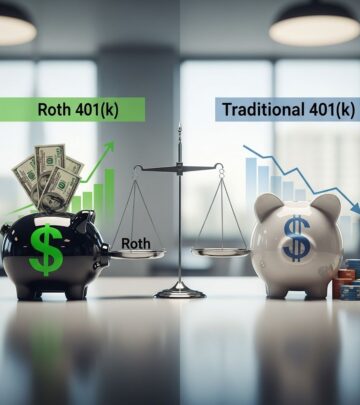
Traditional 401(k) plans dominate workplace retirement offerings, with withdrawals fully taxable. In contrast, Roth 401(k) contributions use after-tax dollars, allowing qualified distributions—after age 59½ and a five-year holding period—to emerge tax-free, including earnings.
| Feature | Traditional 401(k) | Roth 401(k) |
|---|---|---|
| Contribution Taxes | Pre-tax (deductible) | After-tax |
| Tax on Withdrawals | Taxed as ordinary income | Tax-free if qualified |
| Earnings Growth | Tax-deferred | Tax-free if qualified |
| RMDs Apply | Yes, starting at age 73 | Yes, but can roll to Roth IRA |
This comparison highlights why diversifying between traditional and Roth options can optimize after-tax retirement income.
Navigating Early Withdrawals: Penalties and Exceptions
Accessing 401(k) funds before age 59½ triggers a 10% early withdrawal penalty on top of income taxes, designed to discourage premature use. Employers typically withhold 20% for federal taxes on such distributions, regardless of your bracket.
- Hardship Withdrawals: Permitted for specific needs like medical emergencies, home purchases, or funeral costs; still taxable but may avoid the 10% penalty if plan rules allow.
- Substantially Equal Periodic Payments (SEPP): Penalty-free if taken as a series of payments over your life expectancy.
- Exceptions: Include disability, certain medical expenses exceeding 7.5% of adjusted gross income, or first-time homebuyer costs up to $10,000 (via rollover to IRA).
For instance, a $100,000 early withdrawal at a 24% tax rate could net just $66,000 after $20,000 withholding, $24,000 income tax, and $10,000 penalty. Always consult IRS Form 5329 for reporting and exceptions.
Required Minimum Distributions: What You Must Know
Starting at age 73, account owners must take Required Minimum Distributions (RMDs) annually, calculated by dividing your account balance by a life expectancy factor from IRS Uniform Lifetime Tables. Failure incurs a 25% excise tax on the undistributed amount, reducible to 10% if corrected timely under SECURE 2.0 Act provisions.
- First RMD due by April 1 following the year you turn 73, but delaying means two distributions in one tax year, potentially bumping your bracket.
- Only one RMD per year required; heirs inherit RMD obligations post-owner’s death.
- Roth 401(k)s also face RMDs unless rolled into a Roth IRA.
Strategic timing, like aligning your first RMD with a lower-income year, can mitigate tax impacts.
Rollovers and Their Tax Implications
Changing jobs or retiring often prompts 401(k) rollovers to IRAs or new plans. Direct rollovers—trustee-to-trustee transfers—avoid taxes and withholding. Indirect rollovers, where funds are sent to you, mandate 20% withholding and a 60-day window to deposit the full amount (including withheld taxes) into another qualified account.
Failure to complete an indirect rollover makes the distribution taxable, plus the 10% penalty if under 59½. Lump-sum distributions for those born before 1936 may qualify for special tax treatments via Form 4972.
Strategies to Minimize Taxes on 401(k) Distributions
Proactive planning preserves more of your nest egg:
- Bracket Management: Withdraw just enough to fill lower tax brackets, blending with Social Security or pensions.
- Roth Conversions: Convert traditional funds to Roth IRA in low-income years, paying taxes upfront for future tax-free growth (watch for Medicare premium surcharges).
- Qualified Charitable Distributions (QCDs): Post-70½, direct up to $105,000 annually to charities, satisfying RMDs tax-free.
- Net Unrealized Appreciation (NUA): For company stock in 401(k), transfer in-kind to brokerage for favorable capital gains treatment.
These tactics require modeling with tax software or a professional advisor.
State Taxes and Additional Considerations
Federal rules set the baseline, but states vary: some exempt retirement income, others tax it fully. Factor in local taxes too. Also, 401(k) distributions count toward Medicare Part B/D premiums via IRMAA surcharges and may affect Social Security taxation.
Frequently Asked Questions
Are 401(k) withdrawals taxed as ordinary income?
Yes, traditional 401(k) distributions are taxed at your ordinary federal income tax rate, added to other income.
What is the 20% withholding on 401(k) distributions?
Mandatory federal withholding on taxable distributions paid directly to you; it may not cover your full liability.
Can I avoid RMD penalties?
Yes, by taking timely distributions; corrections within two years reduce the penalty from 25% to 10%.
Do Roth 401(k) withdrawals face taxes?
Qualified withdrawals are tax-free; non-qualified incur taxes and penalties on earnings.
How do I report 401(k) taxes?
Form 1099-R reports distributions; include on Form 1040, using Form 5329 for penalties or exceptions.
Planning for Tax-Efficient Retirement Income
Integrate 401(k) strategies with broader retirement planning: delay Social Security for higher benefits, harvest losses in taxable accounts, and consider annuities for steady income. Regularly review contributions to leverage Saver’s Credit if eligible, potentially offsetting up to $2,000 in taxes.
For example, a $20,000 contribution in the 22% bracket saves $4,400 immediately, compounding tax-free until withdrawal. High earners benefit most from deferral, anticipating lower retirement rates.
Consult IRS Publication 575 for pension details and a tax professional for personalized advice, as rules evolve (e.g., SECURE 2.0 updates).
References
- 401(k) Resource Guide – Plan Participants – General Distribution Rules — Internal Revenue Service. 2023-01-15. https://www.irs.gov/retirement-plans/plan-participant-employee/401k-resource-guide-plan-participants-general-distribution-rules
- How to Withdraw 401(k) Money and Minimize Taxes in Retirement — Prudential Financial. 2024-05-20. https://www.prudential.com/financial-education/how-to-get-401k-money-without-owing
- Taxes on 401(k) withdrawal: 401(k) distribution rules — H&R Block. 2024-08-10. https://www.hrblock.com/tax-center/income/retirement-income/taxes-on-401k-distribution/
- 401k Tax Rules: Contributions vs withdrawals — OneMain Financial. 2023-11-05. https://www.onemainfinancial.com/resources/money-management/401k-tax-rules
- The Tax Benefits of Your 401(k) Plan — TurboTax by Intuit. 2024-02-28. https://turbotax.intuit.com/tax-tips/investments-and-taxes/the-tax-benefits-of-your-401k-plan/L8QHCzbiO
Similar Articles








Read full bio of medha deb