401(k) Rollover to an IRA: Key Reasons and Benefits
Explore compelling reasons to roll over your 401(k) to an IRA and maximize your retirement savings potential.
Why Roll Over Your 401(k) to an IRA?
When you change jobs or retire, one of the most important financial decisions you’ll face is what to do with your 401(k) plan. Many people don’t realize they have options beyond leaving their money with their former employer or cashing out entirely. Rolling over your 401(k) to an Individual Retirement Account (IRA) is a popular choice that can offer significant advantages for your long-term financial health. Understanding the reasons behind a 401(k) to IRA rollover can help you make an informed decision that aligns with your retirement goals and financial situation.
Understanding 401(k) Rollovers
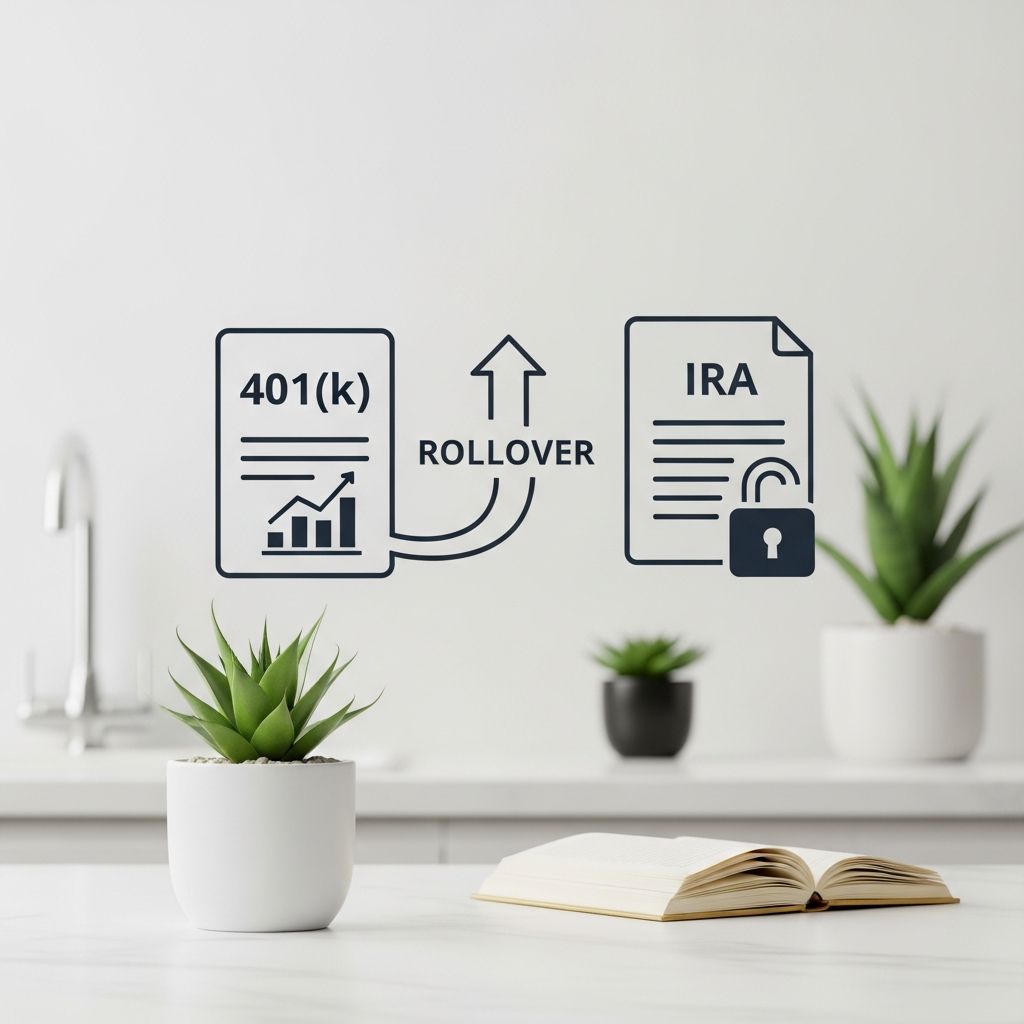
A 401(k) rollover is a direct transfer of funds from your 401(k) plan to another retirement account, typically an IRA. The IRS allows you 60 days from the date you receive a distribution to complete the rollover, though a direct rollover—where funds move electronically between accounts—is the preferred method as it avoids potential tax complications and withholding requirements.
Lower Investment Fees and Costs
One of the most compelling reasons to roll over your 401(k) to an IRA is the potential for significantly lower investment fees. Many employer-sponsored 401(k) plans charge administrative fees, investment management fees, and other expenses that can substantially eat into your retirement savings over time.
IRAs, particularly those opened at discount brokerages, often offer:
– Much lower or zero account maintenance fees- Access to low-cost index funds and exchange-traded funds (ETFs)- Transparent fee structures with no hidden charges- The ability to negotiate lower fees based on your account balance
Over decades of retirement saving, these fee differences can amount to tens of thousands of dollars in additional retirement income. This cost advantage alone makes IRAs attractive for those seeking to preserve more of their hard-earned savings.
Expanded Investment Options and Control
Your 401(k) plan typically limits your investment choices to a pre-selected menu of mutual funds and other investment vehicles chosen by your employer. This restricted selection may not align with your personal investment philosophy, risk tolerance, or retirement timeline.
Rolling over to an IRA provides substantially more investment flexibility:
– Access to thousands of individual stocks, bonds, and mutual funds- The ability to invest in ETFs with specific sector or geographic focus- Options for dividend-focused strategies or growth-oriented portfolios- Potential for real estate investment through self-directed IRAs- Freedom to adjust your asset allocation without plan restrictions
This expanded control allows you to build a truly customized retirement portfolio that reflects your unique financial goals and investment preferences.
Simplified Beneficiary and Estate Planning
IRAs offer more straightforward and flexible beneficiary options compared to many 401(k) plans. With an IRA, you can:
– Designate multiple beneficiaries with specific percentage allocations- Update beneficiaries easily without complex administrative procedures- Name contingent beneficiaries to ensure proper wealth transfer- Provide clear instructions for your heirs regarding account management- Facilitate smoother estate administration upon your passing
The clarity and flexibility of IRA beneficiary designations can provide peace of mind and help ensure your retirement savings pass to your intended recipients exactly as you wish.
Consolidating Multiple Retirement Accounts
If you’ve worked for multiple employers throughout your career, you may have several 401(k) accounts scattered across different companies. Rolling these accounts into a single IRA creates a consolidated retirement portfolio that’s easier to manage and monitor.
Benefits of consolidation include:
– One account statement instead of multiple statements to track- Simplified required minimum distributions (RMDs) in retirement- Easier rebalancing across your entire retirement portfolio- Reduced administrative burden and complexity- Clearer picture of your total retirement savings
Consolidation also makes it simpler to implement a cohesive investment strategy and reduces the likelihood of overlooking accounts when making important financial decisions.
Tax Planning Flexibility
Rolling over to an IRA can provide meaningful tax planning advantages. Depending on your situation, you may have the option to roll funds into either a Traditional IRA or a Roth IRA.
Traditional IRA rollovers allow you to:
– Maintain tax-deferred growth on your retirement savings- Preserve the original tax treatment of your contributions- Avoid immediate tax liability on the rollover transaction- Continue deferring taxes until distributions in retirement
Roth IRA conversions offer alternative benefits:
– Tax-free growth on your retirement savings going forward- Tax-free qualified withdrawals in retirement- Greater flexibility for heirs who inherit the account- No required minimum distributions during your lifetime
The flexibility to choose your IRA type allows you to align your rollover strategy with your overall tax situation and long-term financial objectives.
Direct Rollover vs. Indirect Rollover
Understanding the two rollover methods is critical to avoiding unnecessary taxes and penalties.
Direct Rollover: The preferred method involves a direct electronic transfer of assets from your 401(k) to your IRA without you ever touching the money. Your 401(k) plan administrator sends the funds directly to your new IRA provider. This method avoids mandatory 20% withholding tax and the risk of failing to complete the rollover within 60 days.
Indirect Rollover: Also called a 60-day rollover, this method involves your 401(k) plan sending you a check for the funds. You then have 60 days to deposit the money into an IRA. However, your former employer is required to withhold 20% for taxes, meaning you’ll need to contribute the withheld amount from other sources to roll over your complete balance. This method carries greater risk of missing the 60-day deadline, which would result in the distribution being treated as taxable income.
The 60-Day Rollover Rule
If you receive a distribution check from your 401(k), it’s critical to understand the IRS’s 60-day rollover rule. You have exactly 60 days from the date you receive the distribution to deposit the funds into an eligible retirement account. Failing to meet this deadline results in the entire distribution being treated as taxable income, plus a 10% early withdrawal penalty if you’re under age 59½.
Important considerations include:
– The clock starts from the date you receive the distribution- Weekends and holidays count toward the 60-day window- Only one indirect rollover is permitted per 12-month period per IRA- Direct rollovers are not subject to the 60-day rule or the one-rollover-per-year limitation
Account Balance Considerations
Your current 401(k) balance may affect your rollover options and timeline. If your account balance is less than $7,000 and you’ve left the company, your former employer may require you to move it. Balances under $1,000 can be automatically cashed out or moved to an IRA selected by your employer.
For larger balances, you typically have more flexibility regarding timing, though maintaining the account with your former employer may result in ongoing fees.
Steps to Complete Your 401(k) to IRA Rollover
Step 1: Decide Your Account Type
Determine whether you want to roll over to a Traditional IRA or Roth IRA. This decision depends on your current tax situation and retirement income expectations.
Step 2: Choose Your IRA Provider
Select a reputable brokerage or financial institution to open your IRA. Compare providers based on fees, investment options, and customer service.
Step 3: Open Your IRA Account
Complete the account application process with your chosen provider. Most institutions allow online account opening within minutes.
Step 4: Initiate the Direct Rollover
Contact your 401(k) plan administrator and request a direct rollover to your new IRA. Provide them with your new IRA account information. Specify that you want a direct rollover to avoid the 20% withholding.
Step 5: Allocate Your Funds
Once funds arrive in your IRA, invest them according to your investment strategy. Many new IRA accounts initially hold cash, so you’ll need to actively place trades to implement your desired portfolio.
Important Considerations Before Rolling Over
Employer Match and Vesting: If your 401(k) includes employer matching contributions, ensure they’re fully vested before leaving employment. Only vested amounts can be rolled over.
Loans Against Your 401(k): If you have an outstanding 401(k) loan, you must pay it back in full when you leave employment, or it will be treated as a taxable distribution.
After-Tax Contributions: If you made after-tax contributions to your 401(k), these require special handling during a rollover. Consult a tax professional about properly treating these amounts.
Roth Conversions: Converting a traditional 401(k) to a Roth IRA creates a taxable event. You’ll owe taxes on the converted amount in the year of conversion, so ensure you understand the tax implications before proceeding.
Frequently Asked Questions
Q: How long does a 401(k) to IRA rollover take?
A: Direct rollovers typically complete within 5-10 business days, though some transfers may take up to 2-3 weeks depending on the institutions involved.
Q: Can I rollover my 401(k) while still employed?
A: This depends on your plan. Some plans allow in-service rollovers for employees age 59½ or older, but most require you to leave employment or retire first.
Q: What if I have a Roth 401(k)?
A: A Roth 401(k) can only be rolled over to a Roth IRA. Rolling it into a Traditional IRA would trigger immediate taxation. If your Roth 401(k) includes employer matching (which is treated as traditional contributions), you’ll need separate Traditional and Roth IRAs.
Q: Is there a penalty for rolling over my 401(k)?
A: No, direct rollovers incur no penalties. However, indirect rollovers are subject to 20% mandatory withholding and a 10% early withdrawal penalty if you’re under 59½ and don’t complete the rollover within 60 days.
Q: Can I still access my money after rolling over to an IRA?
A: Your money remains accessible, but early withdrawals before age 59½ typically incur a 10% penalty plus income taxes, with limited exceptions for hardship situations.
When to Keep Your 401(k) Instead of Rolling Over
While rolling over offers many advantages, keeping your 401(k) may be preferable in certain situations:
– Your plan offers unique investment options not available elsewhere- You need ongoing access to loans against your retirement savings- Your plan has exceptionally low fees- You plan to retire before age 59½ (IRAs have limited penalty-free withdrawal options)- You’re concerned about creditor protection (401(k)s often have stronger creditor protections)
Evaluate your specific circumstances before making your rollover decision.
Conclusion
Rolling over your 401(k) to an IRA can be a smart financial move that offers lower fees, greater investment control, tax planning flexibility, and simplified account management. By understanding the rollover process, taking advantage of direct transfers, and carefully evaluating your options, you can make a decision that enhances your retirement security and aligns with your long-term financial goals.
Whether you’re changing jobs, retiring, or simply seeking better retirement account management, a 401(k) to IRA rollover deserves serious consideration as part of your comprehensive financial strategy.
References
- How To Roll Over Your 401(k) In 5 Easy Steps — Bankrate. 2024. https://www.bankrate.com/retirement/401k-rollover-guide/
- 401k Rollover to IRA: A Comprehensive Guide for US Expats — Titan Wealth International. 2024. https://titanwealthinternational.com/learn/401k-rollover-ira/
- Rollovers of retirement plan and IRA distributions — Internal Revenue Service. 2024. https://www.irs.gov/retirement-plans/plan-participant-employee/rollovers-of-retirement-plan-and-ira-distributions
- How to roll over a 401(k): What to do with an old 401(k) — Fidelity Investments. 2024. https://www.fidelity.com/viewpoints/retirement/what-to-do-with-an-old-401k
- How to roll over your 401(k) directly into an IRA — Charles Schwab. 2024. https://www.schwab.com/resource/how-to-roll-over-401k
Similar Articles








Read full bio of Sneha Tete