401k Rollover: Step-By-Step Guide For 2025
Master the process of transferring your 401k to an IRA or new plan with step-by-step advice to preserve your retirement savings tax-free.

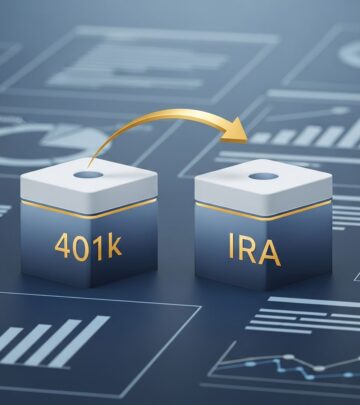
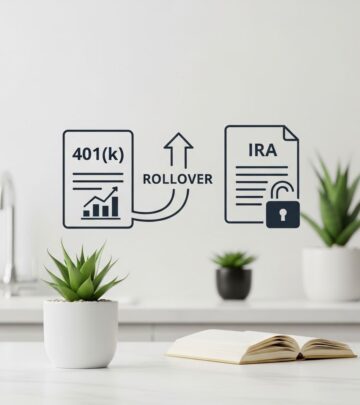
Transferring funds from a 401k plan represents a pivotal decision for anyone navigating career changes or retirement planning. This process, known as a rollover, enables individuals to shift assets from an employer-sponsored 401k into another qualified retirement vehicle, such as an Individual Retirement Account (IRA) or a new employer’s plan, while typically preserving tax-deferred growth.
Understanding the Fundamentals of 401k Rollovers
A 401k rollover occurs when retirement savings accumulated in a workplace-sponsored plan are moved to a different eligible account. This action is often triggered by events like job changes, retirement, or plan termination. The primary goal is to maintain the tax-advantaged status of these funds, avoiding immediate taxation or penalties.
Key benefits include expanded investment choices, potentially lower fees, and consolidated account management. Unlike cashing out, which incurs taxes and early withdrawal penalties (generally 10% if under age 59½), a proper rollover keeps savings intact for future growth.
Eligibility Requirements for Initiating a Rollover
Not everyone can roll over their 401k at any time. Eligibility hinges on a ‘distributable event,’ most commonly the end of employment with the sponsoring employer. Other triggers may include reaching age 59½ while still employed or full plan termination.
Plans outline specifics in their Summary Plan Description (SPD). Exceptions to eligible distributions include required minimum distributions (RMDs) after age 73 or hardship withdrawals. For small balances under $7,000 (depending on plan rules), employers might force a distribution or automatic rollover to an IRA.
- Confirm separation from service or retirement.
- Review plan documents for any restrictions.
- Verify balance meets plan’s cash-out threshold if applicable.
Exploring Your Rollover Destination Options
Deciding where to send your 401k funds requires weighing factors like fees, investment variety, and accessibility. Common choices include:
| Option | Pros | Cons |
|---|---|---|
| Rollover IRA | Broader investments, low fees, full control | No loan options, RMDs at 73 |
| New Employer’s 401k | Possible matches, loans available | Limited choices, higher fees sometimes |
| Leave in Old Plan | Simplicity, creditor protection | Restricted access, forgotten accounts |
| Cash Out (Avoid) | Immediate cash | Taxes + 10% penalty |
An IRA often appeals due to flexibility, especially with providers offering low-cost index funds. Roth conversions from traditional 401ks to Roth IRAs are possible but trigger taxable income on the converted amount.
Direct Rollover: The Recommended Approach
In a direct rollover, assets transfer straight from the old 401k custodian to the new account without your involvement beyond initiation. This method, also called a trustee-to-trustee transfer, eliminates tax withholding and penalty risks.
To execute:
- Contact your new IRA provider to open the account.
- Request the rollover form from your old plan administrator.
- Specify direct transfer and provide new account details.
- Monitor receipt via statements or Form 5498.
No 1099-R taxable amount is reported for direct rollovers; Box 7 codes ‘G’ on the form. Vanguard and similar firms charge no processing fees, though the old plan might.
Indirect Rollover: Proceed with Extreme Caution
An indirect rollover sends funds to you first, requiring redeposit into a qualified account within 60 days. Plans withhold 20% for federal taxes on taxable portions, so you must replace that from other sources to complete a full rollover.
Risks include missing the deadline, treated as a taxable distribution, or using the once-per-12-months IRA rollover rule limit. Only one indirect IRA rollover allowed yearly. Report on Form 1040: full amount on line 5a, taxable on 5b if incomplete, noting ‘rollover’.
Navigating Traditional vs. Roth 401k Rollovers
Match account types to avoid taxes: traditional 401k to traditional IRA, Roth 401k to Roth IRA. Converting traditional to Roth requires paying taxes on pre-tax amounts as income.
For Roth 401k holders, direct rolls to Roth IRA maintain tax-free status seamlessly. Always confirm with providers, as mismatches invalidate rollovers.
Step-by-Step Process to Complete Your Rollover
Follow these structured steps for a smooth transfer:
- Assess and Plan: Evaluate old plan fees vs. new options.
- Open New Account: Choose IRA or new 401k; fund minimally if required.
- Initiate Contact: Call old provider, request rollover paperwork.
- Choose Method: Opt for direct; provide receiving account info.
- Track Progress: Expect 1-4 weeks; follow up if delayed.
- Review Tax Forms: Use 1099-R and 5498 for records.
Fidelity outlines similar steps: open IRA, contact old plan, deposit funds.
Tax Reporting Essentials Post-Rollover
Even nontaxable rollovers generate IRS forms. Direct rollovers show on 1099-R with code G (Box 7), gross in Box 1, Box 2a often blank or zero.
On Form 1040:
- Line 5a: Total distribution.
- Line 5b: Taxable amount (usually $0 for direct); write ‘Rollover’.
Indirect requires reporting withholding (Box 4 of 1099-R) on Form 1040 line 25b. IRA custodians issue Form 5498 confirming receipt—for records only.
Frequent Pitfalls and Prevention Strategies
Avoid these errors to safeguard your nest egg:
| Common Mistake | Prevention Strategy |
|---|---|
| Selecting indirect rollover | Always prioritize direct transfers. |
| Incompatible accounts | Match traditional/Roth types. |
| Missing 60-day window | Use direct method exclusively. |
| Forgetting small balances | Monitor for auto-cashouts. |
| High-fee destinations | Compare expense ratios. |
Long-Term Management After Rollover
Post-rollover, actively manage your IRA. Diversify investments, rebalance annually, and monitor for RMDs starting at age 73. Expats should track treaty benefits to avoid double taxation.
Consolidation simplifies oversight; review performance quarterly. Low-cost providers like Vanguard enhance returns via index funds.
FAQs: 401k Rollover Essentials
Q: Can I roll over while still employed?
A: Generally no, unless age 59½ or plan allows in-service withdrawals.
Q: Are there fees involved?
A: Receiving firms like Vanguard waive them; check old plan.
Q: What if my balance is small?
A: Plans may auto-roll to IRA if under threshold.
Q: Can I convert to Roth during rollover?
A: Yes, but pay taxes on converted pre-tax funds.
Q: How long does it take?
A: Typically 1-3 weeks for direct.
Final Thoughts on Optimizing Your Strategy
Strategic rollovers empower better retirement outcomes. Prioritize direct methods, align account types, and select cost-effective homes for your savings. Consult tax professionals for complex scenarios like Roth conversions or expat status. Proactive planning today compounds into substantial future security.
References
- 401k Rollover to IRA: A Comprehensive Guide for US Expats — Titan Wealth International. 2023. https://titanwealthinternational.com/learn/401k-rollover-ira/
- 401(k) Rollovers – FAQs for Retirement Investors — Employee Fiduciary. 2024-01-15. https://www.employeefiduciary.com/blog/401k-rollovers-faq
- Understanding 401(k) to IRA Rollover Rules — Vanguard Investor. 2025-06-01. https://investor.vanguard.com/investor-resources-education/education/401k-to-ira-rollover-rules
- How to roll over a 401(k): What to do with an old 401(k) — Fidelity Investments. 2024-11-20. https://www.fidelity.com/viewpoints/retirement/what-to-do-with-an-old-401k
- Rollover Your IRA | 401k Rollover Steps — Fidelity Investments. 2025-02-10. https://www.fidelity.com/retirement-ira/401k-rollover-ira-steps
Similar Articles








Read full bio of Sneha Tete