401(k) Plan: Guide to Retirement Savings
Comprehensive guide to 401(k) plans, employer-sponsored retirement savings, and investment options.

A 401(k) plan is one of the most popular employer-sponsored retirement savings vehicles available to American workers today. Named after Section 401(k) of the Internal Revenue Code, this qualified retirement plan allows employees to contribute a portion of their salary to individual accounts on a pre-tax or post-tax basis. Understanding how 401(k) plans work, their benefits, and their limitations is crucial for anyone looking to build a secure financial future.
What Is a 401(k) Plan?
A 401(k) plan is a tax-advantaged retirement savings plan sponsored by employers that allows eligible employees to make salary deferrals—contributions from their paychecks—into the plan. The plan itself holds and invests these contributions on behalf of employees. Unlike traditional pension plans that guarantee a specific benefit amount at retirement, 401(k) plans are defined-contribution plans where the final benefit depends on the contributions made and the investment performance of those contributions over time.
The plan is named after the section of the Internal Revenue Code that created it, introduced in 1978 and made available to employees starting in 1981. Since then, it has become the primary retirement savings vehicle for millions of American workers, largely replacing traditional pension plans in the private sector.
How 401(k) Plans Work
Understanding the mechanics of 401(k) plans is essential for maximizing their benefits. Here’s how the process typically works:
- Employee Contributions: Employees authorize their employers to deduct a specified amount or percentage from each paycheck and deposit it into their 401(k) account.
- Investment Management: The employee typically selects how their contributions are invested from a menu of options provided by the plan, such as mutual funds, target-date funds, and stable value funds.
- Tax Deferral: Contributions to a traditional 401(k) are made with pre-tax dollars, reducing the employee’s current taxable income and allowing earnings to grow tax-deferred until withdrawal.
- Employer Contributions: Many employers offer matching contributions, where they contribute a certain percentage matching what the employee contributes, up to a specified limit.
- Vesting: Employees typically own 100% of their own contributions immediately, but employer contributions may vest over time according to a vesting schedule.
Contribution Limits and Rules
The IRS sets annual limits on how much employees can contribute to their 401(k) plans. These limits are adjusted periodically for inflation. For 2024, the contribution limit for employees is $23,500, with an additional catch-up contribution of $7,500 allowed for employees age 50 and older, bringing the total to $31,000 for those in that age group.
Employers can also contribute to 401(k) plans on behalf of employees, either through matching contributions or profit-sharing contributions. The total combined contribution limit for employers and employees cannot exceed $69,000 in 2024 (or $76,500 for those age 50 and older with the catch-up contribution).
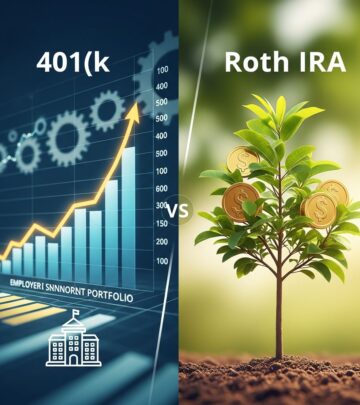
Traditional 401(k) vs. Roth 401(k)
There are two main types of 401(k) plans offered by employers: traditional and Roth. Understanding the differences is important for tax planning:
Traditional 401(k)
- Contributions are made with pre-tax dollars, reducing current taxable income
- Investment earnings grow tax-deferred
- Withdrawals in retirement are taxed as ordinary income
- Required minimum distributions (RMDs) begin at age 73
- Ideal for those expecting to be in a lower tax bracket in retirement
Roth 401(k)
- Contributions are made with after-tax dollars, providing no immediate tax deduction
- Investment earnings grow tax-free
- Qualified withdrawals in retirement are completely tax-free
- Required minimum distributions still apply at age 73
- Ideal for those expecting to be in a higher tax bracket in retirement
Employer Matching Contributions
One of the most valuable features of 401(k) plans is employer matching contributions. Many employers offer to match a portion of what employees contribute, essentially providing free money for retirement savings. A common matching formula is a 100% match up to 3% of salary—meaning if an employee contributes 3% of their salary, the employer contributes an additional 3%. Some employers may offer more generous matches, such as 50% of contributions up to 6% of salary.
To maximize retirement savings, employees should contribute enough to receive the full employer match, as this represents an immediate return on investment. Failing to take full advantage of employer matching is essentially leaving free money on the table.
Investment Options
401(k) plans typically offer a range of investment options for employees to choose from. Common options include:
- Mutual Funds: Both actively managed and passively managed index funds investing in stocks, bonds, and money market instruments
- Target-Date Funds: Funds that automatically adjust their asset allocation based on a projected retirement date, becoming more conservative as retirement approaches
- Stable Value Funds: Conservative investment options that provide principal protection and modest, stable returns
- Company Stock: Some plans allow employees to invest in their employer’s stock, though financial advisors often caution against over-concentrating in a single stock
- Self-Directed Brokerage Windows: Some plans allow employees to invest in a broader range of securities through a brokerage account within the plan
Vesting Schedules
Vesting refers to the point at which an employee has the right to keep employer contributions to their 401(k) plan. While employees always own 100% of their own contributions immediately, employer contributions typically vest according to a schedule. Common vesting schedules include:
- Cliff Vesting: Employees become 100% vested in employer contributions after a specific period, typically three years
- Graded Vesting: Employees vest gradually over time, such as 20% per year over five years
- Immediate Vesting: Some employers provide immediate vesting of employer contributions
Understanding vesting schedules is important when considering job changes, as leaving an employer before contributions are fully vested means forfeiting the unvested portion of employer contributions.
Tax Advantages
401(k) plans offer significant tax advantages that make them attractive retirement savings vehicles:
- Tax Deferral: In traditional 401(k)s, contributions reduce current taxable income, potentially resulting in lower income taxes during working years
- Tax-Deferred Growth: Investment earnings accumulate tax-free until withdrawal, allowing for more compounding growth over time
- Tax-Free Growth (Roth): Roth 401(k) contributions grow completely tax-free, with no taxes owed on qualified withdrawals
- Employer Match: Employer matching contributions are not counted toward the employee’s taxable income in the contribution year
Withdrawal Rules and Penalties
While 401(k) plans are designed for long-term retirement savings, the IRS has established rules regarding when funds can be withdrawn:
Early Withdrawal Penalties
Withdrawals before age 59½ are generally subject to a 10% early withdrawal penalty, plus ordinary income taxes on the withdrawn amount. However, several exceptions apply, including:
- Substantially equal periodic payments following separation from service
- Disability or death of the account holder
- Hardship withdrawals for certain qualifying expenses
- The Rule of 55: Penalty-free withdrawals from a plan with your current employer if you separate from service at age 55 or later
- SEPP (Substantially Equal Periodic Payments): Taking a series of substantially equal payments
Required Minimum Distributions
Beginning at age 73, plan participants must start taking required minimum distributions (RMDs) based on life expectancy tables. These distributions ensure that the government receives tax revenue on the accumulated, tax-deferred funds. Failure to take RMDs results in a significant excise tax on the undistributed amount.
Loans and Hardship Withdrawals
Many 401(k) plans allow participants to borrow from their accounts, typically up to 50% of the account balance (with a maximum of $50,000). Loans must be repaid with interest, typically through payroll deductions. While this provides flexibility, borrowing from retirement accounts can derail long-term savings goals.
Hardship withdrawals are also available from many plans for situations involving immediate and heavy financial need, such as medical expenses, education costs, or prevention of foreclosure. These withdrawals are still subject to income taxes and may be subject to the early withdrawal penalty if the participant is under age 59½.
Portability and Rollovers
When employees change jobs, they can roll over their 401(k) balance to a new employer’s plan or to an Individual Retirement Account (IRA). This rollover allows funds to continue growing on a tax-deferred basis without interruption. It’s important to handle rollovers correctly to avoid unintended tax consequences, such as a 20% withholding tax if funds aren’t properly rolled over within 60 days.
Safe Harbor and SIMPLE Plans
Certain employers, particularly small businesses, may establish Safe Harbor 401(k) plans or SIMPLE IRA plans as alternatives. Safe Harbor plans require employers to make mandatory contributions (either matching or non-elective), while SIMPLE plans have lower administrative requirements and contribution limits but are limited to employers with 100 or fewer employees.
Frequently Asked Questions
Q: What is the difference between a 401(k) and an IRA?
A: A 401(k) is employer-sponsored and often includes employer matching contributions, while an IRA is individually established. 401(k)s typically have higher contribution limits and different distribution rules. IRAs offer more investment flexibility and control.
Q: Can I contribute to both a 401(k) and an IRA?
A: Yes, you can contribute to both, though if you participate in a 401(k), the deductibility of traditional IRA contributions may be limited depending on your income level.
Q: What happens to my 401(k) if I leave my job?
A: You typically have several options: leave funds in your former employer’s plan, roll over to your new employer’s plan, roll over to an IRA, or withdraw the funds (subject to taxes and penalties if under age 59½).
Q: Can I withdraw from my 401(k) before retirement?
A: Early withdrawals before age 59½ are generally subject to a 10% penalty plus income taxes. However, exceptions exist for hardship withdrawals, disability, or specific circumstances like the Rule of 55.
Q: What is a safe harbor 401(k)?
A: A safe harbor 401(k) is a plan where employers make mandatory contributions to employee accounts, which simplifies compliance requirements and eliminates certain non-discrimination tests.
Q: How much should I contribute to my 401(k)?
A: Financial experts generally recommend contributing at least enough to capture your full employer match, then gradually increasing contributions. A common rule of thumb is to save 10-15% of gross income for retirement across all accounts.
References
- 401(k) Plan Overview — Internal Revenue Service (IRS). 2024. https://www.irs.gov/retirement-plans/401k-plans
- 2024 Contribution Limits for Retirement Plans — Internal Revenue Service (IRS). 2024. https://www.irs.gov/retirement-plans/plan-participant-employee/2024-contribution-limits-for-retirement-plans
- Roth vs. Traditional 401(k): What’s the Difference? — Vanguard Retirement Guides. 2024. https://retirementplans.vanguard.com/
- Retirement Plans FAQs Regarding Required Minimum Distributions — Internal Revenue Service (IRS). 2024. https://www.irs.gov/retirement-plans/retirement-plans-faqs-regarding-required-minimum-distributions-rmds
- Hardship Distributions — Internal Revenue Service (IRS). 2024. https://www.irs.gov/retirement-plans/plan-participant-employee/hardship-distributions
- 401(k) Plan Loans — Department of Labor Employee Benefits Security Administration. 2024. https://www.dol.gov/agencies/ebsa/about-ebsa/our-activities/resource-centers/publications/understanding-retirement-accounts
Similar Articles








Read full bio of medha deb