401k Options When Switching Jobs: 4 Smart Choices
Discover essential strategies to manage your 401k during a job change, ensuring tax-free growth and long-term security.
401k Options When Switching Jobs
Changing jobs marks a pivotal moment in your career, but it also presents critical choices for your retirement savings. A 401k plan accumulated over years of contributions requires careful handling to preserve its tax-advantaged growth and avoid costly mistakes. This guide outlines comprehensive strategies, drawing from established financial practices to help you decide whether to roll over to an IRA, transfer to a new employer’s plan, or maintain the status quo.
Understanding Your 401k at a Career Transition
When you leave an employer, your vested 401k balance becomes yours to manage. Vesting means the employer-matched funds you earned are now fully accessible, separate from any unvested portions that may revert to the plan. Federal regulations allow several paths forward, each with unique benefits and risks related to taxes, fees, and investment control.
Key factors influencing your decision include account balance size, age, tax situation, and the quality of investment options in potential new accounts. For instance, plans with balances under $1,000 may trigger automatic cash-outs, subjecting you to immediate taxes and penalties if not handled promptly. Larger balances offer more flexibility but demand proactive steps to prevent erosion from inflation or poor choices.
Primary Choices for Your Old 401k
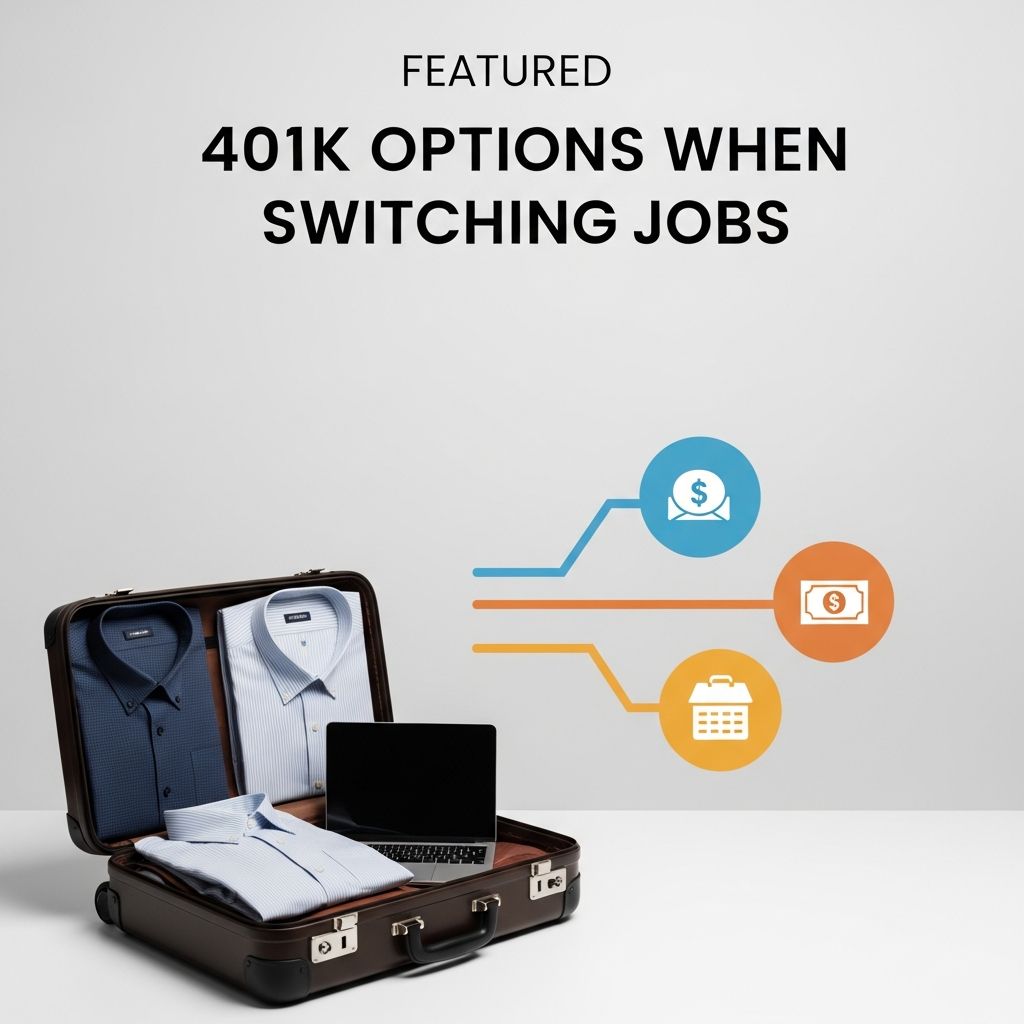
You have four main avenues: direct rollover to an Individual Retirement Account (IRA), consolidation into your new employer’s 401k, leaving funds in the former plan, or cashing out. Each option impacts liquidity, tax deferral, and administrative simplicity differently.
- IRA Rollover: Transfers funds to a personal IRA for broader investment choices and potential lower fees.
- New 401k Consolidation: Moves assets to streamline tracking under one employer plan.
- Leave in Old Plan: Keeps money invested without immediate action, suitable for larger balances.
- Cash Out: Provides immediate access but incurs severe tax consequences—generally inadvisable.
Direct vs. Indirect Rollovers: A Critical Distinction
Opt for a direct rollover whenever possible, where funds move trustee-to-trustee without touching your hands. This avoids mandatory 20% federal withholding and potential 10% early withdrawal penalties for those under 59½. An indirect rollover sends a check to you, requiring full deposit into a qualified account within 60 days, including replacement of withheld taxes from other funds.
Only one indirect rollover per 12-month period is permitted per IRA, adding complexity. Always request direct transfers to safeguard your savings.
Evaluating Rollover to an IRA
Moving your 401k to an IRA unlocks extensive investment options beyond typical employer plan menus, often at competitive costs. Traditional IRAs maintain tax-deferred status, mirroring your 401k, while Roth conversions offer tax-free withdrawals later.
| IRA Type | Tax on Rollover | Future Withdrawals | RMD Age |
|---|---|---|---|
| Traditional IRA | None | Taxed as income | 73 (75 in 2033) |
| Roth IRA (from Traditional 401k) | Paid in conversion year | Tax-free if qualified | None |
| Roth IRA (from Roth 401k) | None | Tax-free if qualified | None |
Roth conversions suit those expecting higher future tax brackets, but require paying taxes upfront on pre-tax amounts. IRAs also provide creditor protection and inheritance flexibility via beneficiary designations.
Pros and Cons of IRA Rollovers
- Pros: Diverse investments (stocks, ETFs, bonds); lower expense ratios; no loan restrictions; easier consolidation of multiple accounts.
- Cons: Loss of certain 401k protections like higher creditor shields; potential surrender fees; RMDs apply to traditional versions.
Compare fees meticulously: some IRAs charge for account maintenance or specific funds, potentially offsetting advantages.
Consolidating into a New Employer’s 401k
If your new job offers a robust 401k, rolling over simplifies oversight by unifying accounts. Confirm eligibility—some plans mandate a waiting period. Direct rollovers preserve tax advantages, allowing continued deferral until withdrawal.
Assess the new plan’s merits: investment variety, expense ratios under 1%, and features like automatic escalation. Not all plans accept rollovers, and liquidating old investments incurs timing risks.
Benefits and Drawbacks
- Benefits: Centralized management; potential creditor protection; delayed RMDs if employed past 73; employer matches resume.
- Drawbacks: Limited options compared to IRAs; plan-specific rules on loans/withdrawals; possible higher fees.
For balances over $7,000, many plans permit leaving funds, but consolidation enhances focus on holistic retirement planning.
Leaving Funds in the Former Employer’s Plan
For substantial balances ($7,000+), retaining assets in the old 401k avoids immediate decisions. Growth continues tax-deferred, with familiar investments.
This suits those disliking the new plan or preferring stability. However, forgotten accounts risk neglect, high fees, or forced distributions. Track via annual statements and consolidate eventually for efficiency.
When This Option Fits Best
- High-quality old plan with low costs.
- Temporary bridge until new plan eligibility.
- Avoiding market timing during rollover.
Avoiding the Pitfalls of Cashing Out
Cashing out delivers quick cash but devastates retirement goals. Expect 20% withholding, plus taxes as ordinary income and 10% penalty if under 59½. A $50,000 distribution could net under $30,000 after deductions, losing compound growth potential.
Small balances (<$1,000) may force this, but deposit checks into an IRA within 60 days to mitigate. Reserve withdrawals for dire emergencies only.
Step-by-Step Action Plan for Seamless Management
- Review Balances and Vesting: Contact old plan administrator for statements and vested totals.
- Compare Options: Analyze new 401k vs. IRA fees, funds, and rules using tools from providers.
- Initiate Direct Rollover: Complete forms for trustee transfer; monitor completion (typically 2-4 weeks).
- Update Beneficiaries: Align designations across accounts.
- Reallocate Investments: Diversify per risk tolerance and timeline.
Tax Strategies and Long-Term Planning
Traditional assets roll tax-free, but Roth conversions demand bracket analysis. Post-59½ hardships or substantially equal payments offer penalty-free access alternatives. Integrate with Social Security, pensions, and other assets for holistic strategy.
Recent IRS rules confirm rollovers to eligible plans/IRAs within 60 days avert penalties, emphasizing direct methods.
Frequently Asked Questions
Can I roll over a 401k to both an IRA and new 401k?
No, funds must go to one destination. Partial rollovers are possible if the plan allows.
What if my balance is under $5,000?
Plans may force distribution or rollover; act swiftly to avoid taxes.
Are Roth 401k rollovers different?
They transfer tax-free to Roth IRAs, preserving after-tax basis and five-year clock considerations.
How long does a rollover take?
Direct: 1-4 weeks; indirect: must complete in 60 days.
Do rollovers affect my tax return?
Direct ones do not; indirects require Form 1099-R reporting.
Advanced Considerations for Diverse Situations
For high earners, ladder Roth conversions across years to manage brackets. Company stock in 401ks qualifies for Net Unrealized Appreciation (NUA) strategies, taxing at capital gains rates upon distribution—consult a tax professional.
Military or government employees may have Thrift Savings Plan (TSP) options with unique rollover rules. Divorce or bankruptcy adds QDRO/creditor layers, favoring IRAs or 401ks based on protections.
In 2026, with RMD age rising, working longer defers distributions in active 401ks, unlike IRAs. Inflation-protected bonds or target-date funds mitigate sequence risk during transitions.
Word count: 1782 (excluding HTML tags).
References
- What to do with your old 401(k) when switching jobs? — Ameriprise Financial. 2024. https://www.ameriprise.com/financial-goals-priorities/retirement/what-to-do-with-your-401k-plan-when-you-change-jobs
- What To Do About Your 401(k) When Changing Jobs — First Business Bank. 2024. https://firstbusiness.bank/resource-center/what-to-do-about-401k-when-changing-jobs/
- Changing Jobs: Should You Roll Over Your 401(k)? — Charles Schwab. 2024. https://www.schwab.com/learn/story/changing-jobs-should-you-roll-over-your-401k
- Should I rollover my 401(k) to my new employer? — John Hancock. 2024. https://www.johnhancock.com/ideas-insights/rolling-over-401k-to-new-employer.html
- Rollover IRA What to do with an old 401(k) — Fidelity Investments. 2024. https://www.fidelity.com/retirement-ira/401k-rollover-options
- Rollovers of retirement plan and IRA distributions — Internal Revenue Service (IRS.gov). 2025-10-01. https://www.irs.gov/retirement-plans/plan-participant-employee/rollovers-of-retirement-plan-and-ira-distributions
Similar Articles





Read full bio of Sneha Tete