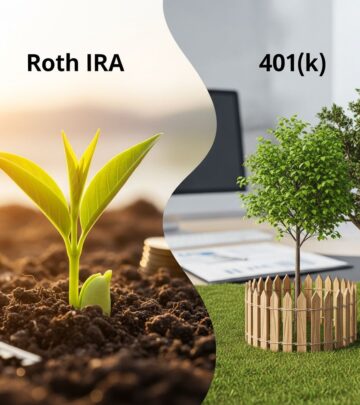
Maximizing Retirement Savings: 401(k) and IRA Strategy Guide
Learn how to leverage both 401(k)s and IRAs to accelerate your retirement savings

Planning for retirement requires understanding the tools available to you. Two of the most powerful vehicles for retirement savings are 401(k) plans and Individual Retirement Accounts (IRAs). While both offer tax advantages and help you build wealth over time, they operate under different rules and structures. The key to a robust retirement strategy often involves leveraging both accounts simultaneously, each serving a distinct role in your long-term financial plan.
Understanding Individual Retirement Accounts (IRAs)
An Individual Retirement Account represents a self-directed retirement savings vehicle that you establish independently. Unlike employer-sponsored plans, an IRA belongs entirely to you and remains under your control regardless of your employment situation. This independence is one of the most appealing aspects of IRAs for many savers.
To open an IRA, you need earned income—either from employment or, in some cases, from a spouse’s income. You fund the account directly from your bank account through personal contributions rather than payroll deductions. This flexibility allows you to save for retirement on your own timeline and terms.
IRAs come in multiple varieties, with Traditional and Roth versions being the most common. Each offers distinct tax treatment and serves different financial situations:
- Traditional IRAs allow you to make tax-deductible contributions in the year you make them, subject to income limits. Your investments grow tax-deferred, meaning you pay no taxes on gains until you withdraw the money in retirement.
- Roth IRAs function in reverse—you contribute after-tax dollars, so you don’t receive an immediate tax deduction. However, all growth and qualified withdrawals are entirely tax-free in retirement.
The Employer-Sponsored 401(k) Plan
A 401(k) is an employer-sponsored retirement plan that functions fundamentally differently from an IRA. Rather than establishing your own account, you participate through your employer’s plan if one is offered. Contributions are made through automatic payroll deductions, reducing the administrative burden on you.
The defining feature of many 401(k) plans is the potential for employer matching contributions. Employers often match a percentage of what you contribute—commonly ranging from 3% to 6% of your salary—which effectively represents free money toward your retirement. This employer match is unavailable with IRAs and represents a significant advantage of workplace plans.
Like IRAs, 401(k) plans can be structured as Traditional or Roth versions. Traditional 401(k) contributions are made with pre-tax dollars, reducing your current taxable income. Roth 401(k)s, available through some employers, allow after-tax contributions with tax-free growth and withdrawals in retirement.
Contribution Limits: A Major Distinction
One of the most significant differences between these accounts lies in how much you can contribute annually. The IRS sets different limits for each type of account to encourage savings while maintaining regulatory balance.
| Account Type | 2025 Limit | 2026 Limit | Age 50+ Catch-Up |
|---|---|---|---|
| Traditional/Roth IRA | $7,000 | $7,500 | $1,000 |
| 401(k) | $23,500 | $24,500 | $8,000 |
| 401(k) Age 60-63 | $34,750 | $35,750 | Special Provision |
The 401(k) contribution limits are substantially higher, making these plans ideal for aggressive savers. If you’re age 50 or older, both account types allow additional catch-up contributions to help you accelerate retirement savings in your peak earning years.
It’s important to note that IRA contribution limits apply across all your IRA accounts combined. If you own multiple Traditional IRAs and a Roth IRA, your total contributions cannot exceed the annual limit across all accounts.
Investment Flexibility and Control
The range of investment options available in each account varies considerably. With an IRA, you choose where to open your account and enjoy significant flexibility in investment selection. You can typically invest in stocks, bonds, exchange-traded funds (ETFs), mutual funds, and other securities based on your provider’s offerings.
401(k) investment options, by contrast, are predetermined by your employer. The plan sponsor selects a curated menu of investment choices—typically mutual funds and target-date funds—from which you must choose. While this limitation reduces options, it can also simplify decision-making for those who prefer a more structured approach.
This difference in investment control makes IRAs attractive for investors with specific investment strategies or preferences that fall outside typical 401(k) menus.
Tax Treatment and Withdrawal Strategies
Both account types offer powerful tax advantages, but in different ways. Traditional accounts—both Traditional IRAs and Traditional 401(k)s—defer taxes on contributions and growth. You reduce your taxable income in the year you contribute and pay taxes when you withdraw funds in retirement, ideally when you’re in a lower tax bracket.
Roth accounts reverse this approach. You pay taxes on contributions upfront but enjoy completely tax-free withdrawals in retirement. This structure works particularly well for younger savers with decades of tax-free growth ahead or for those who expect to be in higher tax brackets in retirement.
The choice between Traditional and Roth depends on your current tax situation and expectations about future tax rates. If you’re in a high tax bracket now and expect lower taxes in retirement, Traditional accounts maximize current deductions. If you expect to be in a higher bracket later, Roth accounts shield you from future tax increases.
Required Minimum Distributions and Access Rules
Both Traditional IRAs and Traditional 401(k)s require you to begin taking required minimum distributions (RMDs) once you reach age 73. This mandatory withdrawal requirement ensures the IRS eventually collects taxes on these tax-deferred funds. However, those still working for the company sponsoring their 401(k) may delay RMDs from that specific plan until retirement, with limited exceptions.
Roth accounts offer more flexibility regarding withdrawals. You can withdraw your Roth IRA contributions at any time tax- and penalty-free. Earnings require more restrictive rules but remain tax-free if you’ve held the account for five years and meet specific IRS exceptions.
For those nearing retirement or already retired, these withdrawal rules significantly impact your cash flow and tax planning.
Employer Matching and Free Money
Perhaps the most compelling reason to maximize 401(k) contributions is the potential employer match. When your employer matches your contributions—typically up to 3-6% of your salary—you’re receiving immediate returns on your investment that IRAs simply cannot match.
This employer match represents free money and an instant return on your contribution. Failing to contribute enough to capture your full employer match means leaving compensation on the table. The math is compelling: if your employer matches 5% of your salary and you don’t contribute that amount, you’re forfeiting 5% of your compensation.
IRAs, by contrast, offer no employer matching. The contributions are entirely dependent on your personal savings capacity.
Portability and Employment Changes
One significant advantage of IRAs is their independence from your employment status. Your IRA belongs entirely to you and travels with you regardless of job changes. You maintain the same account throughout your career, providing consistency and continuity.
401(k) accounts are tied to your employer. When you leave a job, you face several options: leave the funds in the former employer’s plan, roll them over to a new employer’s 401(k) if available, or convert them to a Traditional IRA through a rollover. This flexibility helps preserve your retirement savings, but it requires action on your part.
For those who change jobs frequently, IRAs offer simpler account management since you don’t need to handle rollovers or manage multiple employer plans.
Using Both Accounts Together
The most comprehensive retirement strategy typically involves maximizing contributions to both account types. If your employer offers a 401(k) with matching, you should contribute enough to capture the full match—this is an immediate return you shouldn’t pass up. Then, if you have additional savings capacity, maximize your IRA contributions to gain the additional tax benefits and investment flexibility.
This dual approach provides multiple benefits:
- Maximizes annual tax-advantaged savings across both accounts
- Captures employer matching funds from your 401(k)
- Provides investment flexibility through your IRA
- Offers diversified tax treatment if you use both Traditional and Roth accounts
- Ensures portability through your IRA regardless of employment changes
Fee Considerations and Cost Efficiency
401(k) plans often feature employer-negotiated investment fees that may be lower than individual IRA fees due to economies of scale. However, some plans include administrative fees that reduce your returns.
IRAs typically offer lower fees overall, particularly if you select a reputable provider and low-cost investment options like index funds. The absence of plan administrative costs in IRAs can lead to better long-term returns, especially over decades of investing.
When comparing accounts, examine the fee structure of your specific 401(k) plan and compare it to IRAs you might open. Lower fees compound into significantly higher retirement savings over time.
Income Limits and Eligibility
Not everyone has access to a 401(k)—eligibility depends entirely on your employer offering a plan and meeting its participation requirements. Self-employed individuals and those working for small employers without 401(k)s must rely on IRAs as their primary retirement savings vehicle.
Conversely, anyone with earned income can establish an IRA, though contribution deductibility in Traditional IRAs phases out at higher income levels if you’re covered by a workplace plan.
These eligibility differences mean you should assess what’s available to you personally rather than assuming both options are available.
Frequently Asked Questions
Can I contribute to both a 401(k) and an IRA in the same year?
Yes, you can contribute to both accounts simultaneously. In fact, this is recommended if you have the financial capacity. The contribution limits are separate, so maximizing both provides significant retirement savings advantages.
What happens to my 401(k) if I leave my job?
You have several options: leave the funds in your former employer’s plan, roll them to your new employer’s plan, or convert them to a Traditional IRA. Rolling to an IRA often provides better investment options and flexibility.
Which account type should I choose for tax purposes?
This depends on your current tax bracket and future expectations. Choose Traditional accounts if you expect lower taxes in retirement; choose Roth if you expect higher taxes later. Many savers benefit from a mix of both.
When can I access my retirement funds without penalties?
Generally, both 401(k)s and IRAs penalize withdrawals before age 59½, with limited exceptions. Roth IRA contributions can be withdrawn anytime penalty-free, but earnings face restrictions.
References
- IRA vs 401(k): Ultimate Retirement Comparison — Capital Bank. 2025. https://www.capitalbank.com/ira-vs-401k-the-ultimate-comparison-for-smarter-retirement-planning-2025-edition/
- IRA vs. 401(k): What’s the difference? — Fidelity Investments. 2025. https://www.fidelity.com/learning-center/smart-money/ira-vs-401k
- IRA versus 401(k): What’s the Difference? — U.S. Bank. 2025. https://www.usbank.com/retirement-planning/financial-perspectives/ira-vs-401k.html
- 401(k) and IRA: What’s the difference? — Principal Financial. 2025. https://www.principal.com/individuals/learn/ways-401k-and-ira-are-same-and-ways-theyre-different
- Roth IRA or traditional IRA or 401(k) — Fidelity Investments. 2025. https://www.fidelity.com/viewpoints/retirement/spender-or-saver
- Roth Comparison Chart — Internal Revenue Service. 2025. https://www.irs.gov/retirement-plans/roth-comparison-chart
- 401(k) vs. IRA? Use both if you can — Vanguard. 2025. https://investor.vanguard.com/investor-resources-education/iras/401k-vs-ira
Similar Articles








Read full bio of medha deb