Understanding 401(k) Employer Match: A Complete Guide
Maximize your retirement savings by understanding how 401(k) employer matches work and why they matter.
What Is a 401(k) Employer Match?
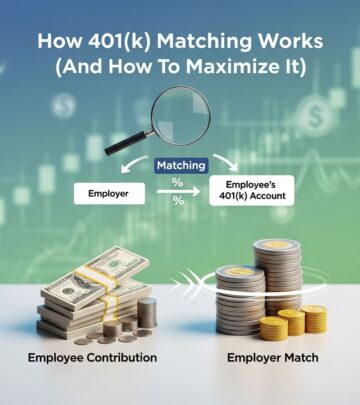
A 401(k) employer match is when a company contributes money to an employee’s retirement account based on how much the employee contributes. Often referred to as “free money,” an employer match represents additional retirement savings that require minimal effort on your part beyond making regular contributions to your 401(k) plan.
Not all 401(k) plans are identical, and understanding the specific features of your plan is essential for maximizing your retirement savings. One of the most important features to evaluate is whether your employer offers a matching contribution and, if so, what the terms of that match are.
How 401(k) Matching Contributions Work
The mechanics of a 401(k) match vary by employer, but the concept remains consistent: your employer agrees to contribute a certain amount to your retirement account based on your contributions. Understanding the different types of matches can help you make informed decisions about how much to contribute to your plan.
Partial Matching
In a partial match, the employer contributes a fraction of what you contribute. For example, an employer might match 50 cents for every dollar you contribute, up to a certain percentage of your salary. Let’s illustrate with a concrete example: if you earn $50,000 annually and your employer offers a 50% match on contributions up to 5% of your salary, and you contribute 4% of your paycheck ($2,000), your employer will contribute an additional 2% ($1,000).
However, if you were to contribute 6% ($3,000), the employer would only match 50% of the first 5% of your salary, which equals 2.5% ($1,250). This cap ensures the employer’s contributions don’t exceed their predetermined limits.
Dollar-for-Dollar Matching
Dollar-for-dollar matching is more generous. In this arrangement, employers contribute 100% of what you contribute up to a certain percentage of your salary. For instance, if you earn $50,000 and contribute 3% ($1,500), your employer matches this dollar-for-dollar, also contributing $1,500. This doubles your immediate contribution to the plan.
Non-Matching Contributions
Some employers provide non-matching contributions, meaning they contribute money to employee retirement accounts regardless of whether the employee makes contributions. This is essentially free money with no strings attached, as long as you meet the plan’s eligibility requirements.
How Matching Contributions Add Up Over Time
The power of employer matches becomes evident when you examine long-term growth scenarios. Consider two employees, Jane and Jack, who each earn $50,000 annually and contribute 6% of their salary to their company 401(k) plan ($3,000 per year). Both earn similar investment returns of 5% annually. However, Jane’s employer offers a 50% match on contributions, while Jack’s employer offers no match.
After 20 years of employment with the same companies and identical contribution rates and investment performance, Jane would accumulate approximately $152,517 in her 401(k), while Jack would have only $101,678. This represents a difference of over $50,000—all attributable to the employer match that Jane received. This dramatic difference illustrates why taking advantage of an employer match is one of the most important decisions you can make for your long-term financial security.
Do Most Employers Match 401(k) Contributions?
Employer matching programs are far more common than many employees realize. According to recent data, 85% of all 401(k) plans provide some form of matching contributions. An additional 10% of plans offer non-matching employer contributions. This means that only 5% of 401(k) plans provide no form of employer contribution whatsoever.
If you work for a company that offers neither a match nor non-matching contributions, you are participating in one of the least generous 401(k) plans available. This statistic underscores just how widespread employer matching has become across American businesses.
When evaluating whether a 401(k) plan is generous, consider these key variables:
- Whether the employer is contributing anything at all
- Whether contributions are matching or non-matching
- The percentage of your contribution that is matched
- Whether the match has a cap, and if so, what that cap is
- The vesting schedule for the matched funds
What Is a Good 401(k) Match?
Not all employer matches are created equal, and understanding what constitutes a competitive offer requires looking at several factors. The most common matching formula used by employers is a 50% match on the first 6% of salary contributions. However, many employers offer more generous terms, both in the percentage matched and the level at which the match is capped.
According to Vanguard data, the average value of the maximum potential employer contribution is 4.3%. The average employee needs to contribute approximately 7.4% of their wages to capture the maximum employer match. This means that if your employer requires you to contribute less than 7.4% to receive the full match, you may have a better-than-average plan.
To determine if your match is competitive, ask yourself: How much must I contribute to receive the maximum employer match? The lower this percentage, the more accessible the match is to you, and the better the deal generally is.
Examples of Matching Formulas
Matching formulas vary widely, but common examples include:
- 50% match on the first 6% of salary (most common)
- 100% match on the first 3% of salary
- 75% match on the first 4% of salary
- 50% match on the first 8% of salary
- 100% match on the first 4%, then 50% match on the next 2%
More generous plans may match a higher percentage or extend the match to a higher salary cap. Some employers even offer tiered matches that provide different match percentages at different contribution levels.
Why an Employer Match Is So Important for Your Retirement
The importance of an employer match cannot be overstated when planning for retirement. This is not merely extra money—it is a critical component of building retirement wealth that can substantially affect your financial security in your later years.
The primary reason employer matches are so valuable is simple: they represent money your employer is giving you specifically for saving for retirement. Unlike bonuses or raises that you must negotiate for or earn through exceptional performance, employer matches are available to you simply for participating in your company’s 401(k) plan.
Beyond the immediate benefit of additional contributions, employer matches compound over time. The longer your money remains invested, the more time it has to grow through compounding returns. The combination of your contributions, your employer’s matching contributions, and investment growth creates exponential wealth accumulation.
Additionally, failing to maximize your employer’s match is essentially leaving free money on the table. If your employer offers a match and you do not contribute enough to capture it, you are missing out on retirement savings that could significantly impact your financial future.
Vesting and Your Employer Match
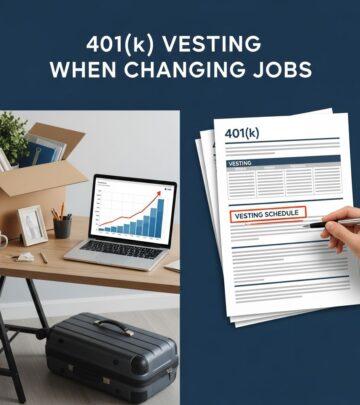
One important aspect of 401(k) matching programs that employees often overlook is the concept of vesting. Vesting refers to the period during which employer contributions become fully owned by the employee. While your own contributions are always 100% vested immediately, employer matching contributions may be subject to vesting schedules.
Common vesting schedules include cliff vesting (where you become fully vested after a specified period, such as three years) and gradual vesting (where you become vested over time, such as 20% per year for five years). Understanding your plan’s vesting schedule is important because if you leave your job before becoming fully vested, you may forfeit a portion of the employer match.
However, this should not discourage you from maximizing the match. Even with vesting restrictions, the employer match remains one of the best retirement savings opportunities available to most workers.
Contribution Limits and How They Interact with Employer Matches
The Internal Revenue Service establishes annual contribution limits for 401(k) plans. For 2025, employees can contribute up to $23,500 of their own money to a 401(k) plan. The good news is that employer matching contributions do not count against this individual contribution limit, allowing you to receive additional employer funds beyond your personal contribution cap.
The overall limit for combined contributions—including your contributions, employer matches, and after-tax contributions—is $70,000 in 2025. Employees aged 50 and older can make additional catch-up contributions, and individuals aged 60 to 63 can contribute up to an additional $11,250 as a new catch-up provision.
Understanding these limits ensures you can maximize both your own retirement savings and your employer’s matching contributions without exceeding regulatory caps.
Roth 401(k) Plans and Employer Matching
Yes, employers can match contributions to Roth 401(k) plans. However, there are important considerations. Before 2023, matching contributions to Roth 401(k)s had to be made on a pre-tax basis, meaning they were technically treated as traditional 401(k) contributions. Starting in 2023, as part of the SECURE Act 2.0, employers may now offer matching contributions on an after-tax Roth basis.
This change provides employees with greater flexibility in structuring their retirement savings. If your employer offers this option and you prefer Roth contributions for their tax-free growth potential, you can potentially receive matching contributions on the same basis as your contributions.
Maximizing Your Employer Match Strategy
To maximize your employer match, first understand your plan’s specific formula. Determine the minimum contribution required to capture 100% of the match and prioritize meeting that threshold. If you cannot afford to contribute at the maximum matching level immediately, gradually increase your contributions over time.
As your income increases through raises or promotions, direct a portion of those increases toward your 401(k) contributions until you reach the maximum match. This strategy helps you build retirement wealth without feeling the impact of increased contributions in your monthly budget.
Additionally, regularly review your plan documents to understand any changes to matching formulas, vesting schedules, or other plan features. Employers may modify their plans, and staying informed ensures you continue to make optimal decisions about your retirement savings.
Frequently Asked Questions About 401(k) Employer Matches
Q: What percentage of 401(k) plans offer an employer match?
A: Approximately 85% of 401(k) plans provide some form of matching contributions. An additional 10% offer non-matching employer contributions. Only 5% of plans provide no employer contribution.
Q: What is the most common employer matching formula?
A: The most frequently cited matching formula is a 50% match on the first 6% of employee salary contributions. However, many employers offer more or less generous terms depending on their company policies and financial capacity.
Q: Does my employer’s matching contribution count toward my $23,500 annual contribution limit?
A: No, employer matching contributions do not count against your individual contribution limit for 2025. Your $23,500 limit applies only to employee deferrals. However, the total combined limit, including employer contributions, is $70,000.
Q: What happens to my employer match if I leave my job?
A: This depends on your plan’s vesting schedule. Contributions you make are always 100% vested. Employer matching contributions may be subject to a vesting schedule, meaning you forfeit any unvested portions if you leave before becoming fully vested.
Q: Can I receive an employer match on Roth 401(k) contributions?
A: Yes, employers can provide matching contributions to Roth 401(k) plans. As of 2023, these matches can be made on an after-tax Roth basis, giving you more flexibility in how you structure your retirement savings.
Q: What should I do if my employer does not offer a 401(k) match?
A: If your employer does not offer matching contributions, you should still maximize your 401(k) contributions if available, as you benefit from tax advantages and potential investment growth. You might also consider other retirement savings vehicles, such as a traditional or Roth IRA, to supplement your retirement planning.
Q: How much of my salary should I contribute to maximize the employer match?
A: On average, employees need to contribute approximately 7.4% of their wages to capture the maximum employer match. However, this varies by employer. Review your specific plan documents to determine your company’s threshold for the full match.
Conclusion
An employer 401(k) match is one of the most valuable benefits available to workers. By understanding how your plan works, what constitutes a competitive match, and how to maximize these contributions, you position yourself for stronger long-term retirement security. Whether your employer offers a 50% match, dollar-for-dollar matching, or non-matching contributions, taking full advantage of these programs is a critical step toward building the retirement savings you need for a financially secure future.
References
- Getting A 401(k) Match From Your Employer: What It Means And How It Works — Bankrate. 2025. https://www.bankrate.com/retirement/401k-match/
- What Is a 401(k) Employer Match? — MoneyRates. 2025. https://www.moneyrates.com/investment/401k-match.htm
- How America Saves 2024 Report — Vanguard. 2024. https://retirementplans.vanguard.com/
- Internal Revenue Service 401(k) Contribution Limits for 2025 — U.S. Internal Revenue Service. 2024. https://www.irs.gov/retirement-plans/401k-contribution-limit-increases-for-2025
- SECURE Act 2.0 Employer Match Rules for Roth 401(k) Plans — U.S. Department of Labor. 2023. https://www.dol.gov/agencies/ebsa
Similar Articles








Read full bio of Sneha Tete