4 Essential Types Of Insurance Everyone Needs
Essential insurance coverage guide: Protect yourself and your family with these critical policy types.
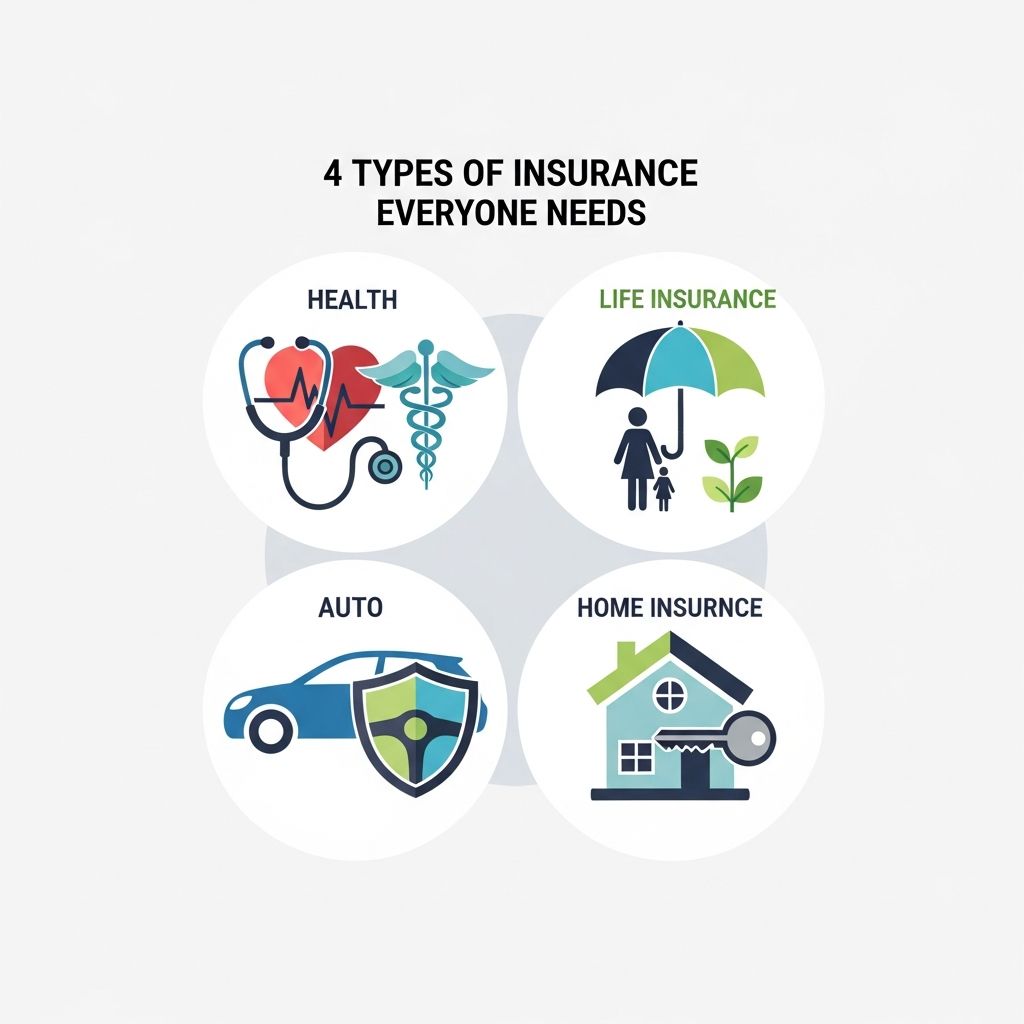
Four Types of Insurance Everyone Needs
Financial security and peace of mind are fundamental goals for most individuals and families. One of the most effective ways to achieve these objectives is through comprehensive insurance coverage. While the insurance landscape offers numerous options tailored to different needs and circumstances, financial experts consistently recommend focusing on four core types of insurance that serve as the foundation of a solid financial protection plan. These essential policies—life insurance, health insurance, auto insurance, and homeowners insurance—protect you and your loved ones against catastrophic financial losses and unexpected hardships.
Insurance fundamentally works by transferring risk from individuals to insurance companies. When you purchase an insurance policy, you pay regular premiums in exchange for financial protection against specific covered events. In times of unexpected illness, accidents, natural disasters, or other emergencies, having the right insurance coverage ensures that you won’t face devastating financial consequences. Understanding these four essential insurance types and their importance can help you make informed decisions about your financial protection strategy.
Life Insurance: Protecting Your Family’s Financial Future
Life insurance represents one of the most critical insurance decisions you’ll make, particularly if you have dependents who rely on your income. This type of policy provides financial support for your family members or designated beneficiaries after your death, ensuring they can maintain their standard of living and meet financial obligations.
How Life Insurance Works
When you purchase a life insurance policy, you pay regular premiums to the insurance company. Upon your death, the policy pays out a death benefit to your designated beneficiaries, who can use these funds to cover various expenses such as mortgage payments, children’s education, outstanding debts, and living expenses. The amount of coverage you need depends on several critical factors including your current income, number of dependents, existing debts, and anticipated future expenses.
A practical example illustrates this concept: if you earn $50,000 annually as the sole provider for your family and have no significant debts, your family would face financial hardship if something happened to you. By purchasing approximately $900,000 to $975,000 in life insurance coverage, the death benefit could be invested and generate sufficient monthly income to replace most of your earnings while accounting for inflation and funeral costs.
Types of Life Insurance Policies
Two primary categories of life insurance exist, each serving different financial needs and circumstances:
Term Life Insurance: This represents the most affordable and straightforward life insurance option. Term policies provide coverage for a specific period, such as 10, 20, or 30 years, with premiums remaining constant throughout the term. If you pass away during the coverage period, your beneficiaries receive the full death benefit. Term life insurance is ideal for individuals seeking affordable protection during their prime earning years when dependents rely most heavily on their income.
Whole Life Insurance: This permanent insurance option provides lifetime coverage and includes both a death benefit and a cash value component. As you pay premiums, a portion accumulates as cash value within the policy. This growing cash value can be borrowed against or withdrawn during your lifetime, providing additional financial flexibility. While whole life insurance offers greater benefits and options, it typically costs significantly more than term insurance.
Who Needs Life Insurance?
Not everyone requires life insurance. If you have no dependents and possess sufficient assets to cover your debts, funeral expenses, and estate costs, life insurance may be unnecessary. However, if you have dependents—especially if you’re the primary or significant income provider—or if your debts exceed your available assets, life insurance becomes essential. Young professionals with mortgages and children, single parents, and business partners all represent situations where life insurance provides critical protection.
Health Insurance: Managing Medical Expenses
Health insurance serves as your financial shield against the high costs of medical care. This essential coverage helps pay for routine doctor visits, prescription medications, surgical procedures, hospitalizations, and preventive care services.
How Health Insurance Coverage Works
Health insurance operates through a shared responsibility model. You pay regular monthly premiums to your insurance company, who in turn covers some or all of your medical expenses related to illness, injury, or medical conditions. Most policies require you to pay certain out-of-pocket costs, including deductibles (the amount you must pay before insurance coverage begins) and copays (fixed amounts you pay for specific services). Many insurance plans also offer free preventive care services such as annual check-ups and vaccinations to encourage early disease detection and wellness.
Health Insurance Options
Multiple pathways exist for obtaining health insurance coverage. Many employers offer health insurance plans to their employees as part of comprehensive benefits packages, often subsidizing portions of the premium costs. For those without employer coverage, individual policies can be purchased through the private insurance market or government programs including Healthcare.gov, Medicare (for seniors), and Medicaid (for low-income individuals and families). Government programs typically accept applications during designated open enrollment periods or following qualifying life events such as marriage, birth, or job loss.
Individuals can also obtain coverage by joining a family member’s plan as a dependent or by purchasing floater plans that extend coverage to multiple family members. Premium costs vary substantially depending on the insurance company, your age, current health status, and the specific coverage level and options you select.
The Importance of Health Insurance
Without health insurance, a single serious illness or accident can devastate your finances. Medical emergencies frequently result in bills exceeding $100,000, and even routine procedures can cost thousands of dollars. Health insurance ensures you receive necessary medical care without facing bankruptcy or financial ruin. Additionally, having insurance encourages preventive care visits, which can detect serious conditions early when treatment is typically more effective and less expensive.
Auto Insurance: Legal Protection on the Road
Auto insurance protects you financially against liability and property damage resulting from vehicle accidents, theft, or other covered events. In virtually every U.S. state, maintaining minimum auto insurance coverage is legally required to operate a vehicle on public roads.
Coverage Components
Auto insurance typically includes several coverage types working together to provide comprehensive protection. Liability coverage pays for medical expenses and property damage you cause to others in an accident, protecting you from potentially devastating lawsuits. Collision coverage pays for damage to your vehicle resulting from accidents with other vehicles or objects. Comprehensive coverage protects against non-collision damage including theft, weather events, vandalism, and animal strikes. Uninsured and underinsured motorist coverage protects you if hit by a driver lacking adequate insurance.
Determining Appropriate Coverage Levels
State minimum requirements establish the floor for required coverage, but these minimums often prove inadequate for actual losses. Financial experts recommend carrying liability limits higher than state minimums, particularly if you have significant assets to protect. Deductibles—the amounts you pay out-of-pocket before insurance coverage begins—affect both your premium costs and out-of-pocket expenses in claims. Choosing higher deductibles reduces premiums but increases what you’ll pay when accidents occur.
Your specific auto insurance needs depend on factors including your vehicle’s age and value, how frequently you drive, your driving record, and your financial situation. Younger drivers typically pay higher premiums due to statistical accident risk, while safe drivers with clean records receive lower rates. Shopping among multiple insurers ensures you receive competitive pricing for your specific situation.
Homeowners Insurance: Protecting Your Most Valuable Asset
For most people, a home represents their single largest financial investment. Homeowners insurance protects this critical asset against loss or damage from covered events including fire, theft, weather damage, and liability claims resulting from injuries occurring on your property.
What Homeowners Insurance Covers
Homeowners insurance encompasses two primary protection categories. The property portion covers your home structure, attached structures, and personal belongings inside the home. This coverage pays for repairs or replacement if your home is damaged by fire, storms, theft, or other covered events. The liability portion covers legal expenses and medical costs if someone is injured on your property or if you’re found responsible for damage to another person’s property.
Standard homeowners policies typically cover the dwelling structure, personal property within the home, liability protection, and additional living expenses if your home becomes uninhabitable due to a covered loss. Most policies require you to pay a deductible before coverage begins, and you select deductible amounts that affect your premium costs.
Mortgage Requirements and Insurance Necessity
If you have a mortgage on your home, your lender legally requires that you maintain homeowners insurance with coverage at least equal to the outstanding loan balance. This requirement protects the lender’s financial interest in your property. However, you should maintain coverage equal to your home’s full replacement cost, not just the mortgage amount, ensuring you can fully rebuild if catastrophic damage occurs.
Even if you own your home outright without a mortgage, homeowners insurance remains essential. Your home’s loss could devastate your finances, and liability coverage protects you if someone is injured on your property and holds you responsible for medical expenses or other damages.
Coverage Gaps and Special Considerations
Standard homeowners policies exclude certain types of damage. Flood damage, earthquakes, and sump pump backups typically require separate specialized policies. If your home is located in a flood-prone area, obtaining flood insurance through the National Flood Insurance Program is wise. Homeowners in earthquake-prone regions should investigate earthquake insurance options. Regularly reviewing your policy ensures coverage remains adequate as your home’s value increases through improvements and neighborhood appreciation.
Comparing Your Insurance Needs
| Insurance Type | Primary Purpose | Key Coverage | Who Needs It |
|---|---|---|---|
| Life Insurance | Provide financial support to dependents after death | Death benefit to beneficiaries | Anyone with dependents or significant debts |
| Health Insurance | Cover medical and healthcare expenses | Doctor visits, medications, hospitalization | Everyone; required under federal law |
| Auto Insurance | Protect against liability and vehicle damage | Liability, collision, comprehensive coverage | Anyone operating a vehicle; legally required |
| Homeowners Insurance | Protect home and possessions from loss | Property damage, liability, personal belongings | Homeowners; required if mortgage exists |
Assessing Your Insurance Gaps
Evaluating your current insurance situation helps identify coverage gaps that could leave you vulnerable. Review existing policies to confirm coverage limits remain adequate for your current circumstances. Life changes including marriage, children, home purchase, or income changes should trigger insurance reviews. If you’ve experienced any of these changes, your insurance needs have likely evolved.
Calculate what financial burden your family would face if you became unable to work, died unexpectedly, experienced a serious accident, or faced major home damage. If your current insurance wouldn’t adequately cover these scenarios, obtaining additional coverage should become a priority. Many insurance companies offer tools and calculators helping estimate appropriate coverage amounts for your specific situation.
Cost Considerations and Budgeting for Insurance
Insurance represents an important expense, but it’s typically far less costly than facing catastrophic financial loss without coverage. Premium costs vary based on multiple factors including age, health status, lifestyle factors, driving record, home location, and coverage levels selected. Shopping among multiple insurers helps ensure competitive pricing. Many insurers offer discounts for bundling multiple policies, maintaining safe driving records, installing safety features, or taking defensive driving courses.
Creating a comprehensive insurance budget accounting for all four essential policy types helps ensure you maintain adequate protection without overspending. While cutting costs by reducing coverage might seem attractive short-term, inadequate insurance leaves you vulnerable to financial devastation that could take years to recover from financially.
Frequently Asked Questions About Essential Insurance Coverage
Q: How much life insurance coverage do I actually need?
A: Life insurance needs depend on your income, number of dependents, existing debts, and anticipated expenses. A common guideline suggests coverage equal to 8-10 times your annual income, though this varies significantly based on individual circumstances. Consulting with a financial planner helps calculate appropriate coverage specific to your situation.
Q: Is health insurance really necessary if I’m young and healthy?
A: Yes, health insurance remains essential regardless of age or current health status. Unexpected accidents and sudden illnesses can happen to anyone, resulting in medical bills exceeding hundreds of thousands of dollars. Additionally, federal law requires most Americans to maintain health insurance coverage or face potential penalties.
Q: What happens if I drive without auto insurance?
A: Driving without required auto insurance is illegal in virtually every state and can result in serious consequences including fines, license suspension, vehicle registration suspension, and legal liability if you cause an accident. If uninsured and at-fault in an accident, you’re personally liable for all damages, potentially facing judgment liens against your assets.
Q: Do I need homeowners insurance if my home is paid off?
A: Yes, homeowners insurance remains essential even without a mortgage. Your home represents a major asset, and homeowners insurance protects both the structure and your possessions. The liability coverage also protects you if someone is injured on your property.
Q: Can I reduce my insurance costs without sacrificing coverage?
A: Yes, several strategies help reduce premiums. Bundling multiple policies with one insurer typically provides discounts. Maintaining clean driving records, installing safety features, paying premiums in full, and increasing deductibles can reduce costs. Additionally, shopping among multiple insurers ensures you receive competitive pricing for your specific needs.
Q: How often should I review my insurance policies?
A: You should review insurance policies annually and whenever major life changes occur, such as marriage, children, home purchase, job change, or significant asset acquisition. These changes frequently affect your insurance needs, and policy reviews ensure your coverage remains adequate and competitively priced.
Conclusion: Building Your Insurance Foundation
Establishing comprehensive insurance coverage across these four essential categories creates a financial safety net protecting you and your family against catastrophic losses. Life insurance ensures your dependents receive financial support if something happens to you. Health insurance covers medical expenses without bankrupting you. Auto insurance protects you financially against vehicle-related accidents and liability. Homeowners insurance safeguards your largest asset and protects you against liability claims.
While insurance premiums represent ongoing expenses, the financial protection these policies provide far outweighs their cost. A single major loss—whether death, serious illness, vehicle accident, or home damage—could financially devastate you without adequate insurance. By maintaining these four essential policy types with appropriate coverage levels, you create a comprehensive protection plan allowing you to face life’s uncertainties with confidence and peace of mind.
Take time to evaluate your current insurance situation honestly. Identify any gaps in coverage, and work with insurance professionals to address them. Your future self will appreciate the security that comprehensive insurance coverage provides.
References
- Different Types of Insurance – Life vs. Health vs. Property & Casualty — ProAssurance. 2024. https://proassurance.com/knowledge-center/different-types-of-insurance
- Four Types of Insurance Everyone Needs — H.B. Cantrell & Co. 2024. https://hbcantrell.com/customer-resources/blog/four-types-of-insurance-everyone-needs
- How Much Life Insurance Do You Need? — Investopedia Video. August 13, 2013. https://www.youtube.com/watch?v=siPVZ8qeXBA
Similar Articles








Read full bio of medha deb