Resume Rules: 4 Ways To Break Them And Land More Interviews
Discover the outdated resume rules holding you back and learn how breaking them can supercharge your job search success.
In the competitive world of job hunting, resumes are your first impression. For years, job seekers have followed rigid “rules” passed down from career guides and well-meaning advisors. But many of these conventions are outdated, especially in a post-pandemic job market where employers value authenticity, skills, and real-world experience over cookie-cutter formats. Breaking these rules strategically can make your resume stand out, showcase your unique value, and increase your chances of landing interviews. This article explores four key resume rules you should be breaking right now, with practical advice on how to do it effectively.
Rule #1: Your Resume Must Be One Page
The one-page resume rule has been gospel for decades, rooted in the idea that hiring managers have short attention spans and only skim documents. While brevity is important, blindly adhering to this rule can force you to cram vital information into a tiny space, omitting key achievements or experiences that could set you apart. In reality, the optimal resume length depends on your career stage, industry, and the complexity of your professional history.
For entry-level candidates or those with under 10 years of experience, one page often suffices. However, mid-career professionals, executives, or those in technical fields with extensive accomplishments should embrace two pages—or even three for senior roles. A study by ResumeGo found that resumes exceeding one page received 20% more interview callbacks when properly formatted and achievement-focused, as they allowed for deeper demonstration of expertise without overwhelming readers.
How to break this rule effectively:
- Prioritize relevance: Lead with your most recent and impactful roles. Use the first page for your strongest selling points—summary, key skills, and top achievements.
- Use white space wisely: Avoid dense paragraphs. Opt for bullet points, bold headings, and ample margins to maintain readability on longer documents.
- Tailor by audience: For creative industries like marketing or design, a visually engaging two-pager can shine. In conservative fields like law or finance, stick closer to one page unless you have 15+ years of experience.
Consider this table comparing resume lengths by career level:
| Career Stage | Recommended Length | Why It Works |
|---|---|---|
| 0-5 years experience | 1 page | Focuses on education, internships, and early wins without dilution. |
| 5-15 years | 1-2 pages | Highlights progression and quantifiable achievements. |
| 15+ years / Executive | 2-3 pages | Showcases leadership depth and strategic impact. |
Professionals who’ve ditched the one-page limit report better results. One hiring manager shared that detailed two-page resumes from engineers allowed them to spot niche skills missed in abbreviated versions. Don’t sacrifice substance for an arbitrary length—let your story breathe.
Rule #2: Always Include an Objective Statement
Objective statements at the top of resumes were once standard, meant to declare your career goals. But they often come across as generic fluff like “Seeking a challenging position in a dynamic environment.” Recruiters spend an average of 7.4 seconds scanning a resume, per Ladders’ eye-tracking study, and trite objectives waste that precious time without adding value.
Instead, replace it with a professional summary or branding statement—a concise 3-5 sentence pitch highlighting your unique value proposition, key skills, and proven results. This shifts focus from what you want to what you bring to the table, making it employer-centric.
Examples of breaking this rule:
- Bad Objective: “Hardworking professional seeking entry-level marketing role to utilize communication skills.”
- Strong Summary: “Dynamic marketing specialist with 5+ years driving 30% YoY growth through SEO and content strategies. Expert in Google Analytics and HubSpot, delivering ROI-focused campaigns for tech startups.”
Gen Z job seekers are leading this charge, prioritizing skills-based summaries over outdated formats. The U.S. Bureau of Labor Statistics notes that skills-focused resumes align better with applicant tracking systems (ATS), which parse keywords rather than narrative objectives.
To implement: Analyze the job description for top skills, quantify your achievements (e.g., “Boosted sales by 25%”), and weave in industry buzzwords. This rule-break transforms your resume header from forgettable to unforgettable.
Rule #3: Never Have Gaps in Your Resume
Résumé gaps terrify many job seekers, stemming from fears that they’ll signal unreliability or skill atrophy. Traditional advice urges fudging dates or padding with irrelevant activities. But in today’s flexible workforce, gaps are increasingly normalized—especially post-COVID, caregiving, travel, or skill-building sabbaticals.
A LinkedIn survey revealed 62% of professionals have taken career breaks, with 79% of hiring managers open to candidates with gaps if explained well. ResumeGo research shows applicants with gaps are 45% less likely to get interviews only if unaddressed; transparent handling boosts callbacks by framing gaps as growth periods.
Strategies to own your gaps:
- Be brief and positive: Use a single line like “Career Break (2022-2023): Full-time caregiving while completing online certifications in project management.”
- Highlight transferable skills: Travel? Note “Backpacked Southeast Asia, honing adaptability and cross-cultural communication.” Layoff? “Professional development hiatus, mastering Python via Coursera.”
- Functional format shift: Lead with skills section, followed by chronological experience—ideal for gaps over 6 months.
Gen Z exemplifies this shift: 47% have taken 6+ month breaks for mental health or upskilling, rejecting the “hustle culture” stigma. Employers like Applied advocate date-free CVs focusing on tenure, reducing bias. Embrace gaps as human—they demonstrate resilience.
Rule #4: Stick to a Standard Format and Template
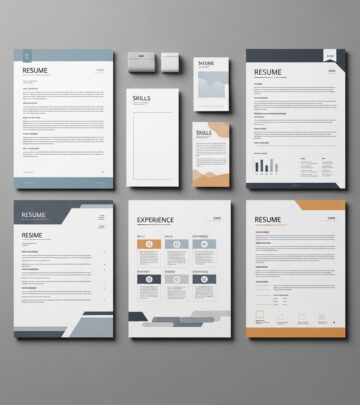
Generic templates from Microsoft Word or online builders ensure ATS compatibility but make your resume blend into the pile. Breaking this means customizing format, design, and content per job, using bold visuals, color accents (for non-corporate roles), or hybrid layouts.
ATS systems have evolved; 99% parse modern formats like PDFs with columns if text is selectable. WiseBread contributors note that creative tweaks—like infographics for designers or achievement tables for sales pros—captivate human readers post-ATS.
Customization tips:
- Mirror job specs: Echo exact phrases (e.g., “Agile methodology” if listed).
- Incorporate visuals: Progress bars for skill levels or icons for quick scans.
- Hybrid structure: Skills first, then experience—perfect for career changers.
Avoid pitfalls like poor fonts (stick to Arial, Calibri 10-12pt) or images that break ATS. Test with free tools like Jobscan. This rule-break personalizes your pitch, signaling effort and fit.
Frequently Asked Questions (FAQs)
Is it really okay to have a two-page resume?
Yes, for professionals with 10+ years of relevant experience. Focus on impact over chronology to justify the length.
What if my gap was for unemployment?
Frame it positively: “Job search and volunteer work at local nonprofit, building leadership skills.” Honesty builds trust.
Will custom formats beat ATS filters?
Most do if text-based. Always submit ATS-friendly versions alongside creative ones for networking.
Should I include hobbies?
Only if relevant (e.g., marathon running for endurance roles). Otherwise, save for interviews.
How often should I update my resume?
Every 6-12 months, or post-achievement. Tailor per application.
Bonus Tips for Resume Success
Beyond these rules:
- Quantify everything: “Managed team of 10” beats “Team leader.”
- Proofread obsessively—typos kill credibility.
- Use action verbs: Led, Optimized, Spearheaded.
- Get feedback: Tools like ResumeWorded or peers.
References
- When to Splurge: Resume Writer — WiseBread. 2009-01-01. https://www.wisebread.com/when-to-splurge-resume-writer
- Gen Z is taking long breaks from their careers — Business Insider. 2023-01-01. https://www.businessinsider.com/gen-z-rewriting-rulebook-jobs-resume-gaps-career-breaks-work-2023-1
- How To Write A Resume: 12 Steps To Your Next Job — WiseBread. 2010-01-01. https://www.wisebread.com/how-to-write-a-resume-12-steps-to-your-next-job
- Best Money Tips: Common Resume Misconceptions — WiseBread. 2012-01-01. https://www.wisebread.com/best-money-tips-common-resume-misconceptions
- Eye-Tracking Study — Ladders. 2018-04-09. https://www.theresumelab.com/eye-tracking-study/
Similar Articles








Read full bio of Sneha Tete