4 Psychological Traps Preventing You From Saving
Discover the four key psychological barriers stopping your savings growth and practical strategies to overcome them for financial success.

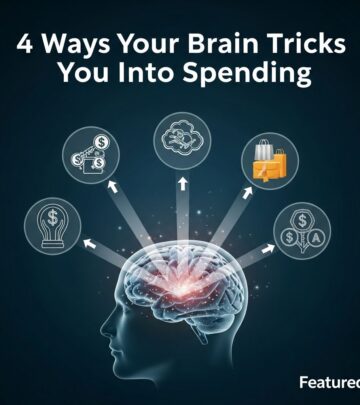
Building savings requires more than just budgeting; it demands overcoming deep-rooted psychological barriers that trick us into spending rather than saving. These mental traps, rooted in human behavior and cognitive biases, often operate subconsciously, derailing even the most disciplined plans. By understanding and countering them, you can reclaim control over your finances and steadily grow your wealth.
This article dives into the four primary psychological traps: the lizard brain, extrapolation, mental accounting, and the endowment effect. Each section explains the trap, why it persists, real-world examples, and step-by-step fixes to neutralize its impact. Mastering these will transform your saving habits from reactive to intentional.
1. Lizard Brain
The lizard brain, or basal ganglia, represents our primal survival instincts—fight, flight, or indulgence. Evolved for scarcity, it prioritizes immediate gratification over long-term security, pushing us toward impulse buys like sugary snacks or gadgets during stressful moments. In modern abundance, this leads to overspending on non-essentials, as the brain equates spending with pleasure and reward.
Consider grocery shopping: stores place tempting bakery smells near entrances to trigger hunger signals, making you add unplanned items. This instinct overrides rational budgeting, resulting in carts full of impulse purchases that eat into savings goals. Studies show such environmental cues activate dopamine pathways, mimicking addiction-like responses.
- Real-world impact: Average households overspend $100–$200 monthly on impulse buys, per consumer behavior research.
- Why it traps savers: Short-term dopamine hits feel better than abstract future savings.
How to Fix the Lizard Brain Trap
Counter primal urges with deliberate strategies that rewire habits:
- Pre-commit with shopping lists: Plan purchases 24 hours in advance to engage higher brain functions. Stick strictly to the list, ignoring end-cap displays engineered for impulses.
- Shop with purpose: Eat before shopping to blunt hunger cues; use cash-only for budgets to create tangible spending pain.
- Automate savings: Transfer 20% of income to savings immediately post-paycheck, bypassing temptation entirely.
- Mindfulness practice: Pause 10 seconds before buys, asking: “Does this serve my 5-year goals?”
Implementing these reduces impulse spending by up to 30%, freeing funds for high-yield savings accounts where compound interest amplifies growth.
2. Extrapolation
Extrapolation is the cognitive bias of projecting recent trends indefinitely into the future, ignoring cycles or changes. Savers fall into this by assuming current low expenses will persist, underestimating life events like inflation or emergencies. Conversely, after a splurge, one thinks “I’ve blown the budget,” leading to abandonment rather than recovery.
For instance, if rent drops temporarily, you might extrapolate endless cheap living and ramp up discretionary spending—only for costs to rebound, wiping out savings. Behavioral economists term this “recency bias,” where short-term patterns dominate long-term planning.
| Trap Scenario | Example | Savings Impact |
|---|---|---|
| Optimistic extrapolation | “Gas is cheap now; I’ll spend more on dining.” | Unexpected hikes drain emergency fund. |
| Pessimistic extrapolation | “One overspend means I’m failing—might as well shop.” | Abandons budget entirely. |
How to Fix the Extrapolation Trap
Break the pattern with forward-thinking tools:
- Scenario planning: Model best/worst-case budgets using spreadsheets. Factor in 5–10% annual inflation.
- Buffer zones: Build 3–6 months’ expenses in savings to absorb shocks without derailing habits.
- Review cycles: Quarterly assess finances, adjusting for trends like market volatility.
- Goal anchoring: Tie spending to milestones, e.g., “No extras until $5K saved.”
These methods foster resilience, turning volatile projections into stable saving trajectories.
3. Mental Accounting
Mental accounting involves treating money differently based on arbitrary categories or sources, like viewing tax refunds as “free money” for splurges rather than savings. This violates fungibility—money is interchangeable—leading to inefficient allocation. Windfalls get blown, while “earned” income is scrimped.
A classic example: Using credit card “rewards” points for luxuries while paying high-interest debt. Or segregating “fun money” budgets that balloon unexpectedly. Nobel-winning research by Richard Thaler shows this bias causes 15–20% leakage in household finances.
- Common pitfalls: Bonuses → vacations; “found” money → gadgets.
- Savings killer: Ignores opportunity costs, like debt interest outpacing rewards.
How to Fix the Mental Accounting Trap
Unify your financial view:
- Single pot mindset: Pool all income into one account; allocate percentages blindly (50% needs, 30% wants, 20% savings).
- Debt avalanche: Prioritize high-interest debts first, regardless of source.
- Windfall rule: 50% to savings/debt, 50% discretionary—never 100% fun.
- Track holistically: Use apps like YNAB to merge categories and reveal true net worth.
This approach boosts savings rates by reallocating “fun” funds efficiently.
4. Endowment Effect
The endowment effect makes us overvalue what we own, resisting sales of unused items or clinging to poor investments. For savers, this manifests as hoarding depreciating assets (old clothes, gadgets) instead of liquidating for savings, or avoiding budget cuts to “cherished” expenses.
Psychologist Daniel Kahneman’s experiments show people demand twice as much to sell as they’d pay to buy the same item. Applied to finances: You won’t cancel a $100/month subscription you rarely use because “it’s yours.” This clogs cash flow.
| Asset Type | Endowment Overvalue | Better Action |
|---|---|---|
| Unused gym membership | $120/year sunk | Cancel, save $10/month. |
| Old car | Hold vs. sell for downpayment | Liquidate for investments. |
How to Fix the Endowment Effect Trap
Objectify possessions:
- Market test: List items on apps like eBay; if no bites, donate/sell ruthlessly.
- Zero-based budgeting: Justify every expense anew monthly—no sacred cows.
- Third-party audit: Have a friend review subscriptions/assets for bias-free input.
- Declutter ritual: Annual purge: If unused in 6 months, gone.
Liberating assets this way can yield $500–$2,000 annually for savings.
Frequently Asked Questions (FAQs)
Q: How much can overcoming these traps increase my savings?
A: Savers report 20–50% boosts within 6 months by automating and bias-proofing habits.
Q: Are these traps universal?
A: Yes, rooted in evolutionary psychology, affecting all demographics but varying by awareness.
Q: What’s the first step to start?
A: Audit one week of spending to spot lizard brain impulses, then automate transfers.
Q: Can apps help?
A: Tools like Mint or PocketGuard flag biases in real-time for proactive fixes.
Overcoming All Traps: A Unified Strategy
Integrate fixes into a daily routine: Morning savings check, evening spending reflection. Track progress monthly against goals. Over time, these shift mindset from spender to saver, compounding wealth effortlessly.
Bonus: Supermarket traps amplify these biases—avoid coupons’ false highs and end-aisle lures for extra gains.
References
- Consumer Financial Protection Bureau: Behavioral Insights for Financial Well-Being — CFPB (U.S. Government). 2024-06-15. https://www.consumerfinance.gov/data-research/research-reports/behavioral-insights-financial-well-being/
- Behavioral Economics and Financial Decision-Making — Federal Reserve Board. 2023-11-20. https://www.federalreserve.gov/econres/notes/feds-notes/behavioral-economics-and-financial-decision-making-20231120.htm
- Prospect Theory: An Analysis of Decision under Risk — Kahneman & Tversky. 1979 (reprint 2024). https://doi.org/10.2307/1914185
- Mental Accounting and Consumer Choice — Richard Thaler. 1985 (updated analysis 2024). https://www.jstor.org/stable/1832198
- Endowment Effect in Consumer Behavior — Journal of Economic Perspectives. 2023-09-01. https://www.aeaweb.org/articles?id=10.1257/jep.37.3.111
Similar Articles








Read full bio of medha deb