30-Year Mortgage Rates: Compare Today’s Best Offers
Find competitive 30-year mortgage rates and compare personalized offers from top lenders.
Compare 30-Year Mortgage Rates Today
On Saturday, November 29, 2025, the national average 30-year fixed mortgage APR stands at 6.31%, according to Bankrate’s latest survey of the nation’s largest mortgage lenders. For those considering refinancing, the average 30-year fixed refinance APR is 6.74%. These rates represent the current snapshot of the mortgage market and can help borrowers make informed decisions about their home financing options.
The mortgage market continues to evolve, and understanding today’s rates is crucial for anyone considering a home purchase or refinancing their existing mortgage. Bankrate provides real-time rate comparisons that allow you to find personalized offers tailored to your specific financial situation and creditworthiness.
Today’s 30-Year Mortgage Rates Overview
The current mortgage rate environment offers several options for borrowers seeking different loan terms and structures. Here’s a breakdown of the rates available as of November 29, 2025:
| Product | Interest Rate | APR |
|---|---|---|
| 30-Year Fixed Rate | 6.25% | 6.31% |
| 20-Year Fixed Rate | 5.99% | 6.08% |
| 15-Year Fixed Rate | 5.60% | 5.69% |
| 10-Year Fixed Rate | 5.63% | 5.74% |
These rates showcase the relationship between loan terms and interest rates. Generally, shorter-term mortgages carry lower interest rates compared to longer-term options, reflecting the lender’s reduced risk exposure over a shorter repayment period.
Specialty Mortgage Products Available
Beyond conventional 30-year mortgages, several specialty products cater to specific borrower needs and qualifications. These alternatives offer distinct advantages depending on your financial profile and eligibility criteria.
| Product | Interest Rate | APR |
|---|---|---|
| 30-Year Fixed Rate FHA | 6.04% | 6.10% |
| 30-Year Fixed Rate VA | 6.23% | 6.28% |
| 30-Year Fixed Rate Jumbo | 6.41% | 6.44% |
FHA Loans offer competitive rates for borrowers who qualify, often featuring more flexible credit requirements and lower down payment options. VA Loans provide benefits specifically for military service members and eligible veterans, typically offering favorable rates without requiring a down payment. Jumbo Mortgages are designed for high-value properties that exceed conventional lending limits, with rates reflecting the larger loan amounts.
30-Year Refinance Rates
For homeowners looking to refinance their existing mortgages, current 30-year refinance rates offer opportunities to potentially lower monthly payments or access home equity. As of November 29, 2025, the national average 30-year fixed refinance APR is 6.74%, with the benchmark refinance interest rate at 6.67%.
| Refinance Product | Interest Rate | APR |
|---|---|---|
| 30-Year Fixed Rate | 6.67% | 6.74% |
| 30-Year Fixed-Rate VA | 7.63% | 7.70% |
| 30-Year Fixed-Rate FHA | 7.01% | 7.08% |
| 30-Year Fixed-Rate Jumbo | 6.55% | 6.61% |
Refinancing decisions should be based on a careful analysis of your current rate, remaining loan term, and anticipated break-even point. While refinancing can lead to significant savings, it’s important to understand the costs involved and calculate whether the long-term benefits justify the upfront expenses.
Why Is the 30-Year Mortgage the Most Popular?
From a consumer standpoint, the 30-year fixed-rate mortgage remains the most popular loan option for several compelling reasons. Lower Monthly Payments represent the primary advantage—spreading the loan balance across 30 years significantly reduces monthly payment obligations compared to shorter terms like 15-year mortgages. This lower payment structure makes homeownership more accessible and attainable, particularly for first-time buyers who may have limited upfront capital or savings.
Long-Term Stability and Predictability are additional crucial benefits. With a 30-year fixed-rate mortgage, your interest rate remains constant throughout the entire loan period, providing certainty in monthly payments and simplifying long-term budgeting. This predictability allows homeowners to plan their finances with confidence, knowing exactly what their mortgage obligations will be for the next three decades.
The 30-year mortgage strikes an optimal balance between affordability and loan structure, making it the preferred choice for millions of American homeowners seeking to build equity while maintaining manageable monthly obligations.
Factors Influencing 30-Year Mortgage Rates
Understanding what drives mortgage rate fluctuations can help borrowers time their applications and make strategic financial decisions. Several key factors influence the 30-year mortgage rates available in the market.
The 10-Year Treasury Yield Connection
The 10-year Treasury yield serves as a benchmark that directly influences 30-year mortgage rates. There exists what’s called a “spread” between these two rates—historically, this difference has averaged around 2%. So if the 10-year Treasury yield is at 4%, 30-year mortgage rates would typically hover around 6%. However, this spread is not static; it expands and contracts as lenders price in perceived risk, economic conditions, and market dynamics.
Federal Reserve Decisions
When the Federal Reserve raises or lowers the federal funds rate, a domino effect ripples through various financial markets, including inflation forecasts, bond yields, and ultimately mortgage rates. The Fed’s monetary policy decisions represent one of the most significant factors affecting mortgage rate movement. Borrowers closely monitor Fed announcements for clues about future rate trends and timing for their mortgage applications.
Recent Mortgage Rate Trends
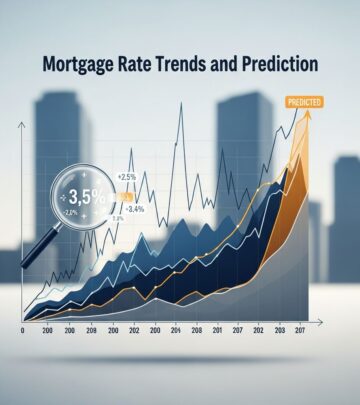
The average 30-year fixed rate was 6.32% as of November 25, according to Bankrate’s national survey of large lenders, representing a decrease from 6.37% the previous week. The rate movement demonstrates the dynamic nature of mortgage markets and the importance of monitoring rate trends when considering a home purchase or refinance.
Throughout 2025, the average 30-year mortgage rate has fluctuated between 6.26% and 7.19%, indicating a relatively stable rate environment compared to historical volatility. As of November 1, the average 30-year rate was 6.19%, showing the slight upward pressure on rates as the year progresses toward year-end. Housing economists expect rates to remain in the sub-6.5% range for the remainder of the year, providing some stability for borrowers planning their home financing strategies.
Comparing Top Bankrate Offers to National Averages
Bankrate’s network of lenders consistently offers competitive rates that often exceed the national average. For the week of November 23rd, top offers on Bankrate’s platform were notably lower than the national average rates. On a $340,000 30-year loan, these rate differences translate to substantial annual savings—often running into the thousands of dollars depending on specific terms and borrower qualifications.
By using Bankrate’s rate comparison tools, borrowers can identify lenders offering personalized rates in their area, enabling them to make informed decisions and potentially save considerable money over the life of their mortgage.
Benefits of 30-Year Fixed Rate Mortgages
The 30-year fixed-rate mortgage offers numerous advantages that explain its widespread popularity among American homeowners:
– Predictable monthly payments: Fixed rates ensure your payment never changes, simplifying budgeting and financial planning- Lower monthly obligations: Compared to 15-year mortgages, 30-year loans offer significantly reduced monthly payments- Easier qualification: Lower monthly payments may improve your debt-to-income ratio, making qualification easier- Flexibility: You can make extra payments toward principal without penalty, accelerating payoff if desired- Interest rate protection: Fixed rates protect you from future rate increases and economic uncertainty
Considerations and Potential Drawbacks
While 30-year mortgages offer substantial benefits, potential borrowers should also consider the following drawbacks:
More Total Interest Paid Over the Loan Life
The extended repayment period comes with a significant tradeoff—you’ll pay considerably more total interest on a 30-year loan compared to shorter-term alternatives. For example, on a $259,471 loan, you would pay $579,190.95 in total interest over 30 years. In contrast, a 15-year mortgage on the same amount would result in $259,471.15 in total interest, representing $319,719.80 in savings over the life of the loan.
Higher Interest Rates for Longer Terms
Lenders charge premium rates for 30-year loans due to the increased risk of lending money for three decades. This means 30-year mortgages inherently carry higher interest rates than comparable 15-year loan products, which further increases total interest costs.
Slower Equity Building
A 30-year repayment schedule means you’re paying down the principal balance at a slower pace than with shorter-term loans. This extended equity-building timeline can be a disadvantage if you’re planning to sell your home in the near future or if you prefer building home equity more quickly.
Frequently Asked Questions
Q: What is the current average 30-year mortgage rate?
A: On November 29, 2025, the national average 30-year fixed mortgage APR is 6.31%, with the benchmark interest rate at 6.25%.
Q: How do 30-year mortgage rates compare to other loan terms?
A: 30-year mortgages typically carry higher interest rates than shorter-term loans. As of November 29, 2025, 15-year fixed rates are 5.60%, 20-year rates are 5.99%, and 10-year rates are 5.63%, all lower than the 30-year rate of 6.25%.
Q: What factors influence 30-year mortgage rates?
A: Key factors include the 10-year Treasury yield, Federal Reserve monetary policy decisions, inflation expectations, bond market conditions, and lender risk assessments. The spread between Treasury yields and mortgage rates typically averages around 2% but fluctuates based on perceived risk.
Q: What is the difference between mortgage rate and APR?
A: The interest rate is the percentage of principal charged yearly, while APR includes the interest rate plus other costs and fees associated with the loan, providing a more comprehensive picture of the true borrowing cost.
Q: Can I refinance my mortgage at current rates?
A: Yes, if you have an existing mortgage with a higher rate than current offerings, refinancing may be beneficial. Current 30-year refinance rates average 6.74% APR. Calculate your break-even point to determine if refinancing makes financial sense.
Q: Are specialty mortgage products like FHA or VA loans available?
A: Yes, specialized programs are available for qualifying borrowers. FHA loans offer rates around 6.04%, VA loans around 6.23%, and jumbo mortgages around 6.41%, each with specific eligibility requirements and benefits.
References
- Compare 30-Year Mortgage Rates Today — Bankrate. 2025-11-29. https://www.bankrate.com/mortgages/30-year-mortgage-rates/
- 30-Year Refinance Rates — Bankrate. 2025-11-29. https://www.bankrate.com/mortgages/30-year-refinance-rates/
- Compare Current Mortgage Rates for Today — Bankrate. 2025-11-29. https://www.bankrate.com/mortgages/mortgage-rates/
- Mortgage Rate Trends and Predictions — Bankrate. 2025-11-26. https://www.bankrate.com/mortgages/rate-trends/
- Mortgage Rate History: 1970s to 2025 — Bankrate. 2025-11-29. https://www.bankrate.com/mortgages/historical-mortgage-rates/
Similar Articles








Read full bio of Sneha Tete