30-Day Challenges To Transform Your Money And Life
Discover powerful 30-day challenges to reset your money, mindset, routines, and lifestyle for lasting financial and personal growth.
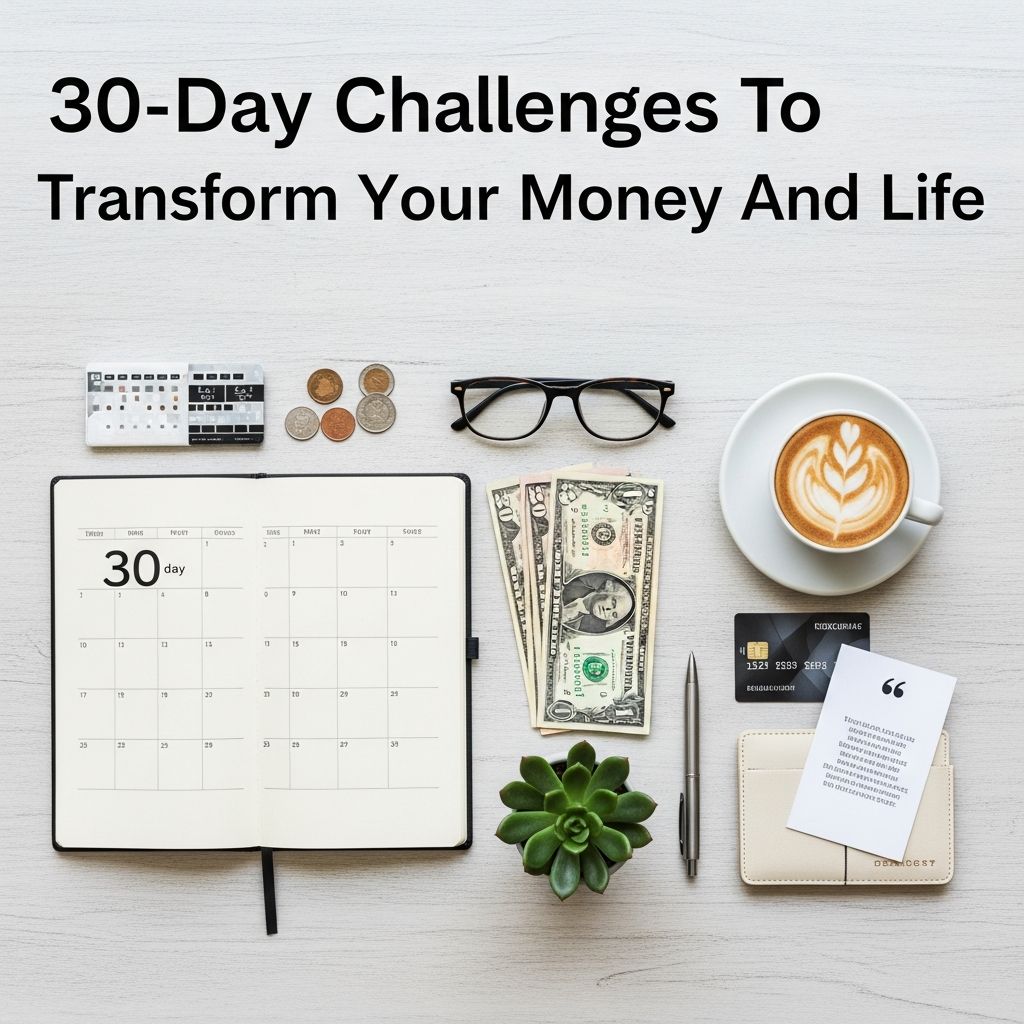
Short, focused 30-day challenges are one of the most effective ways to reset your habits, improve your finances, and build confidence without feeling overwhelmed. When you commit to just one month of intentional action, you create structure, momentum, and quick wins that can spark long-term change.
This guide walks you through powerful 30-day challenge ideas inspired by personal growth, wellness, and money topics, along with practical tips for planning, tracking, and staying motivated. You will find ideas for your mindset, self-care, productivity, finances, and more, plus answers to common questions so you can design a challenge that fits your life.
Why 30-Day Challenges Work
Thirty days is long enough to see real change, but short enough that it feels manageable. Behavioral research shows that repetitions over days and weeks help new actions become more automatic, even though the time it takes to form a habit varies widely across people and behaviors. A 30-day window gives you a clear starting point, a deadline, and built-in accountability.
- Clear time frame: You know exactly when you start and when you will review your progress.
- Low risk, high learning: You can experiment without committing forever.
- Quick feedback: You see what works, what doesn’t, and what you want to keep.
- Motivating wins: Small success over a month can boost your confidence to take on bigger goals.
You can use 30-day challenges to improve your finances, health, productivity, relationships, and more. The key is to focus on one main theme at a time and make the rules simple and measurable.
Types of 30-Day Challenges You Can Try
There is no one-size-fits-all challenge. Depending on your goals, you can focus on self-improvement, money, home life, or a specific skill. Below are core categories commonly used for 30-day challenges, with examples in each area.
1. Self-Love and Self-Care Challenges
A 30-day self-love challenge centers on treating yourself with kindness, strengthening your confidence, and prioritizing your emotional and physical well-being. Daily prompts might include reflection, rest, and practical actions that support your needs.
- Write down three things you appreciate about yourself each day.
- Practice 10 minutes of movement or stretching.
- Set one boundary (say no to something that drains you).
- Go to bed 30 minutes earlier than usual.
- Plan one enjoyable, low-cost activity just for you each week.
Consistent self-care is linked with reduced stress and better mental health, and even small daily practices can contribute to improved well-being over time.
2. Mindset and Gratitude Challenges
Mindset challenges focus on how you think about yourself, money, and challenges in general. A popular version is a gratitude challenge, where you intentionally notice and record what is going well.
- Write one thing you are grateful for related to your life each day.
- Write one thing you are grateful for about your finances (for example, income, skills, opportunities).
- Replace one negative thought about yourself or money with a neutral or positive one.
- Spend five minutes visualizing a future goal as if you have already achieved it.
Research suggests that gratitude practices can improve life satisfaction and reduce depressive symptoms when done consistently over time.
3. Organization and Decluttering Challenges
A 30-day organization or minimalism challenge helps you reduce physical clutter, streamline your routines, and create a calmer environment. A less cluttered home can decrease decision fatigue and stress.
- Declutter one drawer or surface each day.
- Choose one category per day (for example, books, clothes, paperwork) and remove a set number of items.
- Spend 10–15 minutes each evening resetting your space for the next day.
- Unsubscribe from unnecessary email lists to declutter your digital life.
Studies have found that high levels of home clutter are associated with increased stress and poorer subjective well-being, particularly among women.
4. Health and Wellness Challenges
Health-related 30-day challenges are common because small, daily actions can meaningfully improve physical well-being. You don’t need extreme changes; consistent, realistic steps matter more.
- Drink a set amount of water each day.
- Add one serving of vegetables to your meals daily.
- Walk at least 20–30 minutes per day.
- Limit added sugar or ultra-processed snacks for the month.
- Do a daily wind-down routine to improve sleep quality.
Regular physical activity and nutritious eating are linked with lower risk of chronic diseases and improved mood, making wellness-focused challenges highly impactful.
5. Money and Financial Wellness Challenges
Money-focused 30-day challenges are designed to help you save more, spend more intentionally, and build better money habits. They are especially useful if you want a reset or a quick financial win.
- No-spend challenge: Only spend on essentials (such as housing, food, transportation) and pause all non-necessary purchases for 30 days.
- Expense tracking challenge: Record every purchase to gain clarity on where your money goes.
- Daily savings challenge: Transfer a small amount into savings every day, even if it is just a few dollars.
- Debt focus challenge: Make an extra payment or find small ways to reduce interest costs over the month.
Budgeting, regular saving, and tracking are fundamental habits recommended by consumer finance experts and regulators for improving financial health over time.
Designing Your Own 30-Day Challenge
To get the most out of your challenge, plan it carefully instead of choosing a goal at random. A clear design makes it easier to follow through and measure results.
Step 1: Choose One Main Theme
Start by selecting a single core area where you want improvement. This can be:
- Self-love and confidence
- Money and budgeting
- Health and movement
- Decluttering and organization
- Skill building or learning
Focusing on one theme keeps your challenge doable. You can always do another challenge next month in a different area.
Step 2: Set a Clear, Measurable Goal
Next, define what success looks like at the end of the 30 days. Make it specific enough that you can tell whether you did it or not.
| Area | Vague goal | Better 30-day goal |
|---|---|---|
| Money | “Save more money” | “Save $150 by transferring $5 per day into savings” |
| Self-love | “Be kinder to myself” | “Write three self-appreciation statements each day” |
| Health | “Exercise more” | “Walk at least 20 minutes daily” |
| Decluttering | “Organize my home” | “Declutter one drawer, shelf, or surface each day” |
Step 3: Decide on Daily Actions
Break the 30 days into simple, repeatable tasks. You can either repeat the same action every day or rotate through a small set of actions that support the same goal.
- Keep daily tasks small enough to complete in 10–30 minutes.
- Attach them to an existing routine (after breakfast, during lunch, before bed).
- Write your daily task list or prompts in advance so you are not deciding on the spot.
Step 4: Create a Tracking System
Tracking your progress helps you see momentum and holds you accountable. You can use:
- A printed calendar where you mark each successful day.
- A habit-tracking app.
- A notebook or journal to record what you did and how you felt.
- A simple spreadsheet if your challenge includes numbers (saving, steps, time spent).
Visual progress cues, such as checkmarks or streaks, are known to increase motivation and make you more likely to keep going.
Step 5: Plan for Obstacles
Life will not pause just because you start a challenge. Plan ahead for busy days and setbacks.
- Define a minimum version of your habit (for example, 5 minutes of walking if you can’t do 20).
- Decide in advance how you will handle missed days (for example, get back on track the next day without trying to “catch up”).
- Keep your tools ready (for example, meal plan templates, water bottle, journal, budgeting app).
Ideas for a 30-Day Financial Challenge
If you want to focus on your finances, here are structured ideas you can adapt to your income, expenses, and money goals.
1. 30-Day No-Spend Challenge
The 30-day no-spend challenge helps you reset your spending and see how much of your budget is truly essential. You commit to spending money only on needs for an entire month.
- Allowed: Rent or mortgage, utilities, basic groceries, transportation, medicine, priority bills.
- Not allowed: Takeout, impulse online orders, new clothing (unless genuinely required), non-essential subscriptions, decor, and other “wants.”
- Daily action: Log every dollar spent and note whether it was a need or want.
At the end of the month, calculate how much you saved compared to a typical month and decide where that extra money will go (for example, emergency fund, debt payment, or a sinking fund).
2. 30-Day Savings Boost Challenge
Use a 30-day savings challenge to jumpstart or grow your emergency cushion or another key goal. Having an emergency fund covering several months of expenses can significantly improve financial resilience and reduce stress when unexpected costs arise.
- Set a specific savings goal for the 30 days (for example, $150, $300, or another realistic amount).
- Automate transfers on set days (for example, $5–$10 per day or slightly larger weekly amounts).
- Find small cuts: cancel a subscription, swap one weekly restaurant meal for home cooking, or sell unused items.
Track your total weekly so you can see your progress adding up and adjust if needed.
3. 30-Day Budget Refresh Challenge
This challenge is about gaining clarity and control by updating or creating your budget and staying engaged with it for an entire month.
- Week 1: List income, fixed bills, debt payments, and typical spending categories.
- Week 2: Track every expense and compare it to your plan.
- Week 3: Adjust budget categories based on real numbers and cut or reduce at least one category.
- Week 4: Set up automatic bill payments and savings transfers where possible.
This process aligns with consumer protection agencies’ guidance on budgeting as a core tool for managing money and avoiding unnecessary debt.
4. 30-Day Financial Mindset Challenge
How you think about money affects how you manage it. This challenge pairs financial tasks with mindset work.
- Define what financial freedom means to you in writing.
- Write down one money belief each day and examine whether it is helpful or limiting.
- List your financial wins: times you saved, paid down debt, or made a good decision.
- Visualize a specific financial goal (such as debt-free, a certain savings balance, or a home purchase) for a few minutes daily.
How to Stay Motivated For 30 Days
Starting a challenge is exciting; staying consistent is the real work. Use these techniques to maintain momentum:
- Set reminders: Use alarms, calendar notifications, or sticky notes to prompt your daily action.
- Use social accountability: Tell a friend, join an online community, or share updates to stay committed.
- Reward yourself: Plan low-cost or free rewards at the halfway point and at day 30.
- Track visually: Keep your tracker where you see it every day to reinforce your identity as someone who follows through.
- Revisit your why: Write down why this challenge matters to you and read it whenever your motivation dips.
What To Do After the 30 Days End
The end of a challenge is not just a finish line; it is a chance to reflect and decide what comes next.
- Review your results: What changed? How do you feel? What did you learn?
- Keep what works: Choose one or two habits to continue long term.
- Adjust what didn’t work: If something was too difficult, scale it down and try again.
- Choose your next challenge: You can repeat the same theme, increase the difficulty slightly, or shift to a new area of your life.
Over time, stacking these 30-day experiments can create a powerful transformation in your money, health, and overall well-being.
Frequently Asked Questions (FAQs)
Q: How do I pick the right 30-day challenge for me?
A: Start by asking what feels most urgent or exciting right now: is it getting control of your spending, feeling less stressed at home, or taking better care of your health? Choose one area and a challenge that feels slightly uncomfortable but realistic given your schedule and energy.
Q: What if I miss a day of my challenge?
A: Missing a day does not mean you failed. Instead of restarting from day one, simply continue the next day and treat it as a 30-day period where you aimed for consistency, not perfection. The overall pattern matters more than one skipped day.
Q: How much time should a daily challenge task take?
A: Most people do best when the daily action takes 10–30 minutes or less. Short, sustainable tasks are easier to maintain for a full month, especially if you are balancing work, family, or other responsibilities.
Q: Can I do more than one 30-day challenge at the same time?
A: You can, but it is usually better to focus on one main challenge, especially if it involves significant change. If you combine challenges, keep at least one of them very simple (for example, writing one gratitude sentence per day) so you do not get overwhelmed.
Q: How do I track a money-related challenge effectively?
A: Use a simple system you will actually maintain. For many people, that means a budgeting app or a spreadsheet where they record income, expenses, and savings. You can also keep a small notebook in your bag or on your desk and write down each purchase and transfer in real time.
Q: What if my financial situation is very tight? Are money challenges still helpful?
A: Yes. In fact, when money is tight, clarity and intentional habits are especially valuable. Focus your challenge on tracking, planning, and small, realistic changes rather than large savings amounts. Even small improvements, like avoiding a few impulse buys or gaining visibility into your expenses, can make a meaningful difference over time.
References
- How are habits formed: Modelling habit formation in the real world — Lally, P. et al., European Journal of Social Psychology. 2010-07-16. https://doi.org/10.1002/ejsp.674
- Self-care interventions and their impact on health outcomes — World Health Organization. 2021-06-14. https://www.who.int/news-room/fact-sheets/detail/self-care-health-interventions
- The Effects of Gratitude Expression on Well-Being: A Meta-Analysis — Dickens, L.R., Journal of Counseling Psychology. 2017-01-23. https://doi.apa.org/doi/10.1037/cou0000248
- No Place Like Home: Home Tours Correlate With Daily Patterns of Mood and Cortisol — Saxbe, D.E. & Repetti, R.L., Personality and Social Psychology Bulletin. 2010-01-26. https://doi.org/10.1177/0146167209352864
- Physical Activity — U.S. Department of Health and Human Services, Office of Disease Prevention and Health Promotion. 2023-02-01. https://health.gov/healthypeople/objectives-and-data/browse-objectives/physical-activity
- Building an Emergency Fund — Consumer Financial Protection Bureau. 2022-09-15. https://www.consumerfinance.gov/consumer-tools/bank-accounts/building-emergency-savings/
- Manage Your Spending — Consumer Financial Protection Bureau. 2023-04-10. https://www.consumerfinance.gov/consumer-tools/manage-your-spending/
Similar Articles








Read full bio of Sneha Tete