30-30-30-10 Budget Rule: Step-By-Step Setup And Examples
Learn how the 30-30-30-10 budget splits your income into clear categories so you can cover essentials, save more, and still enjoy your money.
The 30-30-30-10 budget rule is a percentage-based budgeting method that divides your income into four clear categories: housing, essentials, savings/debt, and discretionary spending. It is designed to keep your housing costs in check, ensure consistent saving, and still leave room for enjoyment.
This guide explains what the 30-30-30-10 budget is, how it works, who it is best for, how to set it up step-by-step, and how it compares with other popular budgeting methods.
What is the 30-30-30-10 budget rule?
The 30-30-30-10 budget rule is a simple framework that allocates your net (after-tax) income as follows:
- 30% for housing costs (rent or mortgage and related housing expenses)
- 30% for other essential expenses (food, transportation, insurance, utilities, and similar needs)
- 30% for savings and debt repayment (emergency fund, retirement, investing, and paying off debt)
- 10% for discretionary spending (non-essentials and fun money)
This method is a type of percentage budget, where you start with your income and assign fixed percentages to major categories instead of tracking every single line item first.
Why 30-30-30-10?
The percentages in the 30-30-30-10 rule aim to balance three goals:
- Prevent housing from dominating your budget, since high housing costs are a common strain on finances.
- Build strong savings and debt repayment habits by dedicating a full 30% to your future self.
- Cover essential living costs while still keeping 10% available for personal enjoyment.
Many financial experts and housing guidelines suggest keeping housing around or below 30% of income, which aligns with the first 30% in this rule.
How the 30-30-30-10 budget works in practice
To understand how this method works, start with your take-home pay (income after taxes and mandatory deductions). Then multiply that amount by each percentage to get your spending limits for the month.
Category breakdown
| Category | Percentage | What it typically includes |
|---|---|---|
| Housing | 30% | Rent or mortgage, property taxes (if not escrowed), home or renters insurance, HOA fees, and basic housing-related costs. |
| Other essentials | 30% | Groceries, utilities, transportation, minimum debt payments, basic phone and internet, health insurance premiums (if not deducted at source), and essential personal care. |
| Savings & debt payoff | 30% | Emergency fund contributions, retirement accounts (401(k), IRA), extra payments toward debt, and other long-term savings goals. |
| Discretionary (wants) | 10% | Dining out, entertainment, hobbies, travel, gifts, and other non-essential spending. |
Example: 30-30-30-10 on a monthly income
Suppose your monthly net income is $3,500. Under the 30-30-30-10 budget, your allocations would be:
- Housing (30%): $1,050
- Other essentials (30%): $1,050
- Savings & debt (30%): $1,050
- Discretionary (10%): $350
You would then make sure all expenses in each category fit under these limits. If, for example, your rent is $1,300, you would be over the 30% housing allocation, and you might need to adjust your housing or decide whether to modify the percentages.
Benefits of the 30-30-30-10 budgeting method
The 30-30-30-10 method has several advantages, especially for people who want clear structure around housing and savings.
1. Keeps housing costs under control
Housing tends to be the largest single expense for most households. Guidelines from financial educators frequently recommend keeping housing at or below about 30% of income to maintain overall budget health. By explicitly capping housing at 30%, this rule helps you avoid being “house poor” (spending so much on housing that little remains for other needs).
2. Builds strong savings and repayment habits
Allocating 30% to savings and debt is an aggressive, but powerful, target. It can speed up:
- Building an emergency fund (often recommended at 3–6 months of expenses).
- Paying off high-interest debts such as credit cards more quickly.
- Investing for retirement via tax-advantaged accounts.
Research in household finance shows that consistent saving—even at modest levels—significantly improves financial resilience and retirement preparedness over time.
3. Simple, percentage-based structure
Because the method uses just four high-level categories, it is relatively easy to track. Many budgeting guides note that percentage-based budgets can be easier to follow than highly detailed line-item budgets, especially when you are just getting started.
4. Encourages balance between needs and wants
Setting aside 10% for discretionary spending acknowledges that enjoyment and flexibility are important. You do not have to eliminate fun purchases—you simply keep them within a defined boundary. Behavioral studies in personal finance suggest that allowing some room for discretionary spending can make a budget more sustainable over time.
Drawbacks and limitations of the 30-30-30-10 rule
Despite its strengths, the 30-30-30-10 budget will not work perfectly for everyone or in every situation.
1. Not always realistic in high-cost-of-living areas
In cities or regions with very high housing costs, limiting housing to 30% of income can be difficult, especially for renters or early-career workers. Housing affordability analyses from public agencies show that many households routinely spend more than 30% of income on housing in high-cost markets. If that is your situation, you may need to temporarily increase the housing percentage and reduce another category.
2. Requires enough income to save 30%
If your income is low or your essential costs are unusually high (for example, due to medical expenses, childcare, or supporting family), saving 30% may not be feasible. In that case, financial education resources often recommend starting with a smaller savings percentage and increasing it gradually as your situation improves.
3. Less granular than other methods
Because the method groups expenses into broad categories, it may not reveal overspending in specific subcategories (like dining out vs. groceries) unless you choose to track them more closely. Some people prefer a category-rich budget to see exactly where their money goes.
4. May need adjustment as your goals change
Like any rule of thumb, the 30-30-30-10 percentages are guidelines, not strict requirements. As your life changes—marriage, children, home purchase, career shifts—you might need a different split that better fits your priorities, such as allocating more to childcare or more to retirement.
30-30-30-10 vs other popular budgeting methods
The 30-30-30-10 method is one of several percentage-based approaches. Comparing it with others can help you decide whether it is the right choice for you.
| Budget method | Percentages | Main focus | Best for |
|---|---|---|---|
| 30-30-30-10 | 30% housing, 30% essentials, 30% savings/debt, 10% discretionary | Cap housing and boost savings while allowing some fun spending. | People who want tight housing control and aggressive saving. |
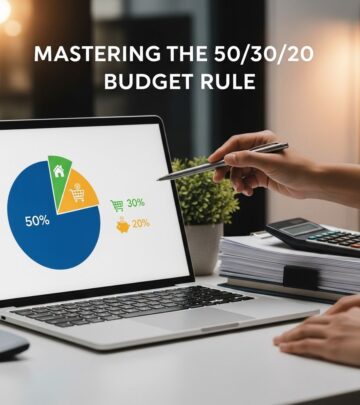
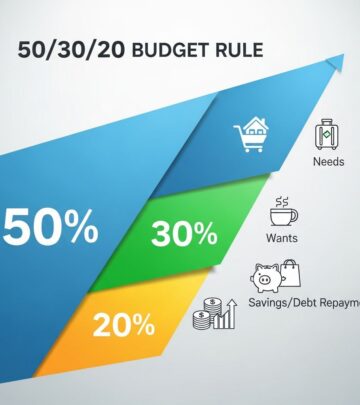
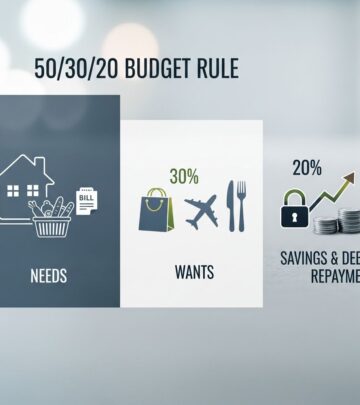
| 50-30-20 rule | 50% needs, 30% wants, 20% savings | Simple balance between needs, wants, and minimum savings. | Beginners or those needing a straightforward starting point. |
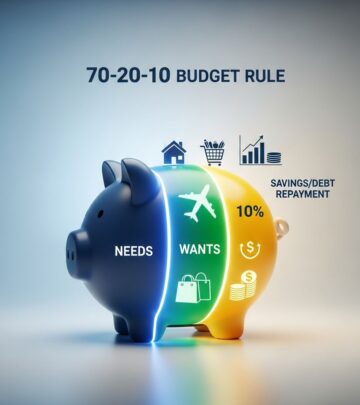
| 70-20-10 | 70% expenses, 20% savings, 10% debt/charity | Broad expense category with moderate savings. | People who want more flexibility in spending while still saving. |
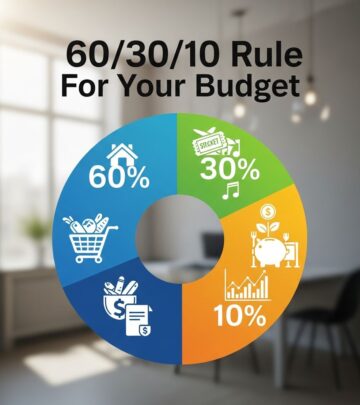
| 60-30-10 | 60% savings/debt/investments, 30% essentials, 10% wants | Very aggressive saving and investing. | High earners or people with very low living costs. |
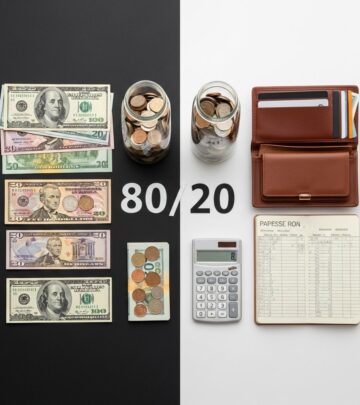
| 80-20 rule | 80% needs & wants, 20% savings | Pay yourself first with 20% savings; the rest covers everything else. | Those who want a simple, two-category budget. |
Many financial educators suggest starting with a simple method (such as 50-30-20) and then adjusting the percentages, potentially moving toward approaches like 30-30-30-10 as your income grows or your goals become more savings-focused.
How to set up a 30-30-30-10 budget step-by-step
Here is a practical process to implement the 30-30-30-10 rule in your own finances.
Step 1: Calculate your monthly take-home pay
- Add all sources of net income: salary after tax, freelance work, side hustles, and regular transfers (such as stipends).
- Use the average of variable income over the last 3–6 months if your income fluctuates.
Knowing your true take-home pay is essential because your percentages will be based on this amount.
Step 2: Multiply by each percentage
Once you know your monthly net income, calculate the dollar limit for each category:
- Housing: Income × 0.30
- Other essentials: Income × 0.30
- Savings & debt: Income × 0.30
- Discretionary: Income × 0.10
You can use a spreadsheet, budgeting app, or calculator to automate this step. Many budget templates allow you to input percentages and income to generate these numbers.
Step 3: List your actual expenses by category
Look at your bank and card statements from the last 1–3 months and sort every transaction into one of the four buckets:
- Housing: rent, mortgage, housing insurance, etc.
- Other essentials: groceries, basic utilities, minimum payments on debt, transportation, and necessary healthcare.
- Savings & debt: transfers into savings accounts, retirement contributions you control, extra payments toward loans.
- Discretionary: dining out, streaming services, vacations, non-essential shopping, etc.
This exercise shows how your current spending compares with the 30-30-30-10 targets.
Step 4: Adjust to fit the 30-30-30-10 targets
If you are over the limit in any category, explore changes:
- Housing: consider negotiating rent, finding a roommate, relocating, or refinancing if possible.
- Essentials: reduce grocery overspending, compare insurance providers, lower utility usage, or choose cheaper transport options.
- Discretionary: cut or rotate subscriptions, reduce impulse purchases, and plan lower-cost entertainment.
If the percentages feel impossible due to your circumstances, adjust them slightly while keeping the spirit of the rule: aim to keep housing reasonable and dedicate as much as you reasonably can to savings and debt.
Step 5: Automate your savings and payments
To make the 30-30-30-10 budget easier to stick to:
- Set up automatic transfers to savings or investment accounts right after payday (often called “paying yourself first”).
- Automate minimum and extra debt payments where appropriate.
- Use separate accounts or sub-accounts for discretionary spending to avoid spending more than 10%.
Financial behavior research shows that automation significantly increases the likelihood of consistent saving, because it removes the need for repeated decisions.
Step 6: Review and refine monthly
Budgets work best when reviewed regularly. Each month:
- Compare actual spending to the 30-30-30-10 targets.
- Identify where you overspent and why.
- Adjust category limits, habits, or the percentages if needed.
Over time, you may find that you can increase the savings percentage or that you need a slightly different distribution that still follows the same principles.
When the 30-30-30-10 budget might be right for you
The 30-30-30-10 method can be especially helpful if:
- Your housing costs are manageable or flexible and you want to keep them from creeping up further.
- You have clear goals like paying off debt faster or increasing retirement savings.
- You prefer a structured, percentage-based approach rather than tracking dozens of categories.
- You can reasonably free up 30% of your income for savings and debt over time, even if you must build up to it.
Situations where you may need a different approach
Other methods may be more suitable if:
- You live in a very high-cost area where housing is above 30% even at a modest level.
- Your income is irregular or low, and you need a flexible method like the 80-20 rule or a basic zero-based budget.
- You are just starting to budget and want an easier entry point such as the 50-30-20 rule.
- You enjoy detailed tracking and prefer many subcategories.
Frequently Asked Questions (FAQs)
Q: What does each 30% and 10% cover in the 30-30-30-10 budget?
A: The first 30% covers housing costs (rent or mortgage and related housing bills). The second 30% covers other essential expenses such as groceries, transportation, insurance, and basic utilities. The third 30% goes to savings and additional debt payments, including contributions to an emergency fund and retirement accounts. The final 10% is for discretionary spending like dining out, entertainment, travel, and non-essential shopping.
Q: Is the 30-30-30-10 rule better than the 50-30-20 rule?
A: It depends on your goals. The 30-30-30-10 rule dedicates more to savings and debt (30% versus 20%), which can accelerate your progress but may require more discipline or a higher income. The 50-30-20 rule is simpler and often recommended as a starting point because it gives 50% to needs, 30% to wants, and 20% to savings. Many people begin with 50-30-20 and gradually transition to more savings-focused splits like 30-30-30-10 as their finances improve.
Q: What if my housing costs are already more than 30% of my income?
A: If your housing exceeds 30%, you have several options: adjust the percentages temporarily (for instance, 35% housing, 25% essentials, 30% savings, 10% discretionary), look for ways to lower housing costs over the long term, or choose a different budgeting method that better reflects your reality. Housing affordability data shows that many households pay more than 30% in high-cost areas, so your situation is not unusual. The key is to keep housing as reasonable as possible while still prioritizing savings and debt repayment when you can.
Q: Should I include minimum debt payments in essentials or savings?
A: A common approach is to treat minimum required payments on debts as part of your essential expenses, since they must be paid to avoid default, and treat any extra payments above the minimum as part of your savings and debt-repayment 30%. This aligns with how many budgeting frameworks distinguish between required costs and contributions toward future goals.
Q: Can I change the percentages in the 30-30-30-10 budget?
A: Yes. The 30-30-30-10 rule is a guideline, not a rigid law. Financial education resources emphasize that percentage-based budgets should be adjusted to match your income, goals, and cost of living. You might, for example, use 25-35-30-10 or 30-25-35-10, as long as you maintain a healthy balance between essentials, savings, and discretionary spending.
References
- The 4 Best Budgeting Methods To Try — Clever Girl Finance. 2024-01-05. https://www.clevergirlfinance.com/how-to-budget/
- Automatic Enrollment, Automatic Contributions, and Retirement Savings Outcomes — U.S. Bureau of Labor Statistics. 2021-09-01. https://www.bls.gov/opub/mlr/2021/article/automatic-enrollment-automatic-contributions-and-retirement-savings-outcomes.htm
- Financial Capability in the United States 2022 — FINRA Investor Education Foundation. 2022-11-15. https://www.finrafoundation.org/financial-capability-study
- How To Use Budget Categories — Clever Girl Finance. 2023-08-10. https://www.clevergirlfinance.com/budget-categories/
- The State of the Nation’s Housing 2024 — Joint Center for Housing Studies of Harvard University. 2024-06-19. https://www.jchs.harvard.edu/research-areas/reports/state-nations-housing-2024
Similar Articles








Read full bio of medha deb