3% Down Mortgages Explained
Unlock homeownership with just 3% down: Explore low-down-payment options, eligibility rules, and smart strategies for first-time buyers in 2026.
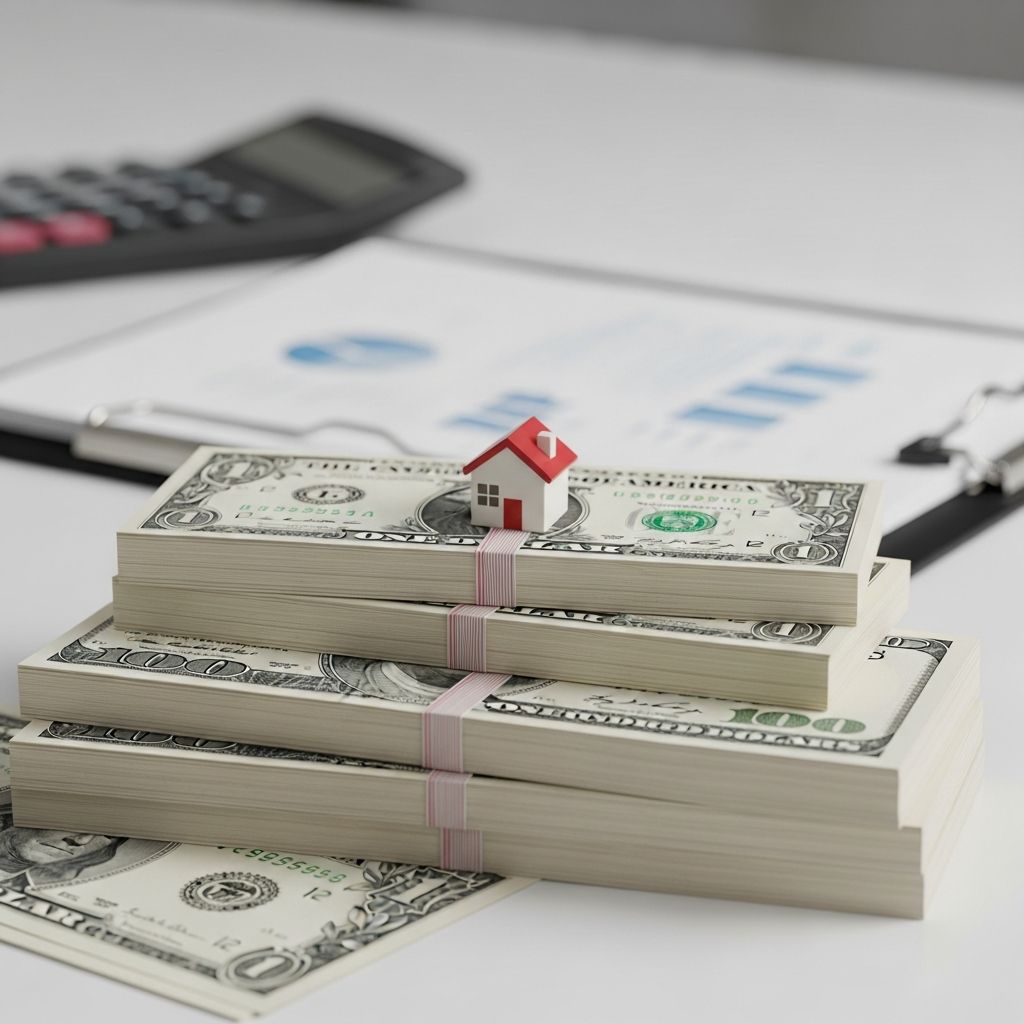
Low-down-payment mortgages have transformed homeownership opportunities, particularly for those unable to save a full 20% upfront. A 3% down mortgage enables qualified buyers to finance 97% of a home’s purchase price, drastically reducing the barrier to entry in a competitive real estate landscape. These programs, backed by entities like Fannie Mae and Freddie Mac, cater primarily to first-time buyers while imposing specific credit and income guidelines.
Why Consider a 3% Down Payment Option?
In 2026, escalating home prices and steady mortgage rates make substantial down payments challenging for many. Programs requiring only 3% down allow buyers to preserve liquidity for closing costs, repairs, or reserves. For a $400,000 home, this equates to $12,000 down versus $80,000 at 20%, freeing up capital without delaying ownership. Such options also align with rising conforming loan limits, now at $832,750 for most areas, boosting borrowing power by over $26,000 from prior years.
These mortgages suit individuals with stable employment, decent credit, and manageable debt, offering a pathway amid market pressures. However, they introduce added costs like private mortgage insurance (PMI), which protects lenders on loans exceeding 80% loan-to-value (LTV).
Popular 3% Down Mortgage Programs
Several conventional loan variants stand out for their 3% minimums, each with tailored features for diverse buyer profiles.
- Conventional 97: Offered through Fannie Mae, this finances 97% LTV on fixed-rate loans for single-family homes. No income caps apply, and down payment sources include gifts or assistance. Requires a primary residence purchase.
- HomeReady: Fannie Mae’s flexible program for lower-income households (typically under 80% of area median income). Allows 3% down, accepts non-occupant co-borrowers, and permits rental income offsets for debt-to-income (DTI) calculations.
- Home Possible: Freddie Mac’s counterpart, mirroring HomeReady but emphasizing boarding houses or multi-generational homes. Non-occupying co-borrowers can fund the down payment.
- HomeOne: Fannie Mae’s first-time buyer focus, waiving the three-year no-ownership rule for some, with 3% down and no income limits in many cases.
These programs differ from government-backed loans: unlike VA or USDA (0% down) or FHA (3.5% minimum), they avoid upfront funding fees but mandate PMI.
Eligibility Criteria for 3% Down Loans
Qualifying demands meeting lender standards on credit, income stability, and DTI ratios.
| Requirement | Conventional 3% Down |
|---|---|
| Credit Score | Minimum 620; higher scores yield better rates |
| Down Payment | 3% for fixed-rate; 5% for ARMs |
| DTI Ratio | Typically <43%; flexible for some programs |
| Property Type | Primary residence, 1-4 units within limits |
| First-Time Buyer | Often required or prioritized |
Borrowers must document funds’ origins, avoiding undisclosed loans. Income limits vary by program and location; for instance, HomeReady caps at area medians. Jumbo loans or investment properties demand higher down payments, often 20%.
Costs Associated with Low Down Payments
Beyond the principal, 3% down loans incur PMI at 0.58%-1.86% annually of the loan amount, added monthly until 20% equity builds. For a $400,000 home with 3% down ($388,000 loan), PMI might cost $225-$600 monthly.
Closing costs (2-5% of loan) and reserves (2-6 months’ payments) add hurdles. Gift funds cover down payments but not always reserves. Total upfront for a $400,000 purchase: ~$12,000 down + $8,000-$20,000 closing = $20,000-$32,000.
Comparing 3% Down to Other Low-Down Options
| Loan Type | Min Down | Min Credit | Insurance/Fee | Best For |
|---|---|---|---|---|
| Conventional 3% | 3% | 620 | PMI (until 20% equity) | First-timers w/ good credit |
| FHA | 3.5% (10% if <580) | 580 | MIP (upfront + annual) | Lower credit scores |
| VA | 0% | None (620 typical) | Funding fee 2.15-3.3% | Veterans |
| USDA | 0% | None (640 typical) | Guarantee fee 1% upfront + 0.35% annual | Rural buyers |
Conventional edges FHA on cancelable PMI and no upfront fees, but FHA suits weaker credit. VA/USDA excel for eligible zero-down seekers.
Financial Pros and Cons
Advantages
- Lower Entry Barrier: Saves tens of thousands upfront.
- Equity Building: Payments accrue ownership faster than renting.
- Gift Flexibility: Family contributions accepted.
- PMI Cancellation: Drops at 20% equity, unlike FHA’s lifetime MIP in some cases.
Disadvantages
- PMI Expense: Increases monthly outlay by hundreds.
- Higher Rates: Low down payments often mean 0.25-0.5% rate premiums.
- Risk Exposure: Less cushion against value drops or emergencies.
- Stricter Qualification: Demands strong credit/DTI vs. government loans.
Steps to Secure a 3% Down Mortgage
- Check Credit: Pull reports; aim for 620+ and fix issues early.
- Save Strategically: Target 3-5% plus closing; explore grants.
- Get Pre-Approved: Shop lenders for best terms on conforming loans.
- Calculate Affordability: Factor PMI, taxes, insurance into DTI.
- Document Everything: Prove income stability and fund sources.
- Lock Rates: Monitor 2026 market; fixed-rates preferred for stability.
Consult multiple lenders, as program availability varies. Down payment assistance from states or nonprofits can supplement.
Is 3% Down Ideal for You?
Ideal for creditworthy first-timers prioritizing speed over minimal payments. If credit lags, pivot to FHA. Larger down payments (5-10%) unlock better rates and no PMI sooner. Run scenarios: a 3% down $400k loan at 6.5% with PMI totals ~$2,800/month vs. 20% down at 6.25% ~$2,200. Equity growth offsets costs long-term.
Weigh renting vs. buying: ownership hedges inflation, builds wealth, offers tax deductions.
Frequently Asked Questions
Can I use gift money for 3% down?
Yes, gifts from relatives cover down payments fully; provide a letter confirming no repayment.
How long does PMI last?
Until 20% equity via payments or appreciation; request cancellation at 78% LTV.
Are 3% down loans available for jumbos?
No, jumbos typically require 20%+ down due to risk.
What’s the 2026 conforming limit?
$832,750 baseline, higher in costly areas.
Do I need to be a first-time buyer?
Many programs require it or no ownership in 3 years.
Navigating 2026 Market Dynamics
With rates unlikely dipping to 3% soon, focus on credit optimization and assistance programs. Rising limits enhance access, but inventory shortages persist. Partner with advisors for personalized paths.
References
- Minimum Mortgage Requirements for 2026 — LendingTree. 2026. https://www.lendingtree.com/home/mortgage/minimum-mortgage-requirements/
- How Much Down Payment Do You Need To Buy A Home in 2026? — Amerisave. 2026. https://www.amerisave.com/learn/how-much-down-payment-do-you-need-to-buy-a-home
- 3 percent down mortgages: A guide to your options — Bankrate. 2026. https://www.bankrate.com/mortgages/3-percent-down-mortgage-guide/
- Conventional Loan Requirements for 2026 — NerdWallet. 2026. https://www.nerdwallet.com/mortgages/learn/conventional-loan-requirements-guidelines
- 3% Down Payment Mortgages for First-Time Home Buyers — The Mortgage Reports. 2026. https://themortgagereports.com/16976/97-mortgage-low-downpayment-3-mortgage-rates
- FHFA Announces Conforming Loan Limit Values for 2026 — Federal Housing Finance Agency (official .gov). 2026. https://www.fhfa.gov/news/news-release/fhfa-announces-conforming-loan-limit-values-for-2026
Similar Articles








Read full bio of medha deb