23 Money-Saving Items Everyone Should Own
Discover 23 essential household items that pay for themselves by slashing utility bills, reducing waste, and cutting everyday expenses over time.
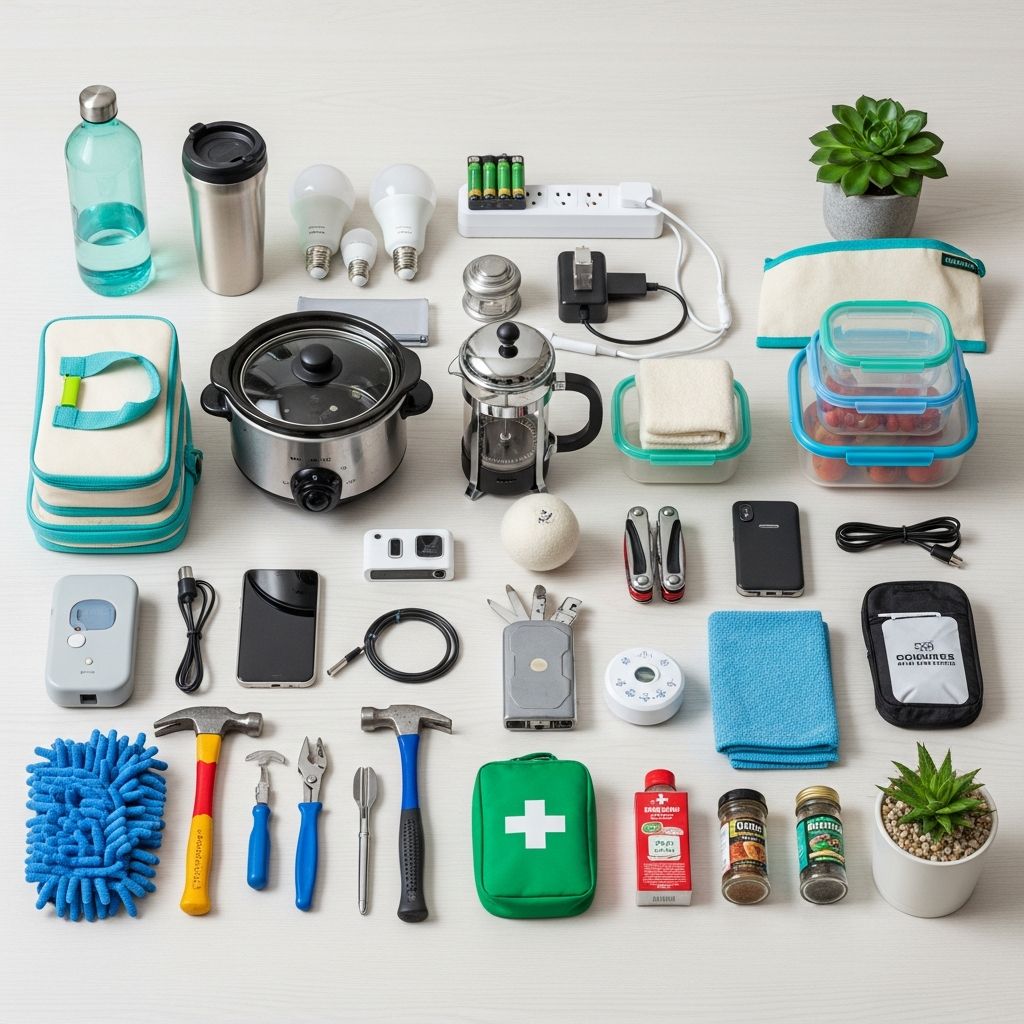
Thrifty shoppers always seek cheaper alternatives, but true savings come from items that generate returns over time. These 23 essentials reduce utility bills, minimize waste, and curb impulse buys, potentially saving hundreds annually. Drawing from practical household hacks, this guide details each item’s benefits, costs, and long-term value.
1. Rechargeable Batteries
Household devices like remote controls, wall clocks, cameras, toys, and smoke alarms devour disposable batteries. A quality set of rechargeable batteries eliminates monthly store runs and prevents dead batteries in storage. Invest upfront in NiMH rechargeables and a smart charger; they recharge hundreds of times, paying for themselves after 20-30 uses. Unplug chargers when idle to avoid phantom energy draw, saving extra on electricity.
2. Efficient Showerheads
Showers account for 17% of home water use.
WaterSense-labeled showerheads
restrict flow to 2.0 gallons per minute while maintaining pressure, slashing water and heating costs. An average family saves $70 yearly on water alone, plus more on energy. Installation takes minutes; choose models with adjustable sprays for versatility.3. Outdoor Solar Powered Motion Activated Lights
Illuminate pathways and deter intruders without wiring or electricity bills. These lights charge via sunlight and activate on motion, ideal for garages, yards, or porches. At under $20 each, they cut outdoor lighting costs to zero while enhancing security. Position for maximum sun exposure to ensure reliable performance.
4. Energy Star Washing Machine
Traditional top-loaders guzzle water and energy.
Energy Star front-loaders
use 35% less water and 25% less energy per load, saving $120+ annually for average households. They spin clothes drier, reducing dryer time and wear. Long-term durability offsets the higher upfront cost.5. Energy Star CFLs or LEDs
Switching from incandescents to compact fluorescent lamps (CFLs) or LEDs cuts lighting bills by 75%. A single bulb saves $40-60 over its life. Use Energy Star-rated for verified efficiency; calculate personal savings with EPA tools based on local rates. LEDs last 25 times longer, ideal for hard-to-reach fixtures.
6. Baking Soda
At $1.50 per pound, baking soda is the ultimate multitasker: cleans counters, deodorizes fridges, unclogs drains, polishes silver, and tenderizes meat. It replaces pricier cleaners, saving $50+ yearly. Stock up in bulk; store dry for indefinite shelf life.
7. Reusable Water Bottle
Weekly $6 bottled water cases cost $300+ yearly. A durable stainless steel or glass reusable bottle ends this habit, paying off in weeks. It reduces plastic waste and ensures hydration on the go. Opt for insulated models to keep drinks cold/hot for hours.
8. Mouthwash Dispenser or Dilution System
A $5 1.5L mouthwash lasts months when diluted 50/50 with water in a dispenser. It maintains efficacy while doubling volume, saving $100+ annually. Shake well before use; test ratios for taste preference.
9. Spare Change Jar
Combat ‘coins-in-couch’ syndrome with a dedicated jar. Family contributions accumulate $200-500 yearly effortlessly. Roll quarters monthly for high-yield savings accounts. Gamify by tracking weekly totals.
10. Vacuum Sealer
Buy bulk meat, produce, or cheese without spoilage. Seal and freeze strawberries, herbs, or leftovers—zero waste. Entry-level sealers cost $50; savings from bulk buys recoup in months. Portion meals ahead for convenience.
11. Blender
Daily $4 smoothies cost $120 monthly. A $20 blender lets you craft healthier versions with fresh fruits, controlling sugar. Blend smoothies, soups, sauces, or nut butters—versatile kitchen workhorse.
12. Crockpot (Slow Cooker)
Cheap cuts transform into tender meals with minimal effort. Uses less energy than ovens; batch-cook for the week. Saves $50+ monthly on dining out or takeout. Reader favorite for time-strapped families.
13. Rain Barrels
Harvest rooftop rainwater for gardens, saving on bills. A 55-gallon barrel costs $50-100; collects free water during storms. Filters prevent debris; use for non-potable needs like lawn irrigation.
14. Waterbroom
Clean driveways with 3 gallons per minute versus a hose’s 8-12. Saves 75% water while effectively blasting dirt. No soap needed; eco-friendly alternative to pressure washers for light jobs.
15. Programmable Thermostat
Automatically adjusts home temperature when away or asleep, saving 10% on heating/cooling. Models learn habits; app control adds convenience. Annual savings: $100-180 per U.S. Department of Energy estimates.
16. LED Nightlights
Use 85% less energy than incandescents; photocell models activate in dark. Prevent stubbed toes without running up bills. Packs of 5 cost $10; last years.
17. Insulated Curtains
Block drafts and retain heat/cool air, reducing HVAC use by 10-25%. Affordable thermal-lined panels pay back in one season. Double-duty as decor.
18. Low-Flow Toilet Dam (Brick in Bag)
Place sealed brick bags in tank to displace water, saving 2-4 gallons per flush. Cumulative yearly savings: $50+ on water/sewer. Inexpensive DIY fix.
19. Power Strips with Switches
Eliminate standby power from TVs, computers, chargers—up to 10% of bills. One flip cuts ‘vampire’ energy. Essential for home offices.
20. Reusable Shopping Bags
Avoid 5-10¢ bag fees; sturdy totes hold heavy loads. Keep in car; reduces plastic pollution. Lifetime cost: pennies per use.
21. Manual Coffee Grinder
Fresh grounds taste better; no electricity needed. $15 models outlast electrics. Brew savings over $200 yearly vs. cafe lattes.
22. Seed Starting Kit
Grow herbs, veggies from $2 seed packets. Saves $100+ on produce; therapeutic hobby. Indoor kits extend seasons.
23. Electric Toothbrush (with caveat)
Some claim superior plaque removal, fewer dental bills. Basic models $20; use with thorough brushing. Readers note technique matters more.
Bonus Tips for Maximum Savings
- Combine items: Pair rain barrels with waterbrooms for yard care synergy.
- Track ROI: Use apps to log bills before/after purchases.
- Buy used: Check for Energy Star certifications secondhand.
| Item | Upfront Cost | Annual Savings | Payback Period |
|---|---|---|---|
| Rechargeable Batteries | $30 | $100 | 4 months |
| Showerhead | $25 | $70 | 4 months |
| LED Bulbs (pack) | $20 | $50 | 6 months |
| Vacuum Sealer | $50 | $200 | 3 months |
Frequently Asked Questions (FAQs)
Do rechargeable batteries really save money?
Yes, they pay for themselves after 20 cycles by replacing disposables. Choose high-capacity NiMH for best value.
Are low-flow showerheads noticeable?
WaterSense models maintain pressure; most users report no difference in shower experience.
Can I DIY a vacuum sealer alternative?
Ziploc bags with straws work short-term, but dedicated sealers excel for long-term freezer storage.
How much do programmable thermostats save?
Up to 10% on HVAC bills; $131 average annual savings per Energy.gov.
Are rain barrels legal everywhere?
Check local laws; most areas allow for non-potable use. Filters ensure clean collection.
References
- 23 Money-Saving Items Everyone Should Own — Wise Bread. 2010 (evergreen personal finance advice). https://www.wisebread.com/23-money-saving-items-everyone-should-own
- WaterSense Showerheads Savings — U.S. Environmental Protection Agency. 2024-10-15. https://www.epa.gov/watersense/showerheads
- Energy Star Washing Machines — U.S. Department of Energy. 2025-03-20. https://www.energy.gov/energysaver/energy-star-washing-machines
- Lighting Choices Savings Calculator — Energy Star (EPA/DOE). 2025-01-10. https://www.energystar.gov/products/lighting_fans/light_bulbs/savings_calculator
- Programmable Thermostats — U.S. Department of Energy. 2024-11-05. https://www.energy.gov/energysaver/programmable-thermostats
Similar Articles








Read full bio of medha deb