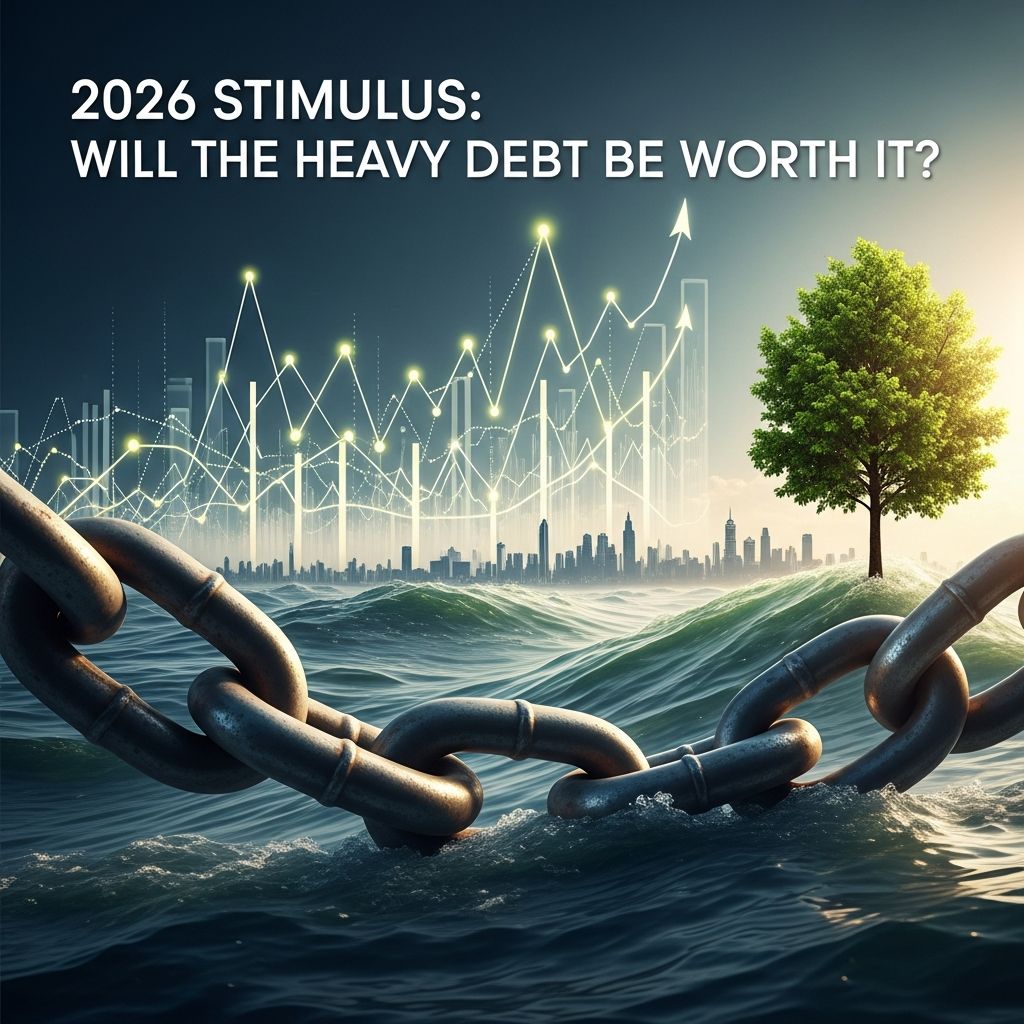
2026 Stimulus: Will the Heavy Debt Be Worth It?
As 2026 tax refunds and tariff dividends promise economic boost, can America afford the mounting debt load?
The One Big Beautiful Bill Act (OBBBA), enacted in July 2025, sets the stage for substantial economic stimulus in 2026 through delayed tax refunds and business incentives. Designed to counterbalance tariff impacts, this package promises roughly $285 billion in fiscal support—nearly 1% of GDP—via consumer refunds and corporate tax relief. Lower- and middle-income households stand to gain from increased refunds, no tax on tips or overtime, and enhanced child credits, while businesses benefit from full expensing provisions. Yet, as federal debt surpasses $36 trillion, critics question if short-term gains justify long-term fiscal burdens.
What is the 2026 Economic Stimulus Package?
The OBBBA represents a multifaceted response to economic pressures from 2025 tariffs. Rather than immediate paycheck adjustments, it modifies deductions, delivering benefits as tax refunds in early 2026. This timing mismatch means consumers feel the stimulus post-tariff pain, with refunds projected to rise 44% over 2025 levels, totaling about $150 billion.
Key consumer provisions include:
- Increased standard deduction, simplifying filings and boosting refunds for most filers.
- No federal tax on tips, overtime pay, or car loan interest, directly aiding service workers, hourly employees, and vehicle owners.
- Child tax credit expansion, providing more support for families.
- State and local tax (SALT) deduction hike from $10,000 to $40,000 for incomes under $500,000.
- Extra $6,000 deduction for seniors earning up to $75,000.
These changes target lower, middle, and even slightly upper-income groups, encouraging spending on retail and boosting state sales tax revenues as refunds are typically spent quickly.
Business Tax Cuts: Fueling Investment and Growth
Complementing consumer relief, the OBBBA includes retroactive business incentives effective from January 2025. Companies already saw $100 billion in tax savings by September 2025 payments, with another $135 billion slated for 2026.
| Provision | 2025 Status | OBBBA Change | Impact |
|---|---|---|---|
| Capital Equipment Expensing | 40% expensing | 100% expensing | Accelerates investments in machinery. |
| R&D Costs | 5-year amortization | 100% immediate expensing | Boosts innovation, especially domestic R&D. |
| Corporate Interest Deduction | Based on EBIT | Based on EBITDA | Eases financing for expansions. |
| Manufacturing Facilities | No provision | 100% immediate expensing | Encourages U.S. production builds. |
These measures aim to spur capital spending, job creation, and reshoring of manufacturing, aligning with administration goals amid global trade tensions.
Tariff Dividends: The $2,000 Check Promise
President Trump has touted $2,000 ‘dividend’ payments per person (excluding high earners) funded by tariff revenues, framing them as returns on America’s economic resurgence. White House officials confirm commitment, though details like eligibility—potentially capping at $100,000 household income—remain fluid. Treasury Secretary Scott Bessent suggested alternatives like existing tax cuts if checks falter.
However, feasibility hinges on Congress. Tariff collections hit $158.4 billion in 2025 projections, rising to $207.5 billion in 2026, but fall short of funding universal $2,000 checks (estimated $280–$607 billion cost) alongside debt reduction. Legal challenges could mandate refunds to importers, further complicating payouts.
- Target: Middle- and lower-income households.
- Form: Direct checks, rebates, or tax credits.
- Status: Under review; no timeline or legislation yet.
Separate military bonuses—$2,900 billion housing supplements for active duty—highlight targeted relief already disbursed.
Projected Economic Impacts
The combined stimulus arrives amid Federal Reserve rate cuts and balance sheet stabilization, amplifying effects. Consumers, receiving larger refunds, are likely to increase spending on durables and services, lifting retail sales. Businesses, with enhanced cash flow, may accelerate hiring and capex.
Quantified boosts:
- Consumer refunds: +44%, $150B total.
- Business savings: $235B (2025–2026).
- Overall: ~1% GDP tailwind.
States benefit indirectly via higher sales taxes. Yet, tariffs have already cost households ~$1,200 on average through higher prices, per Joint Economic Committee analysis using Treasury data.
The Debt Dilemma: Short-Term Gain vs. Long-Term Pain
U.S. debt exceeds $36 trillion, with interest payments rivaling defense spending. OBBBA’s tax cuts widen deficits by $285 billion in 2026 alone, without offsetting revenue measures beyond tariffs—which primarily burden consumers.
Pros of stimulus:
- Immediate GDP growth and employment.
- Offsets tariff inflation.
- Encourages domestic investment.
Cons:
- Accelerates debt spiral; interest crowds out future spending.
- Tariff revenues insufficient for promises.
- Risk of inflation if spending overheats.
Economists debate sustainability: while 2026 offers tailwinds, unchecked deficits threaten fiscal stability.
Who Benefits Most?
Households: Middle-income families with children or overtime earners see largest refund jumps. Seniors and high-SALT payers in blue states gain too.
Businesses: Manufacturers and R&D-heavy firms thrive from expensing.
Losers: High earners over thresholds; tariff-hit importers passing costs to consumers.
| Group | Key Benefit | Est. Gain |
|---|---|---|
| Low-Income | Standard deduction, no tip tax | 20–30% refund increase |
| Middle-Income Families | Child credit, overtime | 40–50% refund boost |
| Seniors (<$75k) | $6k deduction | $1,000+ savings |
| Manufacturers | Facility expensing | Millions in accelerated deductions |
Alternatives and Risks
If tariff dividends stall, embedded tax cuts serve as de facto stimulus. Risks include court-mandated tariff refunds, congressional gridlock, or revenue shortfalls. Administration eyes debt paydown, but analysts doubt feasibility given projections.
Frequently Asked Questions (FAQs)
Q: When will 2026 tax refunds arrive?
A: Early 2026, following 2025 tax filings; expect 44% average increase due to OBBBA changes.
Q: Who qualifies for $2,000 tariff dividends?
A: Proposed for middle/lower-income (details pending; possibly <$100k households). Requires congressional approval.
Q: Are tariffs funding the stimulus?
A: Partially; 2026 revenues ~$207B, but costs exceed for full promises. Consumers bear ~$1,200/household via prices.
Q: How does this affect national debt?
A: Adds $285B stimulus without full offsets, exacerbating deficits amid $36T+ debt.
Q: Will businesses hire more?
A: Likely, with retroactive expensing boosting cash flow for investments.
References
- Significant Consumer Stimulus Arrives in 2026 — Baird Wealth. 2025-11. https://www.bairdwealth.com/insights/market-insights/washington-policy-research-index/2025/11/significant-consumer-stimulus-arrives-in-2026/
- Will Trump Launch $2000 Stimulus Checks for Americans in 2026? — TIME. 2025. https://time.com/7344466/trump-stimulus-checks-payment-for-americans-status/
- Are New Trump $2000 Payments Coming in 2026? What to Know Now — Kiplinger. 2025. https://www.kiplinger.com/taxes/are-new-trump-payments-coming
- Stimulus payment January 2026, IRS direct deposit relief payment tariff dividend fact check — FOX 5 Atlanta. 2025. https://www.fox5atlanta.com/news/stimulus-payment-january-2026-irs-direct-deposit-relief-payment-tariff-dividend-fact-check
Similar Articles








Read full bio of Sneha Tete