2026 Housing Outlook
Discover how mortgage rates, home prices, and sales volume will shape the U.S. housing market in 2026 for buyers and sellers alike.

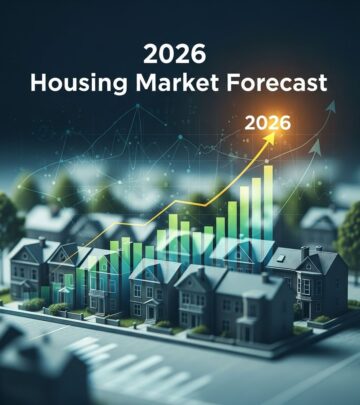
The U.S. housing sector stands at a pivotal moment entering 2026, with forecasts pointing to stabilization after years of volatility. Experts predict subdued home price appreciation, gradually easing mortgage rates, and a modest uptick in sales activity, creating a more balanced environment for participants.
Current Market Snapshot
Throughout 2025, the market grappled with elevated mortgage rates hovering above 6%, record-high home prices, and constrained inventory, leading to stagnant sales around 4 million units annually. This imbalance stemmed from a lingering ‘lock-in effect,’ where homeowners with sub-4% rates hesitated to sell, coupled with robust wage growth failing to fully offset borrowing costs.
However, late 2025 signals suggest a thaw: inventory levels ticked upward as life events prompted listings, and Federal Reserve rate cuts indirectly lowered construction financing costs, spurring new builds.
Home Price Trajectories
Consensus among analysts indicates minimal national home price growth in 2026, ranging from 0% to 1% year-over-year. Redfin projects a 1% median sale price rise, tempered by persistent high rates and economic softening curbing demand. J.P. Morgan anticipates flat prices at 0%, with demand gains offsetting rising supply from recent construction.
Zillow echoes this stability, forecasting 0.7% annual home value growth by year-end, driven by balanced new listings and sales paces. Realtor.com highlights regional divergences, with prices dipping in 22 major cities, particularly overbuilt Sun Belt and West Coast areas like South Florida and Southern California.
| Forecast Source | Predicted Price Growth | Key Rationale |
|---|---|---|
| Redfin | 1% | High rates, weak economy limit demand |
| J.P. Morgan | 0% | Demand uptick balances supply increase |
| Zillow | 0.7% | Supply-demand alignment stabilizes values |
| Realtor.com | Dips in 22 cities | Overbuilding in Sun Belt/West Coast |
Mortgage Rate Expectations
Borrowing costs are poised for relief, with averages projected at 6.3%, down from 2025’s 6.6%. This modest decline, alongside slower price hikes, will reduce monthly payments for the first time since 2020, enhancing accessibility.
Lower Fed funds rates will ease builder loans, indirectly supporting mortgage trends, though rates remain above pre-pandemic norms due to inflation persistence and policy shifts.
Sales Volume Rebound
Existing home sales could climb significantly, with projections from 4.13 million (Realtor.com, +2%) to 4.24 million (Zillow, +4.4%), and optimistic views up 14% nationwide per NAR economists.
This resurgence ties to fading lock-in effects, more listings from relocations, and affordability gains qualifying additional buyers. New-home sales may rise 1%, bolstered by construction upticks.
- Increased inventory: More sellers entering as rates normalize.
- Buyer activation: Wage growth outpacing housing costs.
- Balanced negotiations: Shift to buyer-friendly dynamics in many markets.
Affordability Renaissance
For the first time post-financial crisis, wages are expected to grow faster than home prices and payments, marking a sustained affordability boost. Monthly costs will shrink in real terms, with home prices declining relative to incomes and services.
Redfin notes this trend persisting, as 1% price growth lags wage increases, compounded by sub-2025 rate dips. NAR emphasizes escaping the 4-million sales floor through these dynamics.
Supply Dynamics and Construction
The U.S. faces a moderated housing shortage of about 1.2 million units, far below exaggerated estimates, as household formations nearly match completions over decades. New supply has risen, curbing prices in overbuilt regions.
Single-family construction eyes 1% growth, aided by cheaper developer financing. Multifamily sees slowing deliveries post-2021 surge, tightening rentals amid high renter demand, though immigration curbs may temper growth in select areas.
Regional Variations
Geographic shifts loom large: Sun Belt hotspots like Texas and Florida cool from overbuilding, while Midwest hubs—Columbus, Indianapolis, Kansas City—gain traction with affordability and university proximity.
West Coast and Sun Belt face price drops from excess new homes; emerging data center demand spurs greenfield projects along I-20.
Policy and Economic Influences
Trump-era reforms may have limited supply impact. Weaker economic growth could cap price momentum, while wealth effects from equities bolster demand. Commercial sectors like multifamily prioritize retention amid unleased units.
Rental Market Pressures
Renters, deterred by buying barriers, intensify competition as apartment supply wanes. Sun Belt/Midwest oversupply lingers, but national demand holds firm.
Buyer and Seller Strategies
For Buyers: Target Midwest for value; prepare for 6.3% rates with strong down payments. Monitor inventory spikes in cooling markets.
For Sellers: Price competitively in hot spots; leverage rising sales volumes. In declining areas, emphasize upgrades.
Investment Opportunities
Commercial real estate eyes 16% activity growth to $562B, led by data centers hitting leasing records despite power constraints. Residential investors benefit from stabilizing values and sales upticks.
FAQs
Will home prices fall in 2026?
Not nationally; expect 0-1% growth overall, but declines in 22 cities like Sun Belt areas due to supply glut.
What mortgage rates to expect?
Averages around 6.3%, easing from 2025 for better payments.
Is 2026 a good time to buy?
Yes, with improving affordability, rising sales, and balanced markets favoring buyers in many regions.
How much will sales increase?
From 2% to 14%, potentially lifting from 4M units amid more inventory.
What about rentals?
Tighter supply boosts competition; focus on retention in oversupplied markets.
References
- Redfin’s 2026 Predictions: Welcome to The Great Housing Reset — Redfin. 2026. https://www.redfin.com/news/housing-market-predictions-2026/
- US Housing Market Outlook — J.P. Morgan Global Research. 2026-01-27. https://www.jpmorgan.com/insights/global-research/real-estate/us-housing-market-outlook
- Home prices are poised to dip in 22 U.S. cities next year — CBS News. 2026. https://www.cbsnews.com/news/housing-market-forecast-2026-price-declines-real-estate-mortgage/
- 2026 Real Estate Outlook: What Leading Housing Economists Are Watching — National Association of Realtors. 2026. https://www.nar.realtor/magazine/real-estate-news/2026-real-estate-outlook-what-leading-housing-economists-are-watching
- U.S. Real Estate Market Outlook 2026 — CBRE. 2026. https://www.cbre.com/insights/books/us-real-estate-market-outlook-2026
- Zillow Home Value and Home Sales Forecast (March 2026) — Zillow Research. 2026-03. https://www.zillow.com/research/home-value-sales-forecast-33822/
Similar Articles








Read full bio of medha deb