2026 Housing Market Forecast
Discover how stabilizing prices, lower rates, and rising sales will reshape the U.S. housing landscape in 2026 for buyers and sellers alike.
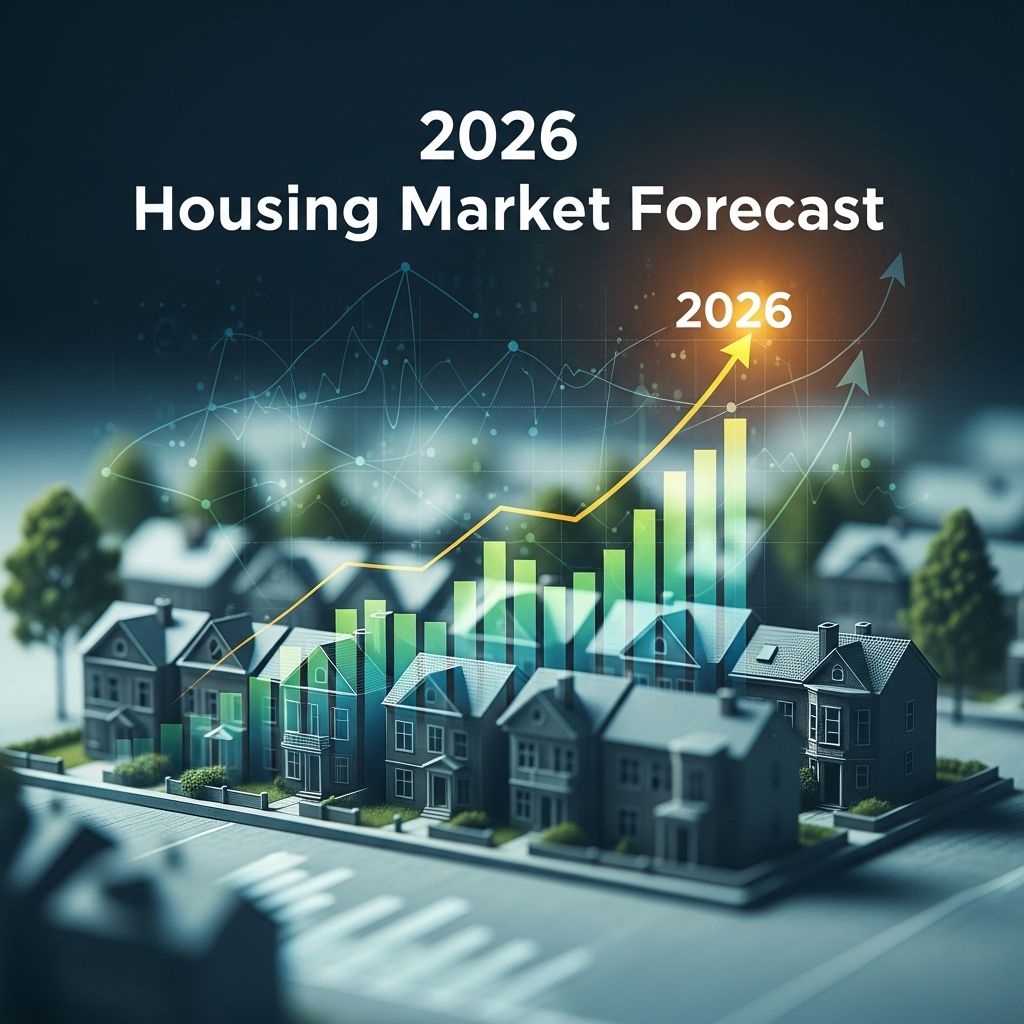
The U.S. housing market in 2026 is poised for a pivotal transition, moving away from the high-price stagnation of recent years toward greater stability and accessibility. Experts predict modest or even flat home price growth, mortgage rates dipping below recent highs, and a noticeable uptick in sales volume, creating a more balanced environment for buyers and sellers.
Price Trends: Slow Growth or Stagnation Ahead
Home prices are expected to rise minimally or hold steady nationwide in 2026, marking a departure from the rapid appreciation seen in prior years. Redfin forecasts a mere 1% year-over-year increase in median U.S. home-sale prices, constrained by persistent high mortgage rates and softening demand amid economic pressures. J.P. Morgan Global Research goes further, projecting 0% growth as rising demand from wealth effects offsets growing supply, particularly in overbuilt regions.
Zillow’s analysis aligns with this tempered outlook, anticipating a 0.7% annual rise in home values by year’s end, a slight downward adjustment from prior estimates. This stability stems from new listings and sales aligning more closely, preventing sharp fluctuations. In contrast, Realtor.com highlights potential declines in 22 of the top 100 U.S. cities, signaling a buyer-friendly shift in select markets.
- National Projection: 0-1% growth, balancing supply increases with demand recovery.
- Regional Declines: West Coast, Sun Belt areas like South Florida and Southern California face price drops due to construction gluts and reduced rental demand from policy changes.
- Midwest Gains: Affordable hubs such as Columbus, OH, Indianapolis, and Kansas City show strength, driven by university proximity and lower costs.
Mortgage Rates: Easing to Support Buyers
Borrowing costs are set to decline modestly, enhancing market participation. Realtor.com predicts an average rate of 6.3% in 2026, down from 6.6% in 2025, encouraging more transactions. This easing, alongside Federal Reserve actions lowering funds rates, will reduce construction loan burdens and stimulate supply.
Lower rates combined with wage growth outpacing price hikes will make monthly payments more manageable for the first time since 2020. Danielle Hale of Realtor.com notes that while sticker prices may not fall, real affordability improves as housing costs shrink relative to incomes.
| Year | Avg. Mortgage Rate | Projected Impact |
|---|---|---|
| 2025 | 6.6% | High barrier to entry |
| 2026 | 6.3% | Boosts sales by 2-14% |
Sales Volume: A Rebound in Transactions
Existing home sales are forecasted to climb, breaking free from the 4-million-unit plateau of recent years. Zillow revises its estimate upward to 4.24 million units, a 4.4% increase. Realtor.com sees a subtler 2% rise to 4.13 million, while the National Association of Realtors anticipates a robust 14% surge nationwide, fueled by inventory growth and the fading “lock-in effect.”
Life events are prompting more listings, and lower rates will qualify additional buyers. Robert Dietz of the National Association of Home Builders expects 1% gains in single-family construction and sales.
Affordability Renaissance: Wages Outpace Costs
For the first time post-financial crisis, wages are projected to grow faster than home prices, markedly improving buying power. Redfin emphasizes that this dynamic, paired with sub-2025 mortgage rates, will slow monthly payment growth relative to incomes.
Realtor.com economists predict declining monthly payments, with home prices effectively falling in real terms against broader economic metrics. This affordability boost is the key driver behind rising sales and a “balanced” market where neither side dominates negotiations.
Supply Dynamics: From Shortage to Equilibrium
The oft-cited housing shortage is smaller than perceived—J.P. Morgan estimates 1.2 million units, not the higher figures bandied about. Over the past 30 years, household formations have nearly matched completions. New construction is rising, particularly in single-family homes, though overbuilding in Sun Belt markets risks price softening.
Apartment supply is slowing after a boom, intensifying rental competition in many areas. Multifamily demand remains positive per CBRE, but unleased units in Sun Belt and Midwest necessitate tenant retention focus.
Regional Hotspots and Cautions
Geography will define 2026 opportunities. Pandemic-era booms are cooling in Texas and Florida due to cyclical overbuilding and sustained high rates. Conversely, Midwest cities are emerging as growth pockets with affordability and job-university synergies.
Sun Belt rentals may see tempered demand from immigration policy shifts, per Redfin. West Coast and Sun Belt home prices are declining most amid supply surpluses.
- Buyer’s Markets: 22 major cities with price dips.
- Seller’s Holdouts: Midwest affordability magnets.
- Watch Zones: Sun Belt for supply overhang risks.
Buyer and Seller Strategies for 2026
For Buyers: Capitalize on easing rates and affordability—prioritize Midwest or declining markets. Strong wage growth supports larger mortgages; monitor inventory for negotiation leverage.
For Sellers: In stable or rising areas, list amid growing sales volume. Avoid overbuilt regions; leverage equity built during prior appreciations.
Investors: Multifamily retention strategies amid slowing supply; eye data centers for robust demand.
Potential Risks and Wild Cards
Economic weakness could mute demand further, though wealth effects may counter this. Policy reforms under recent administrations promise limited impact. Construction timelines for power-constrained sectors like data centers add supply hurdles.
FAQs
Will home prices drop in 2026?
Not nationally, but declines are forecast in 22 major cities and overbuilt regions like the Sun Belt.
What mortgage rates can buyers expect?
Averages around 6.3%, down from 2025, improving monthly costs.
Is now a good time to buy?
2026 offers better affordability and balance, especially with sales rising.
How much will sales increase?
Projections range from 2% to 14%, breaking recent stagnation.
Which regions are safest for investment?
Midwest cities like Columbus and Indianapolis show outsized growth.
References
- Redfin’s 2026 Predictions: Welcome to The Great Housing Reset — Redfin. 2026. https://www.redfin.com/news/housing-market-predictions-2026/
- US Housing Market Outlook — J.P. Morgan Global Research. 2026-01-27. https://www.jpmorgan.com/insights/global-research/real-estate/us-housing-market-outlook
- Home prices are poised to dip in 22 U.S. cities next year — CBS News. 2026. https://www.cbsnews.com/news/housing-market-forecast-2026-price-declines-real-estate-mortgage/
- 2026 Real Estate Outlook: What Leading Housing Economists Are Watching — National Association of Realtors. 2026. https://www.nar.realtor/magazine/real-estate-news/2026-real-estate-outlook-what-leading-housing-economists-are-watching
- U.S. Real Estate Market Outlook 2026 — CBRE. 2026. https://www.cbre.com/insights/books/us-real-estate-market-outlook-2026
- Zillow Home Value and Home Sales Forecast (March 2026) — Zillow Research. 2026-03. https://www.zillow.com/research/home-value-sales-forecast-33822/
Similar Articles








Read full bio of medha deb