2026 Financial Trends Outlook
Discover the pivotal economic, credit, and fraud trends set to influence personal finances and business strategies throughout 2026.

The year 2026 promises a dynamic landscape for personal and business finances, marked by technological leaps, persistent economic uncertainties, and evolving risk profiles. Drawing from recent analyses, this article delves into the forces shaping credit markets, consumer behaviors, fraud prevention, and broader economic indicators. With the U.S. economy carrying momentum from 2025’s strong performance, stakeholders must navigate AI integration challenges, labor market volatilities, and regulatory shifts to thrive.
Economic Momentum and Underlying Risks
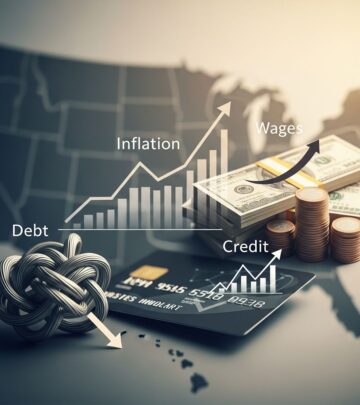
Entering 2026, the U.S. economy exhibits robust growth potential fueled by AI-driven productivity gains and resilient consumer spending. However, inflation trajectories, housing affordability issues, and labor market instabilities pose significant hurdles. Reports highlight that while 2025 exceeded growth expectations, delinquency rates for loans over 30 days past due (DPD) have lingered above pre-pandemic norms, signaling caution for lenders and borrowers alike.
Consumer resilience remains a cornerstone, with spending patterns adapting to affordability pressures. Businesses leveraging consumer credit cards for operations further complicate credit assessments, underscoring the need for nuanced risk evaluation.
- AI-fueled expansion: Productivity boosts from generative and agentic AI could drive GDP growth, though only 15% of AI adopters reported EBITDA improvements recently, prompting spending delays.
- Labor uncertainties: Evolving job markets amid tech disruptions may elevate unemployment risks in certain sectors.
- Housing challenges: Persistent high costs continue to strain first-time buyers and refinancers.
Transforming Credit Markets
Credit landscapes in 2026 are witnessing accelerated fintech penetration, particularly in credit cards, where originations surged 71% year-over-year. This shift challenges traditional lenders to innovate while managing elevated delinquencies. Public sector trends also emphasize modernization to combat fraud and enhance citizen trust through better identity verification.
| Segment | 2025 Trend | 2026 Outlook |
|---|---|---|
| Credit Cards | Fintechs +71% YoY originations | Increased competition, higher delinquencies |
| Consumer Loans | 30+ DPD above pre-pandemic | Sustained caution, AI-enhanced underwriting |
| Housing | Affordability pressures | Modest rate relief possible |
Financial institutions are converging credit, fraud, and compliance functions, with 87% anticipating tighter integration within five years to streamline operations and improve customer outcomes.
The Rise of Sophisticated Fraud Threats
Fraud losses escalated sharply, with U.S. consumers losing over $12.5 billion in 2024 and nearly 60% of companies reporting hikes into 2025. 2026 forecasts pinpoint agentic AI, deepfake job scams, and cyber intrusions as premier dangers, demanding multilayered defenses.
Institutions must prioritize governed data and explainable AI decisions to counter these autonomous attacks. Experian’s predictions stress transitioning from experimental AI to accountable systems amid regulatory pressures.
- Agentic AI exploits: Fraudsters deploy self-operating bots for seamless scams.
- Deepfakes in hiring: Fabricated candidates bypass traditional checks.
- Cyber break-ins: Targeted breaches erode trust and finances.
AI’s Evolution: From Hype to Strategic Implementation
Artificial intelligence shifts gears in 2026, moving beyond pilots to value-generating applications. CFOs are curtailing 25% of planned AI investments due to lackluster returns, favoring orchestrated ecosystems over siloed tools. In finance, this means integrated platforms for real-time risk assessment and personalized services.
Digital trends forecast AI powering upstream measurement for optimized marketing and privacy-safe targeting across channels. Success hinges on data quality, partnerships, and human oversight to ensure fairness and efficacy.
Navigating Regulatory and Compliance Shifts
Regulatory changes are intensifying, with 86% of institutions bracing for heightened scrutiny on AI governance and data practices. Convergence of risk functions promises frictionless experiences but requires robust compliance frameworks.
Public sector reports advocate modernization to fortify identity management and fraud defenses, fostering citizen confidence.
Consumer Financial Habits Evolving into 2026
Lessons from 2025 emphasize adaptive budgeting amid volatile costs. Habits like diversified savings and tech-savvy monitoring carry forward, aligning with broader trends of resilience.
Strategic Recommendations for 2026
To capitalize on opportunities:
- Invest in converged risk platforms for holistic oversight.
- Adopt AI with governance to mitigate biases and ensure explainability.
- Strengthen fraud defenses via partnerships and advanced verification.
- Monitor credit health proactively, especially in high-delinquency segments.
Frequently Asked Questions (FAQs)
What are the top economic risks for 2026?
Labor market volatility and persistent delinquencies top the list, alongside inflation and housing costs.
How is AI changing fraud prevention?
AI enables proactive, multilayered strategies against agentic threats and deepfakes.
Will fintechs dominate credit cards in 2026?
Yes, with continued origination growth challenging incumbents.
What drives credit function convergence?
87% expect integration of credit, fraud, and compliance for better efficiency.
How can consumers prepare for 2026 trends?
Build emergency funds, monitor credit, and embrace secure digital tools.
References
- 3 Key Trends to Watch in 2026 — Experian. 2026-02-10. https://www.experian.com/thought-leadership/business/key-economic-and-credit-trend-report
- Experian’s Global Insights 2026: Predictions for credit and fraud risk — Experian. 2026-01. https://www.experian.com/blogs/global-insights/wp-content/uploads/2026/01/2026_Predictions_Report_Full_Final.pdf
- 2026 Economic and Credit Outlook: Key Trends to Watch — Experian. 2026-03-09. https://www.experian.com/thought-leadership/business/2026-economic-and-credit-outlook-key-trends
- 2026 Public Sector Trends and Impact Report — Experian. 2026. https://www.experian.com/thought-leadership/business/2026-public-sector-trends-and-impact-report
- Global Insights 2026: Predictions for Credit and Fraud Risk — Experian. 2026-03-06. https://www.experian.com/thought-leadership/business/global-insights-2026-predictions
- Experian’s new fraud forecast warns agentic AI, deepfake job candidates — Experian PLC. 2026-01-13. https://www.experianplc.com/newsroom/press-releases/2026/experian-s-new-fraud-forecast-warns-agentic-ai–deepfake-job-can
Similar Articles








Read full bio of Sneha Tete