2016 IRS Tax Rates, Standard Deductions & Exemptions
Complete guide to 2016 federal tax rates, standard deductions, and personal exemptions for all filing statuses.

Understanding 2016 IRS Tax Rates and Deductions
The 2016 tax year brought important adjustments to federal income tax brackets, standard deductions, and personal exemptions. These inflation-adjusted changes affected millions of taxpayers across all income levels and filing statuses. Understanding how these components work together is essential for accurate tax planning and filing.
2016 Standard Deduction by Filing Status
The standard deduction is a fixed dollar amount that reduces your taxable income if you do not itemize deductions. For the 2016 tax year, the standard deduction amounts remained relatively stable compared to 2015, with one notable exception for heads of household filers.For 2016, the standard deduction remained at $12,600 for married filing jointly filers, the same as in 2015. For single filers and married filing separate filers, the deduction also remained the same as 2015 at $6,300. For heads of households, the deduction increased to $9,300, up from $9,250 in 2015.
| Filing Status | 2016 Standard Deduction | 2015 Standard Deduction |
|---|---|---|
| Married Filing Jointly | $12,600 | $12,600 |
| Single | $6,300 | $6,300 |
| Married Filing Separately | $6,300 | $6,300 |
| Head of Household | $9,300 | $9,250 |
Additional Standard Deduction for Seniors and Blind Filers
Taxpayers age 65 and older, or those who are blind, receive an additional standard deduction benefit. Filers who are age 65 and older or blind receive an additional $1,250 standard deduction. This provision recognizes the additional expenses often faced by seniors and individuals with visual impairments.
Personal Exemption Amount and Phase-Out
In addition to the standard deduction, taxpayers can claim personal exemptions for themselves, their spouse, and each dependent. In 2016, the personal exemption was $4,050. This represents a modest increase from the 2015 exemption amount of $4,000.
However, high-income taxpayers face limitations on their exemption benefits. For 2016, the amount was reduced if the taxpayer’s AGI was more than $155,650 ($154,950 in 2015) for married filing separately, $259,400 for single, $285,350 for head of household, and $311,300 for married filing jointly. This phase-out mechanism ensures that upper-income taxpayers receive reduced exemption benefits as their income increases.
How Standard Deductions and Exemptions Work Together
The standard deduction and personal exemptions significantly reduce taxable income for most taxpayers. For example, if a married couple with three children has $50,000 in wage income, they would have only $17,150 in taxable income after subtracting the standard deduction and personal exemptions. This illustration demonstrates how these two deductions can substantially lower tax liability, particularly for moderate-income families.
A married couple filing jointly could claim a $12,600 standard deduction plus five personal exemptions ($4,050 each, totaling $20,250), for a combined reduction of $32,850. This means only income exceeding this threshold would be subject to federal income tax.
Alternative: Itemized Deductions vs. Standard Deduction
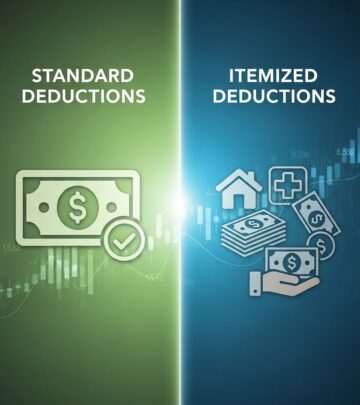
Taxpayers may choose between claiming the standard deduction or itemizing their deductions on Schedule A of Form 1040. Itemized deductions include state and local taxes paid, mortgage interest, and charitable contributions. Most taxpayers benefit from the standard deduction, as it simplifies tax filing and provides a guaranteed reduction in taxable income.
Most tax returns (68.7 percent) claimed a standard deduction, but standard deductions accounted for 42.4 percent of total deductions. This statistic reflects the preference among American taxpayers for the simplicity of the standard deduction, even though itemized deductions represent a significant share of overall deduction amounts.
2016 Tax Brackets and Tax Rates
The IRS implements a progressive tax bracket system where different portions of income are taxed at different rates. For 2016, the tax rate structure included seven marginal tax rates: 10%, 12%, 22%, 24%, 32%, 35%, and 37% for taxpayers subject to the new Tax Cuts and Jobs Act rates, though most 2016 filers still used the previous structure with rates of 10%, 15%, 25%, 28%, 33%, 35%, and 39.6%.
Tax brackets were adjusted annually for inflation to prevent bracket creep, where inflation pushes taxpayers into higher tax brackets without a real increase in income. Understanding which bracket applies to your income is essential for accurate tax planning and estimating your tax liability.
Impact of Tax Credits and Alternative Minimum Tax
Beyond deductions and exemptions, various tax credits directly reduce tax liability. For Tax Year 2016, the maximum AMT exemption increased from $83,400 to $83,800. The Alternative Minimum Tax ensures that high-income taxpayers pay at least a minimum level of federal income tax despite available deductions and credits.
Statistical Overview of 2016 Tax Returns
The IRS tax data for 2016 provides valuable insights into how Americans filed their taxes. The average standard deduction for 2016 ($8,675) remained almost unchanged over the 2015 average ($8,673). This consistency reflects stable economic conditions and minimal inflation adjustments between the two years.
Taxpayers claimed itemized deductions on 30.0 percent of all returns filed, representing 59.1 percent of the total deduction amount for the year. The average for total itemized deductions (after limitation) was $28,645 for 2016, up from the $28,214 average total claimed for 2015. These figures demonstrate that while most taxpayers use the standard deduction, those who itemize typically have significantly higher deductible expenses.
The Largest Itemized Deductions
The largest itemized deduction for 2016 was taxes paid, followed by interest paid and charitable contributions. Taxes paid increased 2.4 percent to $566.1 billion, accounting for 42.3 percent of total itemized deductions for the year. Interest paid, the second largest itemized deduction, increased to $305.0 billion. These deductions primarily benefit higher-income homeowners and residents of high-tax states.
Planning Considerations for 2016 Taxes
Understanding 2016 tax rates, standard deductions, and exemptions was critical for effective tax planning. Taxpayers needed to determine whether to claim the standard deduction or itemize, plan their income and deductions to minimize bracket creep, and consider strategies to maximize tax credits and minimize Alternative Minimum Tax exposure.
Families with dependents benefited substantially from the combination of standard deductions and personal exemptions. Self-employed individuals and business owners needed to carefully track deductible business expenses to maximize their tax benefits. High-income earners faced phase-out limitations on exemptions and itemized deductions, requiring more sophisticated planning strategies.
Frequently Asked Questions About 2016 Tax Deductions and Exemptions
Q: What is the difference between a standard deduction and an itemized deduction?
A: The standard deduction is a fixed dollar amount based on your filing status that reduces taxable income without requiring documentation. Itemized deductions are specific expenses (mortgage interest, charity, state taxes, etc.) that you must list individually on Schedule A. You choose whichever method gives you the greater tax benefit.
Q: Can I claim both a standard deduction and itemized deductions?
A: No, you must choose one or the other. You cannot claim both the standard deduction and itemized deductions on the same tax return. Select the method that reduces your taxable income the most.
Q: Who qualifies for the additional standard deduction?
A: For 2016, taxpayers age 65 or older, or those who are legally blind, qualify for an additional $1,250 standard deduction (or $1,550 for married filing jointly with both spouses qualifying).
Q: How does the personal exemption phase-out work?
A: If your adjusted gross income exceeds certain thresholds ($259,400 for single filers in 2016), your personal exemption amount begins to decrease. For each $2,500 (or fraction thereof) of income above the threshold, you lose 2% of your exemption amount.
Q: What income qualifies for the personal exemption in 2016?
A: All income types that contribute to your adjusted gross income can affect personal exemption phase-outs, including wages, self-employment income, investment income, retirement distributions, and other sources.
References
- The Standard Deduction and Personal Exemption — Tax Policy Center (Urban Institute & Brookings Institution). February 5, 2017. https://taxpolicycenter.org/sites/default/files/publication/138246/2001144-the-standard-deduction-and-personal-exemption.pdf
- 2016 Publication 501 — Internal Revenue Service (U.S. Department of Treasury). 2016. https://www.irs.gov/pub/irs-prior/p501–2016.pdf
- Individual Income Tax Returns, Preliminary Data, 2016 — Internal Revenue Service (U.S. Department of Treasury). 2017. https://www.irs.gov/pub/irs-soi/soi-a-inpd-id1802.pdf
- Section 2 Individual Income Tax Returns, 2016 — Internal Revenue Service (U.S. Department of Treasury). 2017. https://www.irs.gov/pub/irs-soi/16inintaxreturns.pdf
- Section 3 Individual Income Tax Rates, 2016 — Internal Revenue Service (U.S. Department of Treasury). 2017. https://www.irs.gov/pub/irs-soi/16intaxrates.pdf
Similar Articles








Read full bio of Sneha Tete