2-Minute Guide: Balance Transfers to Pay Off Debt
Master balance transfers to slash credit card debt fast—save hundreds in interest with this simple 2-minute strategy guide.

Struggling with high-interest credit card debt? A
balance transfer
can be your fastest path to freedom. By moving debt to a card with a 0% introductory APR, you avoid interest charges for 12-21 months, paying down principal faster and saving hundreds or thousands.What Is a Balance Transfer?
A
balance transfer
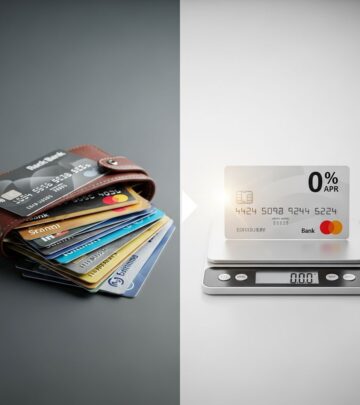
moves debt from one credit card (or sometimes loans) to a new card offering a promotional low or 0% APR period. This consolidates payments, cuts interest, and accelerates payoff. For example, a $5,000 balance at 15% APR costs $415 extra over 12 months; at 0% APR, you pay just $5,000.Key perks include:
- Interest savings: 0% intro APR for 12+ months lets every payment reduce principal.
- Debt consolidation: Combine multiple cards into one payment, simplifying budgeting.
- Credit boost: Lower utilization improves scores if paid responsibly.
Balance Transfer Savings Example
| Scenario | Total Paid (12 Months) |
|---|---|
| High-Interest Card (15% APR, $5,000) | $5,415 |
| 0% Intro APR Transfer | $5,000 |
| Savings | $415 |
Another example: $2,500 at 22% APR with $450/month payments vs. 0% for 6 months saves $161 in interest.
Pros and Cons of Balance Transfers
Pros
- Substantial interest savings during promo periods—redirect funds to principal.
- Simpler finances: One payment replaces multiple.
- Potential credit score gains from reduced utilization and on-time payments.
- Combines well with snowball/avalanche methods for faster payoff.
Cons
- Fees: 3-5% of transferred amount (e.g., $150 on $5,000).
- Time limit: Promo ends (12-21 months); regular APR (15-25%) applies after.
- Credit score hit from hard inquiry; need good score (670+) to qualify.
- Temptation to overspend if not disciplined.
Is a Balance Transfer Right for You?
Yes, if:
- You have $1,000+ in high-interest (>15%) credit card debt.
- Good credit (FICO 670+) for best offers.
- Disciplined to pay off before promo ends—calculate monthly payments needed.
- Fees < interest savings (use calculators).
No, if poor credit, can’t pay extra, or promo too short. Alternatives: Debt snowball/avalanche, consolidation loans, or nonprofit counseling.
Step-by-Step: How to Do a Balance Transfer
- Check eligibility: Review credit score, debt total. Ensure debt fits promo period.
- Compare cards: Seek 0% APR >15 months, <4% fee, high limit. Avoid same-issuer transfers.
- Apply: One app only to minimize inquiries. Provide debt details.
- Request transfer: Online/phone with old account numbers, balances. Takes 2 days-2 weeks.
- Keep paying olds: Minimums until posted.
- Pay aggressively: More than minimum to clear before promo ends.
Pro tip: Use savings calculators to plan payments.
Best Balance Transfer Cards (2026 Overview)
| Card Example | 0% APR Length | Transfer Fee | Best For |
|---|---|---|---|
| Card A (e.g., Chase Slate Edge) | 21 months | 3-5% | Long payoff |
| Card B (e.g., Citi Simplicity) | 21 months | 5% | No late fees |
| Card C (e.g., Discover it) | 18 months | 3% | Cash back |
Always verify current offers; rates vary by credit.
Frequently Asked Questions (FAQs)
Q: How long do balance transfers take?
A: 2 days to 2+ weeks. Continue old minimum payments until confirmed.
Q: Can I transfer to the same issuer?
A: Usually no—most prohibit intra-issuer transfers.
Q: What if I don’t pay off in time?
A: High regular APR applies to remaining balance; lost promo rate.
Q: Does it hurt my credit score?
A: Initial inquiry dings 5-10 points temporarily; payoff boosts long-term.
Q: Can I transfer non-credit card debt?
A: Sometimes loans, but check issuer rules—mostly credit cards.
Common Mistakes to Avoid
- Applying for multiple cards—inquiries tank scores.
- Charging new purchases—many cards apply payments to transfers first.
- Ignoring fees—ensure savings exceed 3-5% cost.
- Stopping payments post-transfer—keep momentum.
- Missing promo end—set calendar alerts.
Maximize Success: Payment Strategies
Combine with:
- Avalanche: Highest interest first post-promo.
- Snowball: Smallest balance for motivation.
- Budget cuts: Automate higher payments.
Track with apps; aim 10-20% income to debt.
Alternatives if Ineligible
- Debt management plans via nonprofits.
- 0% installment plans (e.g., Affirm).
- Personal loans at lower rates.
- DIY: Extra payments via snowball.
Balance transfers shine for qualified users—act now for 2026 offers.
References
- What is a Balance Transfer & How Does it Work? — Bank of America Better Money Habits. 2025. https://bettermoneyhabits.bankofamerica.com/en/debt/how-do-balance-transfers-work
- 5 Strategies for Paying Off Credit Card Debt — Baird Wealth. 2022-08-01. https://www.bairdwealth.com/insights/wealth-management-perspectives/2022/08/5-strategies-for-paying-off-credit-card-debt/
- How Do Credit Card Balance Transfers Help Slash Debt? — Space Coast Credit Union. 2025. https://www.sccu.com/articles/personal-finance/how-do-credit-card-balance-transfers-help-slash-debt
- Your Guide to Credit Card Balance Transfers & Their Benefits — OUR Credit Union. 2025. https://www.ourcuonline.org/blogs?blog_id=297
- What Is a Balance Transfer and How Does it Work? — Experian. 2025. https://www.experian.com/blogs/ask-experian/what-is-a-balance-transfer-and-how-does-it-work/
- How to Do a Balance Transfer — Navy Federal Credit Union. 2025. https://www.navyfederal.org/loans-cards/credit-cards/cardholder-resources/balance-transfers.html
Similar Articles








Read full bio of Sneha Tete