Always There: 150 Years of ADT Security Innovation
From telegraph call-boxes to smart home security: ADT's 150-year journey of protecting communities.

ADT, formerly known as the American District Telegraph Company, stands as one of the most enduring and transformative companies in the home security industry. For 150 years, ADT has evolved from a simple telegraph-based alert system to a comprehensive smart home security provider, continuously innovating to meet the changing security needs of millions of customers across America. This remarkable journey reflects not only the company’s adaptability but also the broader transformation of technology and consumer expectations around home and business protection.
The Founding of ADT: A Response to Burglary
The Inception of American District Telegraph
The story of ADT begins with a personal crisis that would transform into a business revolution. On April 5, 1874, Edward A. Calahan, a prominent inventor and entrepreneur, experienced a burglary at his home in Baltimore, Maryland. Calahan was no stranger to innovation—he had previously invented a stock ticker in 1863, which transmitted stock exchange information over telegraph lines, and had formed the Gold and Stock Telegraph Company in 1867 to capitalize on this technology. Faced with the vulnerability of his own home, Calahan applied his technical expertise to create a solution that would revolutionize how people thought about security.
Calahan designed a telegraph-based security alert system centered around call-boxes that could signal for assistance to a central office in case of a break-in. Rather than keeping this innovation to himself, he quickly connected 50 other homes in his neighborhood to this nascent network, creating what is widely recognized as the first residential security system network. The success of this early system demonstrated both the technical viability and the market demand for organized security protection. American District Telegraph was officially incorporated on August 14, 1874, in Baltimore, establishing the company that would serve as an industry pioneer for generations to come.
The Role of Messenger Boys and Community Protection
In its early years, ADT expanded beyond simply transmitting alerts. The company hired messenger boys to handle customer requests that came through the call-box network, ranging from summoning police and firefighters to running personal errands for customers. These messenger boys became so culturally significant that they achieved pop culture status, appearing in songs, books, and even becoming the theme of a popular board game during the early 20th century. This entrepreneurial approach to customer service established ADT’s reputation not just as a security provider but as a trusted community service organization that understood customer needs beyond simple alarm monitoring.
Evolution of Security Services: The Roundsmen Era
First Proactive Security Monitoring
As ADT entered the period from 1890 to 1920, the company introduced what would become a hallmark of its business model: proactive security monitoring and response services. The company employed specially trained personnel known as “Roundsmen” who made regular nighttime rounds of customers’ homes and commercial properties. These Roundsmen served as neighborhood watchmen, actively working to prevent crime before it happened rather than simply responding to incidents after they occurred. This shift from reactive to proactive security represented a fundamental change in how the industry approached protection, establishing principles that remain central to ADT’s operations today.
The Telegraph-to-Telephone Transition
By the turn of the 20th century, technological advancement required ADT to adapt once again. As telephones began to replace telegraph technology, ADT made a strategic pivot toward signal service, incorporating this more advanced communication technology into its security monitoring and response offerings. This transition demonstrated the company’s ability to embrace new technologies rather than cling to established methods, a characteristic that would define ADT throughout its history. The Roundsmen system continued to evolve, with many messenger boys being recruited to become Roundsmen themselves, strengthening the quality and consistency of ADT’s security services across different locations and customer types.
The Central Monitoring Center Revolution
24/7 Professional Monitoring
During the 1920s through 1940s, ADT pioneered the concept of the Central Monitoring Center, a revolutionary advancement that fundamentally transformed the home security industry. These centralized facilities enabled thousands of customers to link their properties to 24/7/365 monitoring and professional response services. Rather than relying solely on neighborhood patrols, customers could now benefit from round-the-clock professional monitoring where trained operators received alarm signals and could immediately contact police, fire departments, or medical services as needed. This innovation made comprehensive security accessible to a much larger segment of the population and established a business model that remains central to the security industry today.
Automated Systems and Fire Protection
Building on the success of central monitoring centers, ADT launched major expansion efforts in the 1940s after pioneering the first automated burglar system. Simultaneously, the company installed the first automated fire alarm system, enabling immediate response to fire emergencies without requiring human detection or manual reporting. These innovations were particularly significant during World War II, when ADT played a critical role in protecting government factories that produced weapons and aircraft from enemy sabotage, contributing to the nation’s defense infrastructure during a pivotal moment in history.
Mid-Century Innovation and Growth
Going Public and Technological Advancement
By the 1960s, ADT had become a significant player in America’s security market and in 1969, the company became a publicly traded entity on the New York Stock Exchange. This milestone provided capital for further expansion and innovation. During the same period, ADT launched the vault vibration system, adding sophisticated protection for high-value assets and commercial properties. As the company approached its 100th birthday in 1974, it embarked on a flurry of innovation, pioneering ultrasonic indoor motion detectors and developing its first computer-based proprietary system. These technological advancements positioned ADT at the forefront of the security industry as it transitioned from analog to digital technology.
The Modern Era: From Yard Signs to Smart Homes
The Iconic ADT Brand Identity
In the 1980s and 1990s, ADT used new technology to expand its residential security offerings, and in the late 1980s, the company introduced what would become one of the most recognizable symbols in American residential landscapes: the iconic blue octagon ADT yard sign. These signs became ubiquitous across neighborhoods, serving not only as security deterrents but also as a visible representation of customer trust in ADT’s protection. The prevalence of these yard signs transformed ADT’s brand into a household name and a symbol of home security consciousness across the nation.
Strategic Growth and Consolidation
As ADT entered the new century, the company pursued a strategy of growth through acquisition, acquiring other security companies to expand its market presence and service offerings. A significant milestone occurred in 2009 when ADT responded to its billionth alarm signal, a testament to the massive scale of the company’s operations and the millions of customers who had come to depend on ADT’s services over more than 130 years. In 2017, ADT combined forces with Protection 1 to further raise its standards for customer security and service, creating a consolidated entity that served over 6 million customers with more than 17,000 employees in over 200 locations across the United States.
The Smart Home Revolution with ADT Pulse
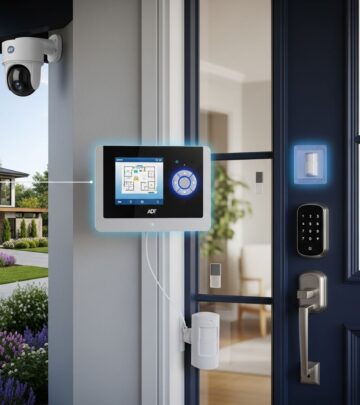
In 2010, ADT elevated the concept of home intelligence with the launch of ADT Pulse, a revolutionary app that allowed customers to remotely access and control their home security systems in real-time. With Pulse, customers could manage not only alarm systems but also lighting, climate control, and security cameras from anywhere, fundamentally changing the relationship between homeowners and their security systems. This innovation reflected ADT’s continued commitment to embracing emerging technologies and recognizing how digital connectivity was reshaping consumer expectations around home automation and control.
Leadership and Current Operations
Today, ADT remains committed to the security and protection of its customers. The company operates under the leadership of Jim DeVries as Chairman and CEO, with Donald Young serving as Chief Operating Officer. With more than 13,000 professionals operating from over 150 locations throughout the United States, ADT serves over 6 million customers. This extensive network of personnel and facilities ensures that ADT can deliver the 24/7 professional monitoring and response services that have been central to its mission since Edward Calahan first connected 50 homes in Baltimore 150 years ago.
Corporate Social Responsibility and Community Engagement
In recognition of its 150th anniversary in 2024, ADT demonstrated its commitment to community welfare by acknowledging the milestone with a donation to The Birthday Party Project, a nonprofit organization supporting meaningful celebrations for unhoused children. This initiative reflects ADT’s broader corporate giving program, established formally in 2013, which benefits communities throughout the company’s service areas. Such efforts underscore that ADT’s mission extends beyond commercial security concerns to encompass genuine commitment to the communities it serves.
Key Innovations Timeline
| Period | Key Innovation | Impact on Industry |
|---|---|---|
| 1874 | Telegraph-based call-boxes | First residential security network established |
| 1890-1920 | Roundsmen proactive monitoring | Shift from reactive to preventive security |
| 1920-1940 | Central Monitoring Centers | 24/7 professional monitoring standardized |
| 1940s | Automated burglar and fire systems | Immediate threat detection and response |
| 1960s-1970s | Computer-based proprietary systems | Digital transformation of security |
| 1980s-1990s | Iconic yard sign branding | Mass market consumer awareness |
| 2010 | ADT Pulse smart home app | Remote real-time system control |
Frequently Asked Questions
Q: When was ADT founded and who was the founder?
A: ADT was founded on August 14, 1874, by Edward A. Calahan, an inventor and entrepreneur who created the first telegraph-based security alert system after experiencing a burglary at his home in Baltimore.
Q: What was the first residential security system network created by ADT?
A: After his burglary experience on April 5, 1874, Edward Calahan designed call-boxes that could signal for assistance to a central office. He connected 50 homes in his Baltimore neighborhood, creating the first residential security system network.
Q: What role did Roundsmen play in early ADT security services?
A: Roundsmen were specially trained personnel employed by ADT who made regular nighttime rounds of customers’ properties to provide proactive crime prevention, checking on homes and commercial buildings to prevent burglaries and fires before they occurred.
Q: How did ADT contribute during World War II?
A: ADT played a critical role protecting government factories that produced weapons and aircraft from enemy sabotage, demonstrating the importance of sophisticated security systems to national defense infrastructure.
Q: What is ADT Pulse and when was it launched?
A: ADT Pulse is a smart home security app launched in 2010 that allows customers to remotely access and control their security systems, lighting, climate control, and security cameras in real-time from anywhere.
Q: How many customers does ADT currently serve?
A: As of 2024, ADT serves over 6 million customers with more than 13,000 professionals operating from over 150 locations throughout the United States.
Conclusion: 150 Years of Continuous Evolution
ADT’s 150-year history represents far more than the story of a single company’s longevity; it reflects the evolution of security technology, consumer expectations, and business innovation across American history. From Edward Calahan’s telegraph-based call-boxes to today’s smart home integration systems, ADT has consistently demonstrated the ability to adapt, innovate, and remain relevant through dramatic technological and social change. The company’s success stems not from clinging to outdated methods but from embracing new technologies while maintaining the core commitment to protecting customers that has defined its mission since 1874. As ADT looks toward its future, the company continues to innovate in smart home security, building on 150 years of experience and trust to serve the evolving security needs of millions of American families and businesses.
References
- History of ADT Security Company | 150 Years of Protection — ADT Corporation. 2024. https://www.adt.com/about-adt/history
- ADT Celebrates its 150th Birthday on Aug. 14 with Company Events and Community Outreach — ADT Newsroom. 2024. https://newsroom.adt.com/corporate-news/adt-celebrates-150-years-on-aug-14-with-company-events-community-outreach
- ADT: Our Story — ADT Newsroom. 2024. https://newsroom.adt.com/adt-our-story
- Always There: 150 Years of ADT — Money Magazine. 2024. https://money.com/always-there-150-years-of-adt/
- ADT’s 150-Year Timeline — ADT Corporation. 2024. https://www.youtube.com/watch?v=EgLjmvb4vFM
- ADT Inc. — Wikipedia Foundation. 2024. https://en.wikipedia.org/wiki/ADT_Inc.
- About ADT Company History | What is & Who Owns ADT — ADT Corporation. 2024. https://www.adt.com/about-adt
Similar Articles








Read full bio of medha deb