15-Year Refinance Rates: Compare Today’s Best Offers
Find competitive 15-year refinance rates and compare personalized offers from top lenders.
Today’s 15-Year Refinance Rates
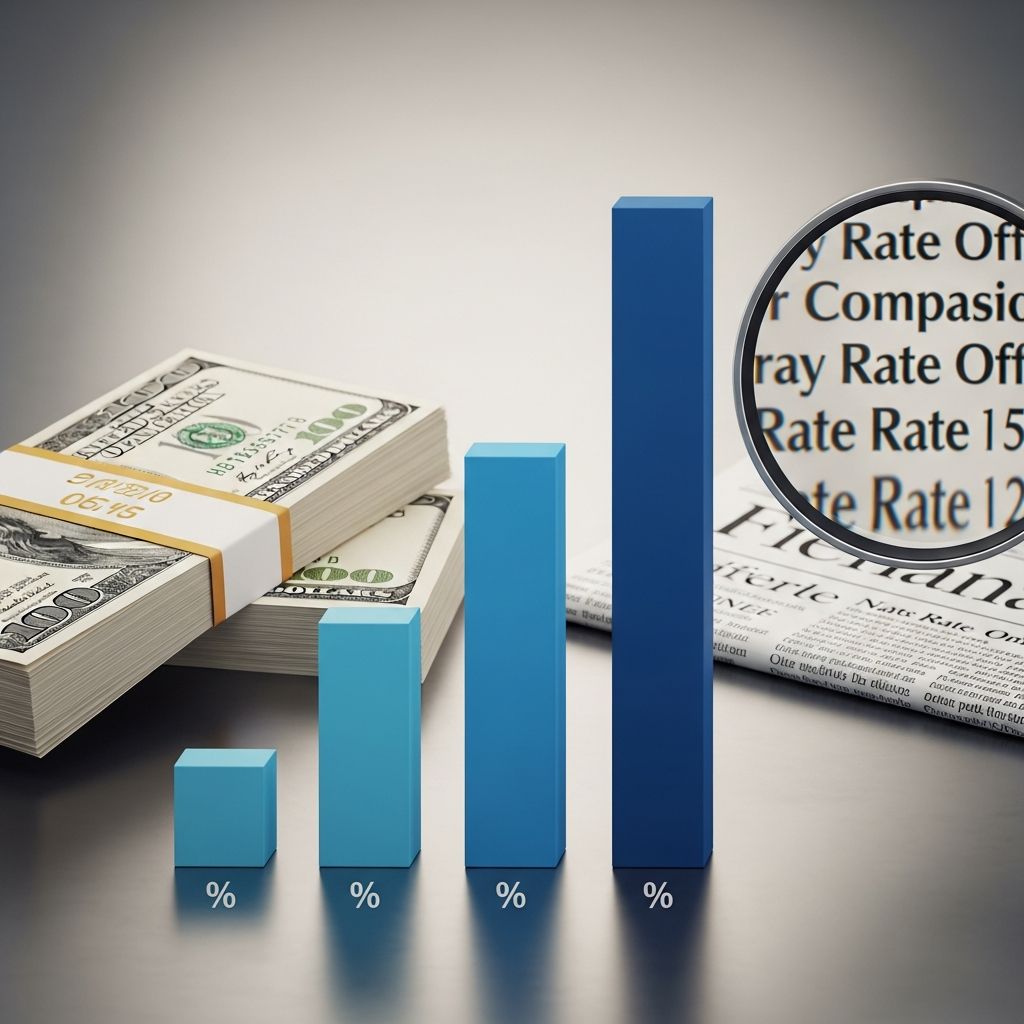
As of Saturday, November 29, 2025, the national average 15-year fixed refinance APR stands at 6.13%, according to Bankrate’s latest survey of the nation’s largest refinance lenders. This represents the current market environment for borrowers looking to refinance their mortgages into shorter-term loans. The average 15-year fixed mortgage APR is 5.69%, showing a slight variance between refinancing and new mortgage purchases. Understanding these rates and how they compare to your current mortgage can help you make an informed decision about whether refinancing is the right move for your financial situation.
National 15-Year Refinance Rate Trends
Market conditions for refinance rates continue to fluctuate based on economic factors and lending trends. As of Saturday, November 29, 2025, the national average 15-year fixed refinance interest rate is 6.03%, down compared to last week’s rate of 6.09%. The national average 15-year fixed mortgage interest rate is 5.60%, also down compared to last week’s rate of 5.64%. These rate movements demonstrate the importance of monitoring market conditions and acting promptly when favorable rates become available. Rate averages tend to be volatile, and Bankrate’s data is intended to help consumers identify day-to-day movement in the lending market. Bankrate calculates its own mortgage and refinance rates at the close of the business day, including annual percentage rates and annual percentage yields from surveys of the nation’s largest lenders.
Why Compare 15-Year Refinance Rates Today
Shopping around for quotes from multiple lenders is essential for every mortgage applicant. When comparing refinance options, consider not just the interest rate you’re being quoted, but also all the other terms of the loan. Compare APRs, which include some loan fees, as well as the interest rate itself. Different institutions may have varying closing costs and fees, and your current bank or credit union may extend you a special offer that makes refinancing particularly attractive. While mortgage rates may be higher now compared to recent years, 15-year mortgage rates are still generally lower than those on 30-year loans, making this an opportune time to evaluate your refinancing options.
Key Advantages of 15-Year Refinance Rates
Understanding the benefits of refinancing to a 15-year loan can help you determine if this option aligns with your financial goals:
- Lower mortgage rates: Lenders typically charge lower interest rates for 15-year loans than they do for 30-year loans, mainly because they’re taking on risk for a shorter amount of time. This rate advantage compounds when combined with the shorter repayment period.
- Less total interest paid: Along with a lower interest rate, compressing the repayment period to 15 years means you’ll wind up paying less in interest overall than you would with a longer-term loan. Over the life of the mortgage, these savings can total tens of thousands of dollars or more.
- Build equity faster: Paying off your mortgage at a faster pace allows you to build equity faster. You can tap that equity in the future via a home equity loan, home equity line of credit (HELOC), or cash-out refinance if needed.
- Payoff certainty: With a fixed-rate 15-year mortgage, you’ll have the stability of knowing that your monthly payment won’t change over time, providing predictability for your household budget.
Is a 15-Year Refinance Right for You?
Determining whether to refinance your current mortgage into a 15-year loan requires careful consideration of your financial situation, goals, and ability to manage higher monthly payments. If you currently have a 30-year mortgage and have room in your budget for a higher monthly mortgage payment, refinancing to a 15-year fixed-rate loan can make good financial sense. You’ll still have the stability of knowing that the monthly payment won’t change. Plus, you’ll pay off your home faster, freeing up money for other financial goals, like saving for retirement. Keep in mind that you’ll need to show the lender that you have enough income to cover a higher payment to qualify for the new loan.
When a 15-Year Refinance Makes Sense
Several scenarios suggest that refinancing to a 15-year mortgage might be right for you:
- Monthly payments are manageable: The monthly payments on a 15-year mortgage won’t be much higher than you’re already paying. This can be especially compelling if your credit score has improved significantly since you obtained your original mortgage, or if you want to refinance out of an FHA mortgage and its steep mortgage insurance premiums.
- You’re halfway into a 30-year mortgage: Many borrowers don’t keep loans this long, but if you’re at the halfway point of your 30-year loan, the time could be right for refinancing to a 15-year one. At this point, you’ve already paid off a significant portion of the principal, making the transition to a shorter-term loan more feasible.
- You can get a lower rate: Ideally, you should aim for a rate reduction of at least a half to three quarters of a percentage point to make refinancing worthwhile after accounting for closing costs.
- You’ll be in your home long-term: Since closing costs can eat into your savings, you need to stay in the home long enough to break even on those costs and start enjoying the interest savings.
- Your credit score or income has improved: If your financial situation has strengthened since you were first approved for your loan, you may now qualify for better terms and rates.
15-Year vs. 30-Year Mortgage Comparison
When deciding between refinancing to a 15-year loan or sticking with a 30-year mortgage, it’s important to understand the financial implications of each choice. The monthly payments on a 15-year mortgage will be higher than on a comparable 30-year loan, but the total interest paid over the life of the loan will be significantly less. Consider the following scenario: On a $265,000 loan balance at 3.90% interest rate, a 30-year mortgage results in a $1,250 monthly payment with $184,971 in total interest paid. In contrast, a 15-year refinance at 3.5% interest rate would result in a $1,703 monthly payment but only $68,328 in total interest paid—saving $116,643 in interest over the life of the loan. If your budget has the flexibility to accommodate the higher payment, refinancing could make significant financial sense.
| Loan Scenario | Loan Balance | Loan Term | Interest Rate | Monthly Payment | Total Interest Paid | Interest Savings |
|---|---|---|---|---|---|---|
| Original Mortgage | $265,000 | 30 years | 3.90% | $1,250 | $184,971 | — |
| 15-Year Refinance | $238,351 | 15 years | 3.5% | $1,703 | $68,328 | $116,643 |
Should You Refinance to a 15-Year Loan?
According to Glenn Brunker, President of Ally Home, “People typically refinance to lower their interest rate or extract cash from the equity in their home. With nearly 90 percent of U.S. homeowners locked in at a mortgage rate below 6 percent, refinancing is likely not applicable. Generally, if you have the opportunity to afford a higher monthly payment, refinancing to a 15-year loan is more advantageous and will reduce the number of payments made and overall interest.” This perspective highlights the current market dynamics where many homeowners have favorable existing rates, making refinancing less attractive unless significant rate reductions or financial improvements have occurred.
In general, it is a good idea to refinance to a 15-year loan if you meet these criteria:
- You can get a lower rate than your current mortgage rate, ideally by at least a half to three quarters of a percentage point
- You’ll be in your home long-term
- You can afford the higher monthly payment
- Your credit score or income has increased since you were first approved for your loan
- You have 15 or more years remaining on your mortgage
Refinancing Adjustable-Rate Mortgages
If you currently have a 15-year adjustable-rate mortgage (ARM) or any ARM loan, you have the option to refinance into a 15-year fixed-rate mortgage. This can be particularly advantageous if the introductory period on your adjustable-rate mortgage is about to end and you’re concerned about your rate potentially adjusting higher. Refinancing to a fixed-rate mortgage can bring more stability and predictability to your monthly payments, protecting you from future rate increases. This is an especially important consideration in rising rate environments.
Additional Mortgage Calculators and Tools
Making the decision between refinancing to a 15-year loan and increasing payments on your existing loan can be complicated. Bankrate offers additional mortgage payment calculators to help you see how extra payments will shorten your pay-off time and lower your interest costs. The 30-year vs. 15-year mortgage calculator allows you to compare your potential monthly mortgage payments based on different loan terms and scenarios. Your monthly mortgage payment will probably be the largest line item in your household budget, and understanding the impact of your mortgage choice is essential for long-term financial planning.
Frequently Asked Questions
Q: What is the current national average 15-year refinance rate?
A: As of Saturday, November 29, 2025, the national average 15-year fixed refinance APR is 6.13%, according to Bankrate’s latest survey of the nation’s largest refinance lenders. The average 15-year fixed mortgage APR is 5.69%.
Q: How much can I save by refinancing to a 15-year mortgage?
A: The amount you can save depends on your current loan balance, interest rate, and the new rate you receive. In many cases, borrowers can save tens of thousands of dollars in interest over the life of the loan by refinancing to a 15-year mortgage, even though monthly payments will be higher.
Q: Will my monthly payment be significantly higher with a 15-year refinance?
A: Monthly payments will be higher with a 15-year mortgage compared to a 30-year loan, but the difference may not be as dramatic as you expect, especially if you’re refinancing to a lower interest rate. Use Bankrate’s mortgage calculators to estimate your specific payment amounts.
Q: What should I compare when looking at refinance offers?
A: Don’t focus solely on the interest rate. Compare the APR, which includes loan fees; closing costs and fees from different lenders; any special offers from your current bank or credit union; and the overall terms of the loan.
Q: Can I refinance an adjustable-rate mortgage to a 15-year fixed-rate mortgage?
A: Yes, you can refinance a 15-year ARM to a 15-year fixed-rate mortgage. This can be beneficial if your ARM’s introductory period is ending and you want to lock in a stable rate before it adjusts higher.
Q: How long do I need to stay in my home to benefit from refinancing?
A: You need to stay in your home long enough for the interest savings to exceed the closing costs you paid to refinance. Calculate your break-even point using the refinance savings estimate when comparing offers from lenders.
References
- 15-Year Refinance Rates | Compare rates today | Bankrate.com — Bankrate. 2025-11-29. https://www.bankrate.com/mortgages/15-year-refinance-rates/
- Should You Refinance To A 15-Year Mortgage? – Bankrate — Bankrate. 2025-11-29. https://www.bankrate.com/mortgages/refinancing-into-a-15-year-mortgage/
- Compare Current 15-Year Mortgage Rates – Bankrate — Bankrate. 2025-11-29. https://www.bankrate.com/mortgages/15-year-mortgage-rates/
- Current Refinance Rates – Compare Rates Today – Bankrate — Bankrate. 2025-11-29. https://www.bankrate.com/mortgages/refinance-rates/
- Compare current mortgage rates for today – Bankrate — Bankrate. 2025-11-29. https://www.bankrate.com/mortgages/mortgage-rates/
Similar Articles








Read full bio of medha deb