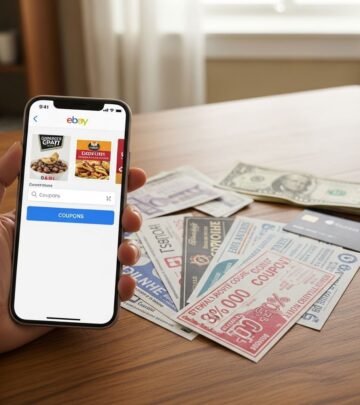
15 Common Couponing Mistakes And How To Fix Them
Avoid these frequent couponing pitfalls to maximize savings and prevent wasting money on unnecessary purchases.

Coupons remain a powerful tool for stretching your budget, especially amid rising grocery and household costs. However, misusing them can lead to overspending rather than savings. This article outlines
15 common couponing mistakes
and provides actionable strategies to avoid them, helping you shop smarter and keep more money in your pocket.Whether you’re a beginner or seasoned couponer, these pitfalls can trip anyone up. By understanding BOGO fine print, stacking deals correctly, and sticking to your shopping list, you can turn coupons into real savings. Let’s dive into each mistake.
1. Buying Things You Don’t Need
The allure of a “great deal” often leads shoppers to purchase items they wouldn’t normally buy. While trying a new product with a coupon is fine, stocking up on unused goods means spending more overall. Impulse buys from coupons can clutter your home and drain your wallet.
Tip: Stick strictly to your shopping list. Ask yourself: “Do I need this, or am I buying it just because it’s discounted?” Only deviate for truly versatile, high-value items you’ll use soon.
2. Buying Things with No Real Value
Not all discounted items offer genuine value. A coupon might slash the price of a premium brand, but if a cheaper store alternative exists, you’re still overpaying. Free items aren’t free if they go to waste or don’t meet your quality standards.
Compare unit prices and consider long-term use. For instance, a “free” spicy soup might end up donated, costing time and gas instead of saving money.
3. Not Understanding BOGO Coupons
BOGO (Buy One Get One) coupons often aren’t truly free. Many state “50% off the second item,” effectively a 25% discount on two items. Additional stipulations, like required add-ons (e.g., drinks at restaurants), can increase costs.
- Read fine print carefully.
- Wait for sales to combine with BOGO for better savings.
- Avoid buying extras you don’t need.
4. Using the Coupon for a Large Size
Large sizes seem economical, but coupons frequently yield better
unit price savings
on smallest sizes. Bulk buys tie up money and space, and perishable large packs risk spoilage.Strategy: Calculate unit cost (price per ounce/gram). Small sizes often beat large ones post-coupon, freeing cash for other needs.
5. Buying More Expensive Brands
High-value coupons tempt you toward name brands. A $0.50 coupon on a $2 item saves 25%, but a $1.25 store brand saves more overall. Even discounted, premium brands can exceed generics in cost.
| Brand | Pre-Coupon Price | Coupon | Final Price | Store Brand |
|---|---|---|---|---|
| Premium Crackers | $2.00 | $0.50 | $1.50 | $1.25 |
| Savings Difference | – | – | Overpay $0.25 | Best Value |
Always compare post-coupon prices.
6. Buying More Than You Need
Coupons requiring multiples or deep discounts on perishables lead to waste. Excess inventory expires, turning “savings” into trash. Overbuying ties up budget for items sitting unused.
- Buy only what fits your consumption rate.
- Check expiration dates on products.
- Limit to one or two extras max.
7. Buying the Wrong Size or Variety
Coupons specify sizes or varieties (e.g., “original flavor only”). At checkout, mismatched items get rejected, but many buy anyway. This wastes money on ineligible products.
Prevention: Scan fine print pre-purchase. If rejected, return the item confidently.
8. Not Watching the Register
Cashiers may process invalid coupons without notice, or errors occur unnoticed. You discover overcharges later via receipt review.
Pro tips:
- Place coupon items last on the belt.
- Monitor screen during ringing.
- Request void if needed before completing purchase.
9. Not Checking the Expiration Date
The top mistake: expired coupons invalidate at checkout, costing deals and time. Hoarding leads to accidental use attempts.
Habit: Sort weekly, discard expired ones immediately. Use apps for digital tracking.
10. Using a Coupon in the Wrong Store
Store-specific coupons (e.g., Target-only) differ from universal manufacturer ones. Mixing them up wastes the coupon.
- Separate by binder sections: store vs. manufacturer.
- Check terms: “Valid only at [store].”
11. Being Disorganized
Chaotic organization means lost coupons, expired misses, or full-price buys despite having deals.
Build a system:
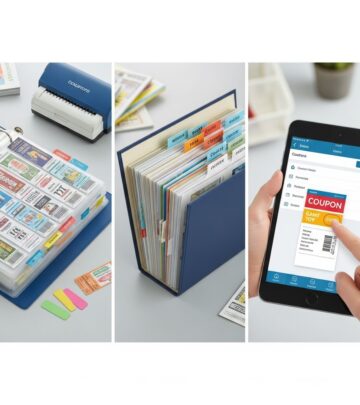
- Accordion file by category.
- Digital apps like Ibotta or store apps.
- Weekly purge and plan.
12. Failing to Stack Your Savings
Stacking amplifies savings: manufacturer + store coupons, sales + coupons, even gift cards. Missing this halves potential discounts.
Example: Sale cat food + coupon + rewards = 50% off. Many stores allow one of each type per item.
13. Not Using Your Supermarket’s App or Rewards
Free rewards programs offer exclusive digital coupons, personalized deals, and gas discounts. Apps track history for targeted offers like free produce.
- Sign up everywhere you shop.
- Clip digital coupons pre-visit.
- Earn points for fuel savings (e.g., 10¢/gallon per $100 spent).
14. Forgetting to Look for Coupons Online
Online shopping skips savings without code searches. Before checkout, hunt promo codes for 10-20% extra off.
Sites like Coupons.com or RetailMeNot help, but verify at official brand pages.
15. Chasing Deals Instead of Planning
Chasing every hot deal disrupts budgets and leads to overbuying unknowns. In-store focus beats sporadic online ones for consistent savings.
Fix: Plan transactions with reward balances. Avoid blind hoarding—test one first.
Frequently Asked Questions (FAQs)
Q: Can I still extreme coupon like on TV?
A: Extreme couponing has evolved; focus on sustainable stacking and apps rather than hoarding. Communities thrive online for real deals.
Q: What’s the best way to organize coupons?
A: Use category binders, apps, and weekly sorts. Separate store/manufacturer types.
Q: Do store rewards really save money?
A: Yes, they provide digital coupons, points for gas, and personalized offers, stacking with others.
Q: How do I avoid food waste from coupons?
A: Buy perishables in small quantities matching your use; freeze extras if possible.
Q: Are online coupons as good as paper ones?
A: Often better—stackable, personalized, no expiration hassles. Always check both.
Mastering couponing transforms grocery runs into profit centers. Avoid these
15 mistakes
by planning, reading details, and stacking smartly. Start small, track savings, and watch your budget grow.References
- Consumer Expenditure Survey: Household Spending on Groceries — U.S. Bureau of Labor Statistics. 2024-10-01. https://www.bls.gov/cex/
- Discounting Practices in Retail Grocery — Federal Trade Commission. 2023-05-15. https://www.ftc.gov/reports
- Food Waste in America: Facts and Figures — USDA Economic Research Service. 2024-02-28. https://www.ers.usda.gov/data-products
- Coupon Usage Trends 2024 — NielsenIQ. 2024-08-10. https://nielseniq.com/global/en/insights/
- Retail Rewards Programs Impact Study — Journal of Retailing (Peer-reviewed). 2023-11-20. https://doi.org/10.1016/j.jretai.2023.103XXX
Similar Articles








Read full bio of medha deb