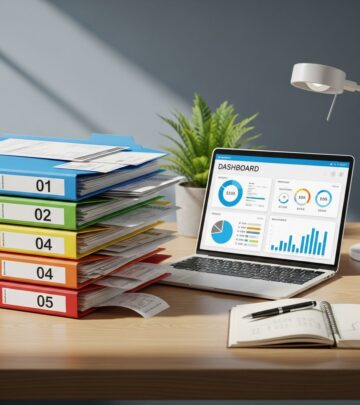
12 Steps To Simplify Your Finances Today
Declutter your money, cut stress, and create a simple financial system that works on autopilot for your goals.

Managing money does not have to be complicated. When you simplify your finances, you make it easier to track your cash, pay bills on time, and stay consistent with saving and investing. A simpler system also reduces stress and frees up your time for what matters most.
This guide walks through 12 practical steps to streamline your financial life, stay organized, and create routines you can actually maintain.
Why Should You Simplify Your Finances?
Many people juggle multiple bank accounts, several credit cards, different due dates, piles of paper, and apps they rarely open. This complexity creates confusion and makes it harder to see whether you are truly moving toward your financial goals.
According to recent research from the American Psychological Association, money remains a top source of stress for adults in the United States, with many reporting that financial worries negatively affect their mental and physical health. Simplifying your system can help reduce that burden.
Money Is Easier To Track
When your finances are simple, you can quickly answer basic questions like:
- How much do I spend each month on essentials?
- How much am I saving and investing?
- What debts do I still owe, and at what interest rates?
Fewer accounts, fewer cards, and more consistent routines make it easier to monitor your progress and catch mistakes before they become expensive problems.
Bills Are Paid On Time
Missed payments can lead to late fees, penalty interest rates, and negative marks on your credit report. Organizing your bills and simplifying how and when you pay them reduces the risk of forgetting a due date.
By aligning billing cycles where possible and using tools like automatic payments and reminders, you can greatly cut down on last-minute scrambling.
Less Financial Stress
Financial strain is closely linked with higher levels of anxiety and even depression, especially when debts feel unmanageable. While simplifying your finances will not remove every stressor, it:
- Reduces decision fatigue around daily money choices
- Makes your progress visible and measurable
- Helps you feel more in control of your financial life
A clear, streamlined system also makes it simpler to adjust your plan when life changes.
How To Simplify Finances In 12 Practical Steps
Use the following 12 steps as a checklist. You do not need to implement them all at once. Start with the areas causing the most stress and build from there.
| Step | Focus Area | Main Benefit |
|---|---|---|
| 1 | Clarify your financial picture | Know exactly where you stand |
| 2 | Go paperless | Reduce clutter and lost documents |
| 3 | Automate bill payments | Avoid late fees and missed due dates |
| 4 | Simplify and automate budgeting | Keep spending aligned with your goals |
| 5 | Automate your savings | Build savings without thinking about it |
| 6 | Streamline your bank accounts | Make cash flow easier to manage |
| 7 | Get rid of high-interest debt | Lower stress and free up income |
| 8 | Consolidate and simplify investments | Reduce fees and confusion |
| 9 | Cut unused subscriptions and expenses | Instantly reclaim part of your budget |
| 10 | Use a cash-only or limited card system | Control impulse spending |
| 11 | Track accounts in one place | See the big picture at a glance |
| 12 | Schedule regular money check-ins | Stay organized over the long term |
Step 1. Get Clear On Your Overall Financial Picture
Before simplifying anything, you need to know what you are working with. Create a simple overview that lists:
- All income sources and typical monthly amounts
- All regular bills and variable expenses
- Every debt (balance, interest rate, and minimum payment)
- Your current savings and investment accounts
This is your baseline. You can use a spreadsheet, a notebook, or a budgeting app—what matters most is that the information is complete and kept up to date.
Step 2. Go Paperless
Paper statements, bills, and receipts quickly pile up and are easy to misplace. Most banks, utilities, and lenders now offer secure electronic documents and e-billing.
Switching to paperless statements can help you:
- Reduce physical clutter in your home
- Access records quickly when you need them
- Lower the risk of sensitive documents being lost or stolen from your mailbox
Many institutions store electronic statements for several years, which can be useful when preparing taxes or applying for a mortgage.
Step 3. Automate Your Payments
Automatic payments are one of the easiest tools for simplifying finances. Once set up, they run in the background with little effort from you. Consumer financial education resources consistently highlight automatic payments as a way to avoid late fees and protect your credit history.
Consider setting up auto-pay for:
- Rent or mortgage
- Utilities and internet
- Insurance premiums
- Minimum credit card and loan payments
Monitor your accounts regularly to ensure there is enough money to cover these transfers and to catch any incorrect charges.
Step 4. Simplify And Automate Your Budget
You do not need a complicated budgeting system with dozens of categories. A simple structure that you can stick to is far better than a complex plan you abandon.
Many people find it helpful to organize their spending into a few broad buckets, such as:
- Needs: housing, food, transportation, utilities, minimum loan payments
- Wants: dining out, entertainment, travel, non-essential shopping
- Savings and debt payoff: emergency fund, retirement, extra payments on loans or credit cards
Choose a budgeting method that matches your personality. Some prefer zero-based budgeting, assigning every dollar a job, while others use percentage-based rules of thumb. The key is to review your plan monthly and adjust as your income and priorities change.
Step 5. Automate Your Savings
Paying yourself first means moving money to savings and investments before you spend on anything else. The U.S. Consumer Financial Protection Bureau notes that regularly saving even small amounts can strengthen financial resilience over time.
Set up automatic transfers:
- From your checking account to an emergency fund
- Into retirement accounts such as a 401(k) or IRA, if available to you
- Toward sinking funds for short-term goals (for example, car repairs, holidays, or annual insurance premiums)
Start with amounts that feel manageable and increase them when your income grows or when you pay off a debt.
Step 6. Streamline Your Bank Accounts
Having too many accounts can make it hard to see where your money is going. Consider simplifying to a small set of clearly defined accounts, such as:
- One main checking account for income and bills
- One primary savings account for your emergency fund
- Optional separate savings accounts for specific goals
When evaluating where to keep your accounts, compare fees, interest rates, and digital tools. Many people choose fee-free accounts to avoid monthly service charges and overdraft fees where possible.
Step 7. Get Rid Of Your High-Interest Debt
High-interest debt, especially on credit cards, can be one of the biggest obstacles to financial progress. U.S. credit card interest rates have been elevated in recent years, which increases the cost of carrying balances.
Two well-known payoff strategies are:
- Debt snowball: Pay off the smallest balance first while making minimum payments on others. Once the first debt is cleared, roll that payment amount into the next smallest balance.
- Debt avalanche: Focus extra payments on the debt with the highest interest rate while paying minimums on the rest. After that is paid off, move on to the next highest rate.
Choose the method that keeps you most motivated. As your balances fall, your monthly obligations decrease, and your overall financial system becomes easier to manage.
Step 8. Consolidate And Simplify Your Investments
Scattered investment accounts can make it difficult to track your asset allocation, total fees, and progress toward long-term goals like retirement. Consider consolidating old workplace retirement plans into a single account where appropriate and allowed by the plan rules.
A simpler investment strategy might use:
- Low-cost index funds or exchange-traded funds (ETFs)
- Automatic contributions each payday
- Periodic rebalancing to maintain your target mix of stocks and bonds
Government and regulatory agencies often emphasize diversification and fee awareness as key components of long-term investing success.
Step 9. Cut Unused Subscriptions And Recurring Expenses
Streaming services, apps, memberships, and software subscriptions can quietly consume a large portion of your monthly budget. Many people underestimate how much they spend on recurring charges.
To simplify:
- Review bank and card statements from the last 3–6 months
- List every subscription and recurring charge
- Cancel anything you no longer use regularly or truly value
This step can free up cash immediately and reduce the number of payments you need to monitor.
Step 10. Go Cash-Only Or Limit Your Cards
Using cash for discretionary spending (like dining out or shopping) can make it easier to stick to a budget because the money is visible and finite. Once the cash is gone, you are done spending until the next budget period.
If cash is not practical for all your expenses, you might:
- Use one primary debit or credit card for everyday purchases
- Turn off or securely store other cards to reduce temptation
- Set spending alerts so you know when you approach your limits
The goal is not to eliminate modern payment tools but to choose a simple system that makes overspending less likely.
Step 11. Keep Track Of Your Accounts In One Place
To stay organized, it helps to see your entire financial picture from a single dashboard. Many people use spreadsheets or personal finance apps that can show balances, transactions, and trends over time.
Bringing your information together lets you:
- Monitor both your assets and debts
- Spot unusual charges or errors quickly
- Measure progress toward goals like debt payoff or net worth milestones
Whichever tool you choose, keep your login information secure and update your data regularly.
Step 12. Schedule Regular Money Check-Ins
Simplifying your finances is not a one-time project; it is an ongoing habit. A short, regular check-in helps you catch issues early and keeps your system running smoothly.
For example, you could:
- Hold a 15–30 minute weekly review to look over transactions and upcoming bills
- Do a monthly review of your budget, savings, and debt payoff progress
- Complete a deeper review once or twice a year to adjust major goals and investment contributions
Putting these check-ins on your calendar increases the odds that you will follow through.
Simplify Finances And Free Up Your Time
By simplifying your finances, you reduce clutter, automate routine tasks, and make it easier to stay consistent with the habits that build wealth over time. The steps above help you move from reactive, stressful money management to a calmer, more intentional approach.
Focus on small, manageable changes. Choose one or two steps to start with, implement them fully, and then add more as you are ready. Over time, your simpler system can support both your day-to-day peace of mind and your long-term goals.
Frequently Asked Questions (FAQs)
Q: Where should I start if my finances feel completely overwhelming?
A: Begin by listing all of your accounts, income, debts, and regular bills in one place. Once you have a clear picture, choose one step—such as automating minimum bill payments or creating a basic budget—to implement first. Gradual changes are easier to maintain than trying to overhaul everything at once.
Q: Is it safe to use automatic payments and transfers?
A: Automatic payments can be safe when set up through reputable banks and service providers that use secure systems. To protect yourself, monitor accounts regularly, keep your contact information up to date, and immediately report any suspicious activity to your bank or card issuer.
Q: How much should I automate versus manage manually?
A: Automate predictable, recurring tasks like bill payments and savings transfers, but keep a manual review process through weekly or monthly check-ins. This balance reduces your workload while ensuring you still understand what is happening with your money.
Q: What if my income is irregular or varies from month to month?
A: If your income fluctuates, base your core expenses and automatic transfers on your lowest reliable monthly income. Treat any extra earnings as a bonus that can go toward savings, debt payoff, or specific goals, adjusting your plan as needed.
Q: Do I need multiple bank accounts for different goals?
A: You can use either one main savings account with a detailed tracking system or several labeled accounts for separate goals. Choose whichever approach makes it easier for you to see your progress and avoid dipping into money that is earmarked for other purposes.
References
- Stress in America 2023: A Nation Recovering from Collective Trauma — American Psychological Association. 2023-10-31. https://www.apa.org/news/press/releases/stress/2023/report
- Understand Your Credit Card Statement — Consumer Financial Protection Bureau. 2023-02-14. https://www.consumerfinance.gov/ask-cfpb/how-do-i-read-my-credit-card-statement-en-21/
- Financial Stress and Mental Health — Money and Mental Health Policy Institute. 2016-03-22. https://www.moneyandmentalhealth.org/financial-difficulties-mental-health/
- Start Small, Save Up: A Step-by-Step Guide — Consumer Financial Protection Bureau. 2020-09-28. https://www.consumerfinance.gov/consumer-tools/start-small-save-up/
- Consumer Credit – G.19 — Board of Governors of the Federal Reserve System. 2024-12-09. https://www.federalreserve.gov/releases/g19/current/
- Investor Bulletin: ETF Basics — U.S. Securities and Exchange Commission. 2023-06-06. https://www.investor.gov/introduction-investing/investing-basics/investment-products/exchange-traded-funds-etfs
Similar Articles








Read full bio of Sneha Tete