10 Things You Didn’t Know About the $1 Bill
Discover fascinating secrets about America's most common currency and its hidden design elements.
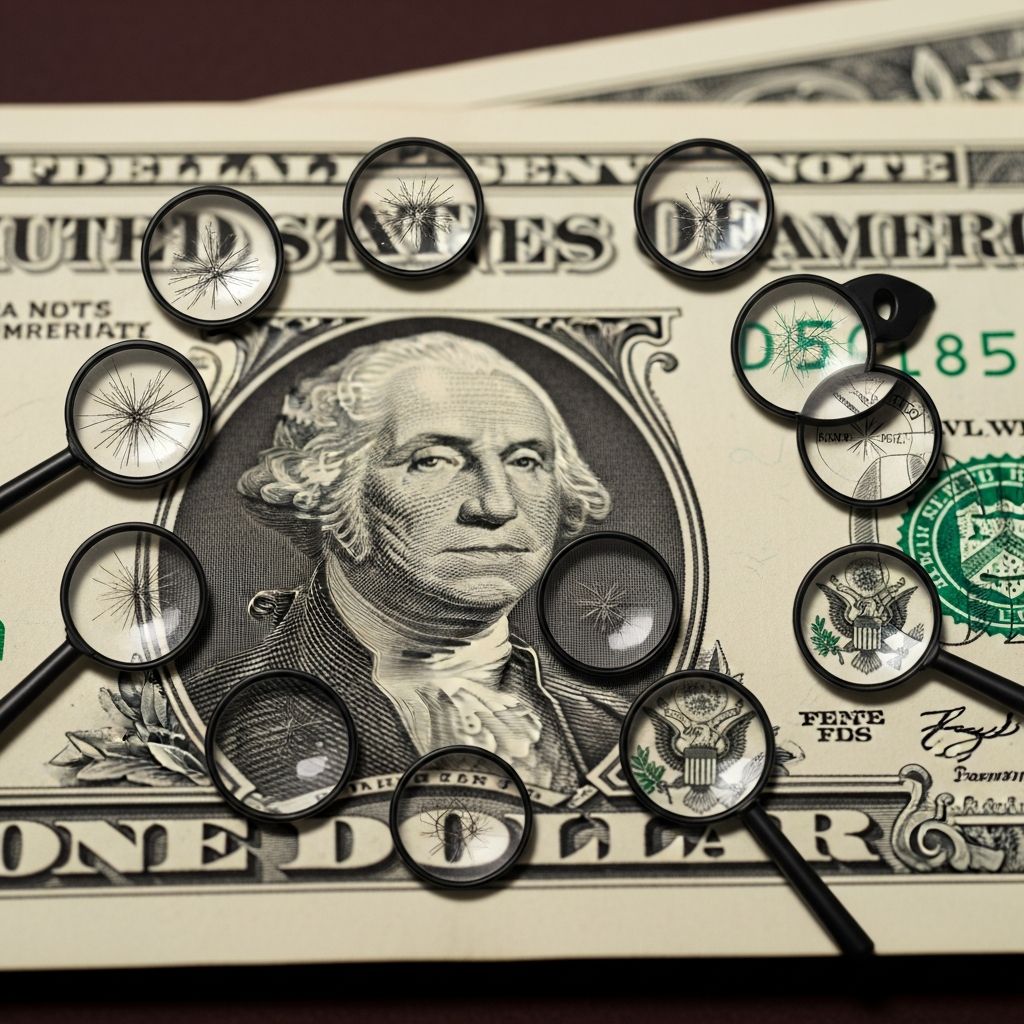
The United States $1 bill is one of the most recognizable and frequently used pieces of currency in the world. Yet despite handling it thousands of times throughout our lives, most people know surprisingly little about the fascinating details, history, and characteristics of this humble denomination. Whether it’s the hidden symbols woven into its design, the surprising duration of its circulation, or the contamination found on its surface, the $1 bill holds numerous secrets that deserve exploration. Understanding these facts not only provides interesting trivia but also offers insight into how modern currency is designed, produced, and maintained.
The Lifespan of a $1 Bill
One of the most surprising facts about the $1 bill is its relatively short lifespan in circulation. The average $1 bill circulates for approximately 5.8 years before it becomes too worn or damaged to remain in use. This duration is notably shorter than some might expect, considering the durability of the material used to print currency. The short lifespan is probably because $1 bills experience intense usage and wear due to their frequent handling and the constant movement through wallets, cash registers, and numerous transactions. This means that despite billions of $1 bills being in circulation at any given time, they are constantly being replaced and reissued by the Federal Reserve.
The Material: Not Actually Paper
Most people refer to currency as “paper money,” but this common terminology is misleading. U.S. currency is not actually made from paper at all. Instead, according to the Bureau of Engraving and Printing, currency paper comprises 75 percent cotton and 25 percent linen. This specialized fabric composition is what gives currency its distinctive texture and durability. The blend of cotton and linen creates a material that is far more resilient than regular paper, allowing bills to withstand the rigors of daily handling, folding, and repeated use. This unique composition also contributes to the distinctive feel of U.S. currency when handled, distinguishing it from ordinary paper and making it more difficult to counterfeit using standard paper-making materials.
Production Costs and Efficiency
The $1 bill is the least expensive denomination to produce among circulating currency. It costs only 5.4 cents per note to manufacture, matching the production cost of the $2 bill. This economical production cost reflects the bill’s simpler design and fewer anti-counterfeiting features compared to higher denominations. In contrast, the $50 bill is the most expensive at 19.4 cents per bill, while the $100 bill costs 15.5 cents per note. Despite its low production cost, the $1 bill remains extraordinarily profitable for the government when considering its face value versus manufacturing expense, yielding a significant return on investment with each bill printed.
Circulation Statistics
The volume of $1 bills in circulation is staggering and reveals the importance of this denomination in everyday commerce. In 2016, there were approximately 11.7 billion $1 bills in active circulation, according to the Federal Reserve System. This number exceeded even the quantity of $100 bills, which stood at 11.5 billion at the same time. The distribution of other denominations tells an interesting story:
| Bill Denomination | Quantity in Circulation (2016) |
|---|---|
| $1 Bill | 11.7 billion |
| $100 Bill | 11.5 billion |
| $20 Bill | 8.9 billion |
| $5 Bill | 2.8 billion |
| $10 Bill | 1.9 billion |
| $2 Bill | 1.2 billion |
The abundance of $1 bills reflects their critical role in everyday transactions, tipping, and small purchases throughout the American economy.
Design Consistency Since 1963
Unlike most other U.S. currency denominations, the $1 bill has not undergone a design revision for over six decades. The bill’s design has remained virtually unchanged since 1963. This remarkable consistency stands in stark contrast to other denominations, which have been redesigned within the past decade or so. The Federal Reserve has updated the designs of the $5 bill, $10 bill, $20 bill, and $50 bill, but the $1 bill has never received these modern updates. The primary reason for this unusual stability is that the $1 note is infrequently counterfeited compared to higher denominations. Since counterfeiters typically target higher-value bills where the effort-to-reward ratio is more favorable, the $1 bill does not warrant the investment in enhanced security features and design updates. This makes the $1 bill a historical artifact of sorts, representing design choices made during the early 1960s.
Bacterial Contamination and Health Concerns
The cleanliness of currency is a concern that many people overlook. In 2002, a study conducted by the U.S. Air Force examined 68 dollar bills and found that 94 percent of them contained bacteria. Some of this bacteria included strains capable of causing pneumonia and other serious infections. The accumulation of bacteria on currency is virtually inevitable given the constant handling of bills by numerous individuals, their exposure to various environments, and their frequent contact with hands and pockets. Considering that an average $1 bill remains in circulation for nearly six years, the opportunities for bacterial colonization are extensive. This finding underscores the importance of regular hand washing, particularly after handling money or before eating.
Cocaine Traces on Currency
Beyond bacterial contamination, another disturbing discovery emerged in 2009 when CNN reported that approximately 90 percent of paper money in U.S. cities contained traces of cocaine. This finding was even more pronounced in major metropolitan areas, where the prevalence reached 100 percent in certain cities including Detroit, Boston, Orlando, Miami, and Los Angeles. The presence of cocaine on currency likely results from direct contact with contaminated hands or through contact with contaminated surfaces, and it spreads rapidly as bills circulate from person to person and through various transactions. While the actual health risk from trace amounts of cocaine on currency is minimal, the statistic is striking and serves as a reminder of how currency can accumulate various substances during its time in circulation.
Limited Security Features
Contrary to what many people assume, not all U.S. currency denominations include security strips and UV seals as anti-counterfeiting measures. Notably, the $1 bill and the $2 bill do not contain security strips. These security features are reserved for larger denominations because higher-value bills are more frequently targeted by counterfeiters. The Federal Reserve estimates that less than 0.01 percent of all U.S. currency in circulation worldwide is counterfeit, meaning that approximately one in 10,000 bills is fake on average. The lack of security strips on the $1 bill reflects both its lower counterfeiting risk and the cost-benefit analysis of implementing additional security measures on a bill with such low production cost.
Historical Context and Design Evolution
The history of the $1 bill is more complex than many realize. George Washington was not always featured on the $1 bill. During the Civil War, the first legal tender $1 notes featured Salmon P. Chase, who served as Secretary of the Treasury at that time, according to the Federal Reserve Bank of Philadelphia. Additionally, Martha Washington, America’s first First Lady, once appeared on $1 silver certificates, and surviving examples of these bills can be worth considerably more than face value, with some specimens valued at over $1,000 depending on their condition. These historical variants remind us that the current design of the $1 bill is a relatively recent standardization in the context of American currency history.
Damaged Currency Can Be Replaced
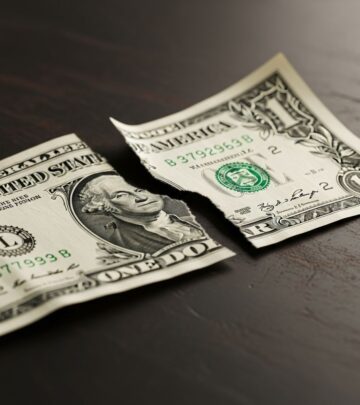
Many people are unaware that damaged, torn, or mutilated $1 bills do not have to be discarded. You can tape two halves of a $1 bill together and present it to a bank for replacement with a new bill. In fact, as long as you possess three-quarters of the bill, you should be able to exchange it for a replacement $1 bill. This policy exists to prevent economic loss and ensures that partially damaged currency does not remain out of circulation indefinitely. Banks and the Federal Reserve can assess the condition of mutilated bills and replace those that meet the minimum retention requirements, which is typically at least 51 percent of the bill present.
Hidden Design Elements
The $1 bill contains numerous hidden design elements and details that most people never notice despite handling the currency regularly. These include tiny creatures, intricate patterns, and encoded information throughout the bill. Many design elements serve security purposes, while others are purely aesthetic or symbolic in nature. The denominations appear multiple times throughout the bill in both numeral and spelled-out forms, helping to identify the bill’s value when it is in various orientations or positions. Red and blue fibers are embedded within the bill itself rather than printed on its surface, serving as an anti-counterfeiting measure that casual observers often overlook. These hidden details contribute to making the $1 bill far more complex than its simple appearance initially suggests.
Frequently Asked Questions
Q: Why hasn’t the $1 bill been redesigned since 1963?
A: The $1 bill has not been redesigned because it is infrequently counterfeited compared to higher denominations. Counterfeiters focus their efforts on higher-value bills where the effort-to-reward ratio is more favorable, making security updates less necessary for $1 bills.
Q: How long does an average $1 bill stay in circulation?
A: The average $1 bill circulates for approximately 5.8 years before it becomes too worn to remain in active circulation. This relatively short lifespan is due to the intense usage and handling that $1 bills experience.
Q: What is U.S. currency actually made from?
A: U.S. currency is made from a specialized blend of 75 percent cotton and 25 percent linen, not paper. This composition makes currency more durable and resistant to wear and tear than ordinary paper.
Q: What should I do if I have a torn or damaged $1 bill?
A: You can tape the two halves together or present at least three-quarters of the bill to a bank for replacement with a new $1 bill. Banks and the Federal Reserve will exchange damaged currency that meets minimum retention requirements.
Q: How much does it cost to produce a $1 bill?
A: It costs 5.4 cents to produce each $1 bill, making it the least expensive denomination to manufacture among circulating U.S. currency.
Q: Is the information about bacteria and cocaine on currency accurate?
A: Yes, studies have documented bacterial contamination on a majority of bills and trace amounts of cocaine on most paper currency in U.S. cities. These findings result from the bill’s extensive circulation and contact with numerous individuals and environments.
References
- 20 things you didn’t know about dollar bills — CBS News. 2014. https://www.cbsnews.com/news/20-things-you-didnt-know-about-dollar-bills/
- U.S. Currency Composition and Production Costs — Bureau of Engraving and Printing, U.S. Department of the Treasury. 2024. https://www.bep.gov/
- Federal Reserve System Currency Circulation Data — Board of Governors of the Federal Reserve System. 2024. https://www.federalreserve.gov/
- Bacterial contamination on U.S. currency — U.S. Air Force Medical Research Center. 2002. https://www.scientific-american.com/
- Cocaine traces on paper currency in United States — CNN. 2009. https://www.cnn.com/
- What Do the Symbols on the U.S. $1 Bill Mean? — HowStuffWorks. 2024. https://money.howstuffworks.com/symbols-dollar-bill.htm
Similar Articles








Read full bio of medha deb