Online Banks: 10 Reasons To Switch For Higher Rates
Discover how online banks can cut fees, boost your interest earnings, and simplify everyday money management from any device.
Online banks have moved from a niche alternative to a mainstream choice for everyday banking. Compared with traditional branch-based institutions, many online banks offer higher interest rates, lower fees, and a smoother digital experience that fits how people already manage most of their lives: on phones and laptops.1 As more banking activity shifts online, customers are discovering that giving up the local branch often brings better value and more control over their money.1
This article explains ten practical reasons to use an online bank, how they differ from brick-and-mortar institutions, and what to consider before moving your accounts. It mirrors the core topics covered in common guides to online banking: rates, fees, convenience, tools, and safety, plus FAQs to help you decide whether an online bank is right for you.
What Is an Online Bank?
An online bank is a financial institution that delivers most or all of its services through websites and mobile apps instead of physical branches. While many traditional banks now offer online and mobile banking, online-only banks operate with few or no branches and rely on digital channels, ATMs, and electronic transfers for customer service and transactions.2
Because online banks do not carry the real estate and staffing costs of extensive branch networks, they generally have a structural cost advantage. That lower cost base often shows up as:
- Higher interest rates on savings accounts and CDs
- Lower (or no) monthly maintenance, overdraft, and ATM fees
- More investment in digital tools such as budgeting and alerts
Reason 1: Higher Interest Rates on Savings
One of the biggest reasons consumers switch to online banks is the potential to earn significantly higher interest on savings and certificates of deposit (CDs). Surveys of deposit rates regularly find that online banks and credit unions often offer yields several times the national average paid by traditional banks.2
Online banks can pass along more generous rates because they spend less on branches and related overhead.1 For savers, even a small percentage difference compounds meaningfully over time, especially for emergency funds and long-term goals.
| Account Type | Typical Traditional Bank | Typical Online Bank* | Impact for Savers |
|---|---|---|---|
| High-yield savings APY | Often near national average | Often 2–5x national average | Faster growth on idle cash |
| 1-year CD APY | Modest premium over savings | Frequently much higher | Better reward for locking funds |
*Representative comparison based on historical differences reported in rate studies rather than specific advertised rates, which change frequently.
Reason 2: Lower Fees and Fewer Surprises
Fees can quietly erode your balance. Monthly maintenance charges, overdraft fees, non-network ATM fees, and paper statement fees are common pain points at traditional banks. Many online banks structure their accounts to reduce or eliminate these costs.3
When you compare fee disclosures, you frequently find online banks offering:
- No monthly maintenance fee on checking and basic savings
- Low or no minimum balance requirements
- Reduced overdraft fees or fee-free overdraft cushions
- Fee-free access to large ATM networks, sometimes with rebates
For households that maintain modest balances or use multiple services, these savings can be substantial over a year.
Reason 3: Convenient 24/7 Access from Anywhere
Online banks are built around the idea that you should be able to handle most routine banking tasks whenever and wherever you want. Using a web browser or mobile app, you can typically:
- Check balances and review recent transactions
- Transfer money between your accounts
- Schedule bill payments
- Send funds to external accounts or other people
Because these services are available 24/7, you are not constrained by branch hours, and you do not need to visit a physical location to handle everyday banking. Surveys show that customers who bank online often report higher satisfaction levels with service, suggesting that digital access does not come at the expense of a good customer experience.1
Reason 4: Strong Digital Tools and Mobile Apps
Since online banks compete primarily through their digital experience, they frequently invest heavily in their websites and mobile apps. Many provide tools that go beyond basic account access, such as:
- Spending categorization and visual summaries
- Budget tracking and goal-setting features
- Custom alerts for low balances, large transactions, or upcoming bills
- Integrated savings tools that automate transfers into savings accounts
Recent advances in financial technology and artificial intelligence have also enabled more personalized insights, helping users understand cash flow patterns, avoid overdrafts, and stay on track with savings goals.9
Reason 5: Easy Online Bill Pay and Money Transfers
Online bill pay and electronic money transfers are core features of most online banks. Once you set up your payees, you can pay recurring bills—like utilities, credit cards, and subscriptions—without writing checks or visiting a branch. Many banks also support person-to-person payment networks for sending money to friends and family.
Key benefits of online bill pay and transfers include:
- Reduced risk of missed due dates, thanks to recurring or scheduled payments
- A single dashboard to see and manage multiple regular bills
- Fast transfers between your own accounts at different institutions
- Less dependence on paper checks and postage
This automation can make day-to-day money management smoother and less time-consuming.
Reason 6: Nationwide ATM Access Without Branches
Even without physical branches, online banks usually offer practical ways to access cash. Common approaches include:
- Free access to large third-party ATM networks
- Monthly reimbursement of out-of-network ATM fees up to a set limit
- Partnerships with retailers for cash back at the point of sale
As a result, many customers find they can withdraw cash conveniently across the country, even if their bank has no local branch presence.
Reason 7: Competitive Checking Options
Online banks do not just focus on savings. Many also offer checking accounts designed to be low-cost everyday spending hubs. Typical features include:
- No monthly maintenance fees and no or low minimum balance
- Robust debit card controls in the mobile app
- Fast internal transfers between checking and savings
- Optional interest on checking balances at some institutions
By combining a no-fee checking account with a high-yield savings account at the same online bank, you can keep spending and saving under one digital roof while getting more value than at many traditional banks.2
Reason 8: Helpful Customer Service in New Forms
Some consumers worry that moving to an online bank means losing personal service. Surveys suggest the opposite: customers who use online banking often report slightly higher satisfaction with customer service than those who do not.1 Instead of visiting a teller, you typically contact support by:
- Secure in-app messaging or online chat
- Phone support, often with extended or 24/7 hours
- Detailed self-service help centers and FAQs
Because online banks can centralize their support operations, they may be able to staff them more efficiently and offer more consistent service coverage than branch-dependent models.1
Reason 9: Safe and Regulated, with Strong Security
Reputable online banks in the United States are typically FDIC-insured, just like traditional banks, meaning eligible deposits are protected up to at least $250,000 per depositor, per ownership category.4 This insurance is provided by the federal government and does not depend on whether a bank operates online or through branches.
To protect customer information and transactions, online banks usually deploy multiple security measures, such as:
- Encryption of data sent between your device and the bank
- Multi-factor authentication (MFA) for logins
- Fraud monitoring and alerts for unusual activity
- Secure messaging channels instead of email for sensitive information
Regulators and central banks have emphasized that digital transformation in banking must be accompanied by strong operational resiliency and cybersecurity controls, which has pushed institutions to continually strengthen their safeguards.6
Reason 10: Aligning with How Banking Is Changing
Broader trends indicate that banking is steadily becoming more digital. Key developments include:
- Increased use of mobile devices to check balances, pay bills, and transfer funds1
- Greater customer comfort with paperless statements and electronic documents1
- Industry pressure to automate more processes to reduce costs and improve efficiency1
- Rapid growth in digital channels, accelerated by events such as the COVID-19 pandemic3
For many people, moving to an online bank simply acknowledges these shifts and takes fuller advantage of the benefits technology has made possible.
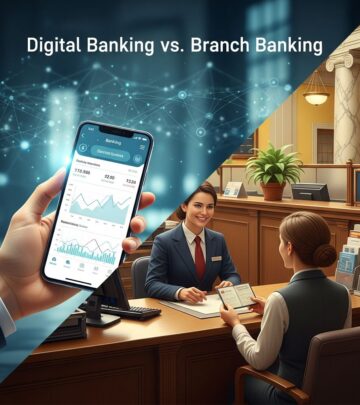
Online Banks vs. Traditional Banks: Key Differences
Choosing between an online bank and a traditional bank depends on your priorities. The table below summarizes some of the main contrasts:
| Feature | Online Banks | Traditional Banks |
|---|---|---|
| Branch Access | No or limited branches; service via web, app, and phone | Extensive physical branch networks |
| Savings & CD Rates | Often higher due to lower overhead2 | Often closer to national average |
| Fees | Frequently lower, with more no-fee accounts3 | More common monthly and service fees |
| Digital Tools | Typically advanced; focus on UX and mobile experience | Widely available; quality varies by institution |
| Customer Service | Remote support; satisfaction often strong1 | In-person plus remote support |
How to Decide Whether to Use an Online Bank
Before you open an account or move your primary banking relationship online, consider the following questions:
- Do you rely on cash or branch services? If you frequently deposit cash or need specialized in-branch services, ensure an online bank’s ATM and deposit options fit your habits.
- How important are higher savings rates? If you keep significant funds in savings, online banks’ higher yields may justify adding or switching accounts.
- Are you comfortable with digital tools? If you already manage bills, shopping, and communication online, using an online bank may feel natural.
- Do you value relationship banking? If personal relationships at a local branch matter to you, a hybrid strategy—keeping some accounts locally while using an online bank for high-yield savings—may be a good compromise.
Frequently Asked Questions (FAQs)
Q: Are online banks safe for my money?
A: Yes, provided you choose an online bank that is federally insured (for example, FDIC-insured in the U.S.). Eligible deposits are protected up to at least $250,000 per depositor, per ownership category, regardless of whether the bank operates online or through branches.4
Q: How do I deposit cash if my bank is online only?
A: Online banks typically do not accept cash directly at branches, but you have alternatives. Common methods include using ATMs that accept cash deposits for your online bank (if supported), depositing cash into an account at a local institution and transferring it electronically, or requesting cash back when making purchases with your debit card.
Q: Will I still be able to talk to a real person?
A: In most cases, yes. Online banks generally provide customer service through phone, secure messaging, and chat. Surveys have found that customers using online banking report high satisfaction with service quality, indicating that remote service can be effective when well designed.1
Q: Can an online bank replace my current bank entirely?
A: For many people, an online bank can handle all everyday banking needs: checking, savings, bill pay, transfers, and ATM access. However, if you often need services like in-person cash deposits, notary services, or complex business banking at a local branch, you may prefer to keep a small relationship with a traditional bank alongside your online accounts.
Q: How do I choose the right online bank?
A: Evaluate each bank’s fees, interest rates, digital features, ATM access, and customer service channels. Consider your own priorities—such as higher savings yields, low fees, or budgeting tools—and compare account disclosures carefully. Guidelines for selecting a bank recommend focusing on fee structures, interest rates, service accessibility, and digital capabilities when making your decision.25
References
- Online Banking: The Key to Better Customer Service? — MoneyRates. 2014-09-03. https://www.moneyrates.com/research-center/online-banking-and-customer-service.htm
- How to Choose a Bank: Why Bigger Isn’t Always Better — MoneyRates. 2024-03-19. https://www.moneyrates.com/banks/how-to-choose-a-bank.htm
- Reasons to Switch Banks: Guide to Better Banking — MoneyRates. 2024-06-18. https://www.moneyrates.com/banks/reasons-to-switch-banks.htm
- Deposit Insurance at a Glance — Federal Deposit Insurance Corporation (FDIC). 2023-03-31. https://www.fdic.gov/resources/deposit-insurance/index.html
- The Most Important Features When Shopping for a Bank — MoneyRates. 2024-01-22. https://www.moneyrates.com/personal-finance/how-to-shop-for-a-bank.htm
- Implications of Fintech Developments for Banks and Bank Supervisors — Basel Committee on Banking Supervision, Bank for International Settlements. 2018-02-19. https://www.bis.org/bcbs/publ/d431.htm
- AI Budgeting: How Artificial Intelligence is Changing Banking — MoneyRates. 2024-05-07. https://www.moneyrates.com/research-center/how-artificial-intelligence-is-changing-banking.htm
Similar Articles








Read full bio of medha deb