The 10 Percent Rule: A Simple Path To Saving More
Learn how the 10 percent rule can jumpstart your savings, build better money habits, and grow your wealth over time.

The 10 percent rule is a simple money guideline that suggests you consistently save at least 10% of your income before you spend on anything else. It is designed to make saving automatic, help you build better financial habits, and move you steadily toward your long-term goals.
While 10% is a common starting point, many experts recommend working toward a higher savings rate over time, especially for retirement and major financial goals. The power of this rule lies not in perfection, but in building a consistent, repeatable habit of paying yourself first.
What Is The 10 Percent Rule?
At its core, the 10 percent rule means that every time you receive income—from your salary, side hustle, bonus, or any other source—you set aside at least 10% for savings or investments before you spend on bills or wants.
For example, if your take-home pay is $3,000 per month and you follow the rule strictly, you would move $300 into savings or investments as soon as you get paid. The remaining $2,700 is then used for your regular spending and bills.
This idea is closely related to the broader concept of paying yourself first, a strategy often recommended in personal finance education and workplace retirement guidance.
Key Features Of The 10 Percent Rule
- Percentage-based: You save a fixed percentage of income, not a random leftover amount.
- Habit-focused: It encourages consistent, automatic saving each time you get paid.
- Flexible starting point: You can begin at 10% and adjust up or down based on your situation.
- Goal-driven: The money can go to multiple goals: emergency fund, debt payoff, retirement, or large future purchases.
Why The 10 Percent Rule Is Popular
The rule is popular because it is easy to remember and doesn’t require complicated spreadsheets or financial formulas. Many people struggle to save because they wait to see what is left at the end of the month. The 10 percent rule flips that script: saving becomes the first line item, not the last.
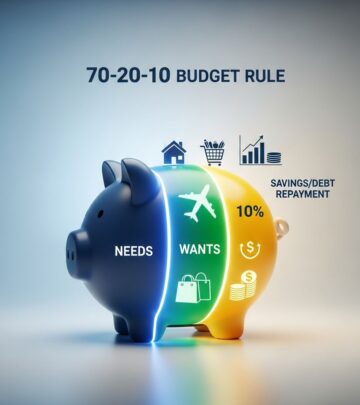
Financial education resources often highlight percentage-based budgeting systems, such as the 70-20-10 budget (70% spending, 20% saving, 10% giving or debt payoff), because they provide clear targets. The 10 percent rule focuses specifically on the savings portion and makes it a non-negotiable part of each pay period.
Benefits Of Following The 10 Percent Rule
- Builds an emergency cushion: Regularly saving 10% helps you build an emergency fund to handle unexpected expenses like car repairs or medical bills.
- Encourages long-term planning: It pushes you to think about retirement, home ownership, and financial independence.
- Works with any income level: The rule is scalable; 10% of a part-time income is smaller, but the habit is the same.
- Supports other budgeting systems: The 10% savings can be integrated into broader percentage budgets like 60-30-10 or 70-20-10.
Is Saving 10 Percent Really Enough?
While starting with 10% is helpful, many experts and retirement planners suggest that 10% is only a minimum and may not be sufficient for long-term retirement goals, especially if you start saving later in life. For instance, some retirement guidelines recommend saving between 10–20% or more of your income throughout your working years, depending on your age, lifestyle, and existing savings.
That said, saving 10% is often far better than not saving at all, especially for those who are just beginning to build financial habits or dealing with tight budgets.
| Scenario | Suggested Savings Rate | Notes |
|---|---|---|
| New to saving, limited income | Start at 5–10% | Focus on emergency fund and basic security. |
| Mid-career, some savings | 10–15% | Increase contributions toward retirement and investments. |
| Late start on retirement savings | 15–20%+ if possible | Higher rate may be needed to catch up. |
When 10 Percent Might Be Too Low
- You are starting to save for retirement in your 40s or later and have little set aside.
- You have ambitious goals like early retirement or a large down payment in a short time frame.
- Your employer does not offer a retirement plan or match, so you must save more personally.
In these situations, the 10 percent rule can still be your baseline, but gradually increasing your rate above 10% will likely be necessary.
How To Start Using The 10 Percent Rule
To implement the rule effectively, you need a clear understanding of your income, your current spending, and where your savings will go. The simpler and more automated you make the process, the more likely you are to stick with it.
Step 1: Know Your Take-Home Pay
Start by determining your net income—the amount you receive in your bank account after taxes and mandatory deductions. If your income varies, estimate an average monthly or biweekly amount using your last several paychecks.
Step 2: Calculate 10 Percent
Once you know your average take-home pay, calculate 10%:
- If you earn $2,000 per month, 10% is $200.
- If you earn $3,500 per month, 10% is $350.
- If you earn $5,000 per month, 10% is $500.
Write this number down; this is your minimum savings target each month according to the rule.
Step 3: Decide Where Your 10 Percent Will Go
The 10% you save should be directed toward your most important financial priorities. Common destinations include:
- Emergency fund: A cash buffer for unexpected expenses, often recommended at 3–6 months of essential expenses.
- High-interest debt payoff: Extra payments toward credit cards or other high-rate debt to reduce interest costs.
- Retirement accounts: Contributions to workplace plans or individual retirement accounts, which is encouraged by many employers and financial educators.
- Specific savings goals: A house down payment, education, or a large purchase you want to avoid financing with debt.
Step 4: Automate Your Savings
Automation is one of the most effective ways to stick with the 10 percent rule. Moving money automatically reduces the temptation to spend it first. Many personal finance guides and workplace plans recommend automatic transfers for this reason.
- Set up a direct deposit split so a portion of your paycheck goes directly to savings or investments.
- Schedule an automatic bank transfer every payday from your checking account to your savings or debt account.
- If you use a retirement plan, select a percentage contribution (such as 10% or more) so it adjusts as your income changes.
Step 5: Adjust Your Spending Around The 10 Percent
Because 10% is now a priority, you may need to adjust your budget. Percentage-based budgeting frameworks, such as the 70-20-10 or 60-30-10 methods, can guide how much of your income goes to needs, wants, and additional savings or debt payoff.
For example, in a 70-20-10 budget, 20% is designated for savings and investments, which includes your 10% rule amount and possibly more. In a 60-30-10 budget, 60% is used for financial goals, which can dramatically accelerate progress if your expenses are low.
How The 10 Percent Rule Fits With Other Budgeting Rules
The 10 percent rule does not need to stand alone. It can be combined with other budgeting rules that divide your income into multiple categories. Understanding these can help you see where the 10% fits into your bigger financial picture.
10 Percent Rule vs 70-20-10 Budget
| Aspect | 10 Percent Rule | 70-20-10 Budget |
|---|---|---|
| Main Focus | Saving at least 10% of income | Allocating 70% to expenses, 20% to saving, 10% to giving or debt payoff |
| Categories | Only savings is defined | Spending, saving, and giving/debt are all defined |
| Flexibility | Very flexible; rest of income can be allocated as desired | More structured target percentages for all spending |
In practice, you can treat the 10 percent rule as your minimum within the 20% savings category of the 70-20-10 budget and aim to increase toward the full 20% as your finances improve.
10 Percent Rule vs 60-30-10 Budget
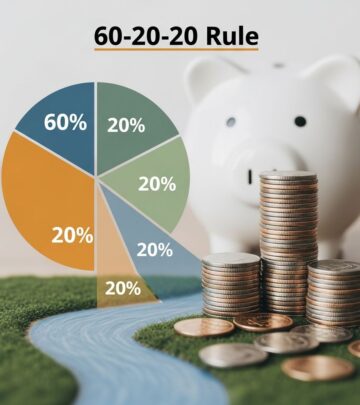
The 60-30-10 budget is another percentage-based method where:
- 60% of income goes to savings, investments, or debt payoff.
- 30% covers needs such as housing, groceries, and utilities.
- 10% is for wants and discretionary spending.
This approach is more aggressive and typically works best when your income is relatively high or your expenses are relatively low. In this context, the 10 percent rule can be seen as the starting point; the 60-30-10 budget is a much more ambitious extension of the same idea—prioritizing financial goals ahead of lifestyle expansion.
Pros And Cons Of The 10 Percent Rule
Advantages
- Simple and memorable: Easy to explain and apply without advanced budgeting tools.
- Encourages early action: Helps new savers get started without feeling overwhelmed.
- Flexible use of funds: Can be directed toward different goals as your priorities change.
- Builds discipline: Reinforces the habit of saving every time you receive income.
Drawbacks
- May not be sufficient: Ten percent alone might not be enough to reach retirement or large goals, especially if you start late.
- Hard with tight budgets: Those living paycheck to paycheck may find 10% unrealistic at first and need to start smaller.
- Can create a “ceiling” mentality: Some people may treat 10% as a maximum rather than a minimum and stop there even when they could save more.
How To Customize The 10 Percent Rule For Your Life
The rule is a guideline, not a rigid law. Adjusting it to your circumstances can make it more practical and sustainable.
If 10 Percent Feels Too High
- Start at 3–5% and increase your rate by 1–2 percentage points every few months as you reduce expenses or increase income.
- Focus your smaller savings rate on your highest-impact goals, such as building a starter emergency fund or paying down high-interest debt.
- Look for ways to free up room in your budget by trimming non-essential spending or negotiating bills.
If You Can Save More Than 10 Percent
- Increase your savings rate gradually to 15–20% or more, especially if you aim for early retirement or have major goals.
- Combine the 10 percent rule with a more ambitious framework like the 60-30-10 budget if your expenses are low relative to income.
- Diversify your savings: build your emergency fund, invest for retirement, and set aside money for mid-term goals.
Practical Example Of The 10 Percent Rule In Action
Consider someone with a monthly net income of $4,000 who decides to follow the 10 percent rule and grow beyond it over time.
- Month 1–6: Saves 10% ($400) each month, directing it to a basic emergency fund.
- After 6 months: With $2,400 saved, they increase their savings rate to 12% ($480) and allocate new contributions between retirement and debt payoff.
- After 1 year: They aim for 15% ($600), using a mix of employer retirement plan contributions and automatic bank transfers.
This step-by-step approach reflects the same principle often emphasized in financial literacy content: start where you are, build the habit, and then increase your commitment as your situation improves.
Frequently Asked Questions (FAQs)
Q: Does the 10 percent rule apply to gross income or net income?
Most people apply the 10 percent rule to net income—the amount they receive after taxes and mandatory deductions—because that reflects the money actually available for saving and spending. Some choose to use gross income for long-term planning, but net income is usually more practical for budgeting.
Q: Should I save 10 percent if I still have high-interest debt?
If you have high-interest debt, such as credit card balances, many experts suggest balancing debt payoff with at least a modest level of savings so you have cash for emergencies. You can apply part of your 10% to a small emergency fund and part to accelerated debt payments, then increase your savings rate after high-interest debts are under control.
Q: How does the 10 percent rule work with retirement accounts?
You can treat your retirement contributions as part or all of your 10% savings rate. For instance, if you contribute 6% to a workplace retirement plan and save 4% in a separate account, you are effectively following the 10 percent rule. Many retirement planning resources encourage raising that rate over time, particularly if you start saving later.
Q: What if my income is irregular or from gig work?
If your income fluctuates, you can apply the 10 percent rule to each payment as you receive it. For example, every time you are paid for a gig, you immediately move 10% into savings. Alternatively, you can estimate an average monthly income and set a monthly savings target, adjusting as your earnings change.
Q: Can I follow the 10 percent rule and another budgeting method at the same time?
Yes. The 10 percent rule easily fits inside broader budgets like the 70-20-10 or 60-30-10 methods. You can treat 10% as your minimum savings target and allocate additional percentages to savings or debt based on your chosen framework.
References
- How Does The 60 30 10 Rule Work For Budgeting? — Clever Girl Finance. 2023-08-10. https://www.clevergirlfinance.com/60-30-10-rule-budget/
- How Does The 30-30-30-10 Budget Work? — Clever Girl Finance. 2023-05-24. https://www.clevergirlfinance.com/30-30-30-10-budget/
- The 4 Best Budgeting Methods To Try! — Clever Girl Finance. 2022-11-15. https://www.clevergirlfinance.com/how-to-budget/
- What Is The 70-20-10 Budget? — Clever Girl Finance. 2022-09-08. https://www.clevergirlfinance.com/70-20-10-budget/
- 7 Financial Literacy Basics We All Need To Know — Clever Girl Finance. 2022-03-29. https://www.clevergirlfinance.com/financial-literacy-basics/
Similar Articles








Read full bio of Sneha Tete