10 Biggest Solar Companies To Watch In 2025
Discover the world's largest solar energy companies driving renewable innovation and sustainability.
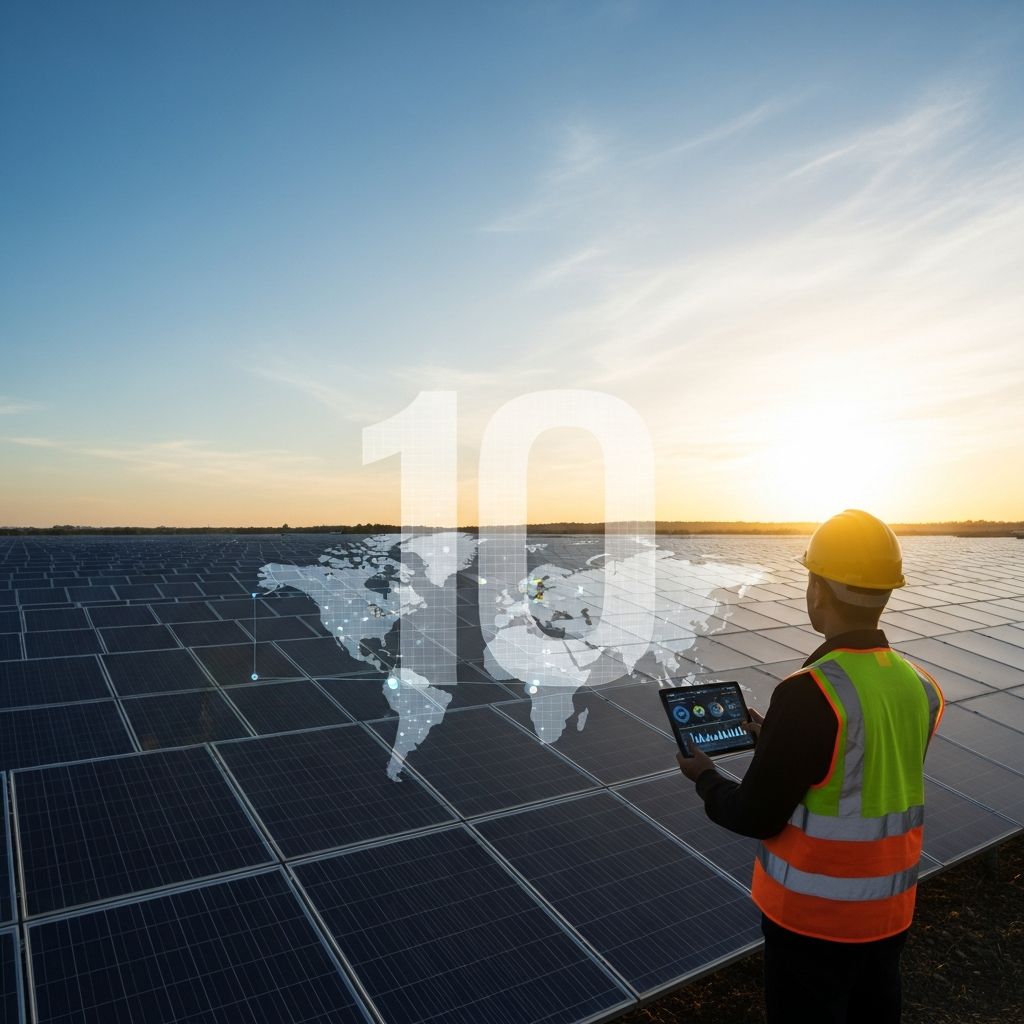
The 10 Biggest Solar Companies Shaping the Future of Renewable Energy
The global solar energy industry has experienced unprecedented growth over the past decade, with the world’s leading solar companies driving innovation, expanding capacity, and making renewable energy more accessible than ever before. From massive utility-scale project developers to cutting-edge module manufacturers and residential installation providers, these companies represent the backbone of the solar revolution. Understanding the landscape of the top solar companies provides insight into how the industry is evolving and where investment and growth opportunities lie.
What Defines the Biggest Solar Companies?
The concept of “biggest” in the solar industry can be measured in multiple ways. Some companies lead by market capitalization and total assets, while others dominate through manufacturing capacity, installed capacity, or market share in specific segments. The largest solar companies typically operate across multiple segments of the solar value chain, from manufacturing photovoltaic modules to developing utility-scale projects and providing residential installation services. This vertical integration or diversification allows them to capture value at multiple levels and provides resilience across market cycles.
Leading Utility-Scale Solar Developers
NextEra Energy
NextEra Energy stands as one of the world’s largest electricity companies and a dominant force in renewable energy generation. Founded in 1984 as FPL Group, the company operates through several subsidiaries including NextEra Energy Resources, NextEra Energy Partners, and Florida Power and Light (FPL). With adjusted earnings of $6.4 billion for 2023 and over 16,800 employees, NextEra Energy has established itself as a powerhouse in the renewable sector. The company maintains at least 5 GW in installed solar capacity, with several additional GW-scale projects in development. NextEra’s success stems from its ability to integrate solar into the utility framework as a reliable and financially viable power source, demonstrating that wide-scale adoption of solar energy requires excellence across multiple, interdependent industrial segments.
First Solar
First Solar operates as a leading manufacturer of thin-film photovoltaic modules and provides comprehensive utility-scale project solutions. The company specializes in manufacturing unique Cadmium Telluride (CadTel) thin-film solar modules, primarily designed for large-scale projects. Among First Solar’s manufacturing portfolio are two of the largest solar plants in the United States: the 550 MW Topaz farm in California and the 290 MW Agua Caliente in Arizona. The company is planning to reach 25 GW in installed capacity by 2026, with 14 GW dedicated to installations within the United States alone. First Solar’s focus on utility-scale solutions positions it as a critical player in meeting growing demand for large renewable energy projects.
Cypress Creek Renewables
Cypress Creek Renewables represents a newer but rapidly growing player in the solar energy landscape. Founded in 2014, the company has built an impressive portfolio despite its relatively recent entry into the market. With 380 employees and $200 million in funding raised, Cypress Creek owns 2 GW in solar capacity and has been involved in over 200 projects across the United States. Through these projects, the company has developed and sold 12 GW in capacity while also maintaining and operating 5 GW of projects for other customers. This business model—combining development, sales, and operational management—provides multiple revenue streams and operational flexibility.
Global Photovoltaic Module Manufacturers
LONGi
LONGi stands as a leading global photovoltaic module manufacturer, consistently ranking at the top globally for module shipments. The company specializes in manufacturing high-efficiency monocrystalline silicon solar modules and has established itself as a critical supplier in the global solar supply chain. LONGi’s focus on quality and efficiency has made it a preferred supplier for numerous residential and commercial installers worldwide, including major companies like Freedom Forever.
JinkoSolar
JinkoSolar operates as a leading global photovoltaic module manufacturer with a vertically integrated production model. The company’s integration across the entire production chain—from solar wafers to cells and finished modules—allows it to maintain quality control and optimize costs. JinkoSolar manufactures and supplies solar wafers, cells, and modules for diverse market segments, ranging from small residential installations to massive utility-scale projects. This vertical integration strategy enables the company to respond quickly to market changes and maintain competitive pricing.
JA Solar
JA Solar has established itself as a leading global photovoltaic module manufacturer known for high-performance products. The company focuses on designing, developing, and manufacturing solar cells and modules tailored for residential, commercial, and utility-scale projects. JA Solar’s emphasis on product performance and reliability has made it a trusted partner for installers and developers seeking high-quality components for their solar installations.
Canadian Solar Inc.
Canadian Solar Inc. operates as a leading global provider of solar energy solutions, functioning as both a major module manufacturer and a large-scale project developer. The company manufactures solar modules and develops utility-scale solar power plants and battery storage projects. This dual-track approach allows Canadian Solar to benefit from both manufacturing margins and project development profits, positioning it as a comprehensive solar energy solutions provider.
Residential and Commercial Solar Installation Leaders
Sunrun
Sunrun dominates the residential solar market in the United States with a 10% domestic market share as of 2023, making it the largest residential solar company in the country. The company has served over a million customers and installed over 6.7 GW in capacity. Sunrun offers multiple service models to cater to different customer preferences: a popular leasing model where the company owns and maintains the panels while customers pay low upfront costs, a power purchase agreement (PPA) option where customers pay a fixed price for electricity generated, and the option for customers to purchase panels outright. This flexibility in service offerings has been instrumental in Sunrun’s market dominance.
Freedom Forever
Freedom Forever ranks second among residential solar installers with approximately 5% of the domestic market share in 2023. Founded in 2011, the company employs 3,000 people and generated over $1 billion in revenue in 2023. Like Sunrun, Freedom Forever offers both purchasing and leasing options for solar equipment. The company sources panels from multiple suppliers, including LONGi and REC, as well as manufacturing its own Freedom Forever Solar Panel. Additionally, Freedom Forever offers energy storage solutions, providing customers with comprehensive home energy management capabilities.
Tesla
Tesla has expanded beyond electric vehicles to become a significant player in the residential solar market, holding approximately 2.5% market share in the United States. Founded in 2003 with over 100,000 employees and $13.4 billion in gross profits for 2023, Tesla has completed over half a million installations of its solar panels. While the actual installation is conducted by third parties, Tesla maintains quality standards and offers one of the most competitively priced solar options available. The company operates in all 50 states, making solar energy accessible to customers across the nation.
Specialized Solar Technology and Energy Management
Enphase Energy
Enphase Energy distinguishes itself as a top supplier of module-level power electronics (MLPE) and energy management technology. Rather than focusing on manufacturing traditional solar modules or developing large projects, Enphase has captured significant value by providing the “brains” of solar systems. The company designs and manufactures solar microinverters, battery energy storage solutions, and home energy management hardware and software. This specialization reflects a maturation in the solar industry where value increasingly comes from system optimization, performance monitoring, reliability, and intelligent grid integration rather than just generating capacity.
Community Solar and Emerging Players
Arcadia
Arcadia has emerged as a leader in the community solar sector, becoming the first community solar energy company in the USA to reach 2 GW in capacity as of January 2024. Operating 400 farms across 15 states, Arcadia provides solar energy access to customers who cannot install rooftop solar due to shading, structural, or financial constraints. The company also offers specialized services for businesses and claims to have connected over 2,500 organizations to community solar farms, expanding access to renewable energy across diverse customer segments.
Nexamp
Nexamp, founded in 2007, has established itself as a frontrunner among solar companies with 1.5 GW in operation or under construction. With 478 employees and $1.31 billion raised in funding, Nexamp operates across both commercial and community solar segments. The company has won major commercial clients including Walmart and recently raised $500 million specifically for expanding its community solar business across 19 states. This balanced approach to commercial and community solar positions Nexamp well for future growth.
Key Considerations for Investors and Consumers
The solar industry encompasses multiple distinct business models and value capture mechanisms. Utility-scale developers like NextEra Energy and First Solar benefit from large project contracts and long-term power purchase agreements. Module manufacturers such as LONGi and JinkoSolar capture value through production scale and efficiency improvements. Residential installers like Sunrun generate returns through customer acquisition and financing arrangements. Technology providers like Enphase Energy build recurring revenue through system optimization and monitoring. Understanding these different segments helps explain how the industry supports numerous large, profitable companies simultaneously.
The global solar industry continues to expand rapidly, driven by declining module costs, supportive government policies, and growing corporate and individual demand for renewable energy. The companies listed above represent the current leaders, but the competitive landscape remains dynamic with new entrants and established players constantly innovating.
Frequently Asked Questions
Q: What is the difference between module manufacturers and project developers in the solar industry?
A: Module manufacturers like LONGi and JinkoSolar produce the solar panels and components used in installations, while project developers like NextEra Energy develop, construct, and operate solar farms and installations. Some companies operate in both segments.
Q: Why is NextEra Energy so much larger than other solar companies?
A: NextEra Energy is a diversified utility company with operations spanning wind, solar, and traditional energy generation. Its size reflects its position as a major electricity provider, not just a solar specialist.
Q: What is the difference between buying and leasing solar panels?
A: With leasing (offered by Sunrun and Freedom Forever), a company owns the panels and handles maintenance while you pay a fixed monthly fee. With purchasing, you own the panels outright and handle maintenance, but receive any available tax incentives and have long-term savings.
Q: How do microinverters from Enphase Energy differ from traditional inverters?
A: Microinverters like those from Enphase convert DC power to AC at each individual panel, allowing for better monitoring, improved performance in shaded conditions, and enhanced system reliability compared to centralized string inverters.
Q: Is community solar right for me if I have a rooftop?
A: Community solar works best for people whose rooftops cannot accommodate solar due to shading, structural issues, or rental situations. If your rooftop is suitable, rooftop solar typically provides better long-term economics.
References
- Solar: Top 10 Projects & Companies in 2025 and 2024 — EnkiAI. 2025. https://enkiai.com/solar-top-10-projects-companies-in-2025-and-2024
- 10 Solar Energy Companies To Watch in USA [2025] — Climate Insider. 2024-11-22. https://climateinsider.com/2024/11/22/solar-energy-companies-in-usa/
Similar Articles








Read full bio of Sneha Tete