0% Intro APR Cards: Pitfalls and Proven Wins
Discover why many fail with 0% APR cards and master strategies to succeed without the debt trap.
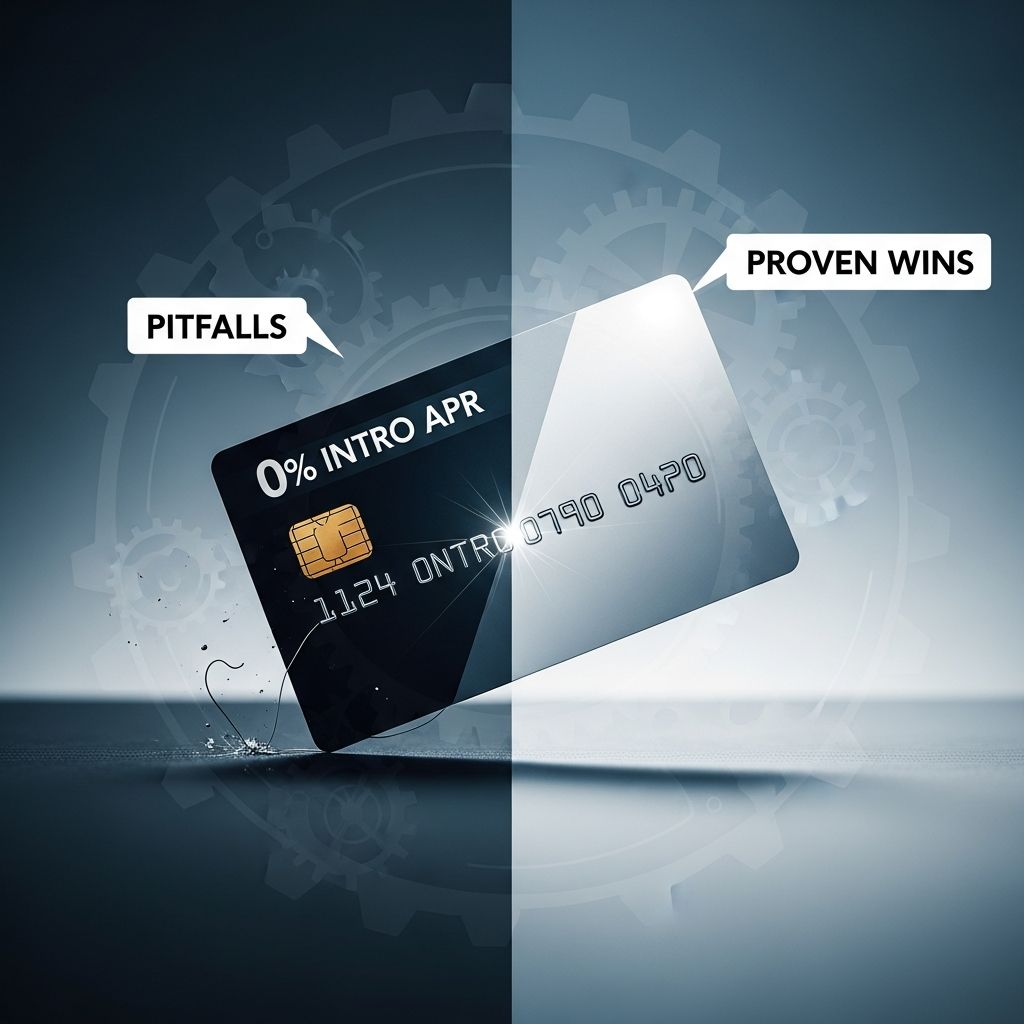
0% introductory APR credit cards promise a window of interest-free borrowing, typically lasting 12 to 21 months on purchases or balance transfers, allowing users to sidestep interest charges during that period. However, these offers often lead to failure for many due to overlooked fees, poor planning, and failure to clear balances before the regular APR—often 16% to 29%—kicks in.
Understanding the Appeal and Mechanics of 0% Offers
These cards waive interest on qualifying transactions for a promotional period, resetting to standard rates afterward. Offers vary: some cover purchases, others balance transfers, or both, but rarely cash advances. By law, intro periods must last at least six months, though top cards extend to 21 months.
Users with good to excellent credit qualify most easily, using these for debt consolidation or big buys like appliances, provided repayment aligns with the timeline.
Common Traps That Derail 0% APR Success
Despite the hype, pitfalls abound. Balance transfer fees, often 3-5% of the amount, erode savings on high-interest debt shifts. Minimum payments alone stretch balances beyond promo ends, triggering retroactive-like interest via deferred offers—where unpaid full balances accrue interest from day one.
- Overlooking Fees: Intro fees on transfers (e.g., 3% first 60 days, then 5%) add up quickly on large debts.
- Promo Expiration: Remaining balances face steep variable APRs, compounding daily.
- New Spending: Adding purchases during promo mixes low-rate old debt with high-rate new charges.
- Credit Impact: Hard inquiries and utilization spikes hurt scores temporarily.
A key distinction: true 0% APR applies interest only to post-promo remnants, unlike deferred interest where full-period charges hit if not zeroed out.
Real-World Examples of Top 0% Cards
| Card Name | Intro APR Period | Covers | Transfer Fee | Annual Fee |
|---|---|---|---|---|
| Citi Simplicity® Card | Up to 21 months | Balance Transfers | Variable | $0 |
| Wells Fargo Reflect® Card | 21 months | Purchases & Transfers | 5% ($5 min) | $0 |
| U.S. Bank Shield™ Visa® | 18 billing cycles | Purchases & Transfers | 5% ($5 min) | $0 |
| BankAmericard® | 18 billing cycles | Balance Transfers | 3-4% | $0 |
These no-fee cards shine for disciplined users, but success hinges on math: a $5,000 transfer at 4% fee costs $200 upfront, offset only if regular APR exceeds ~20% over 18 months.
Why Strategies Fail: Behavioral and Mathematical Breakdown
Many treat 0% as free money, accruing new debt without repayment plans. A $10,000 balance at 20% APR post-promo adds $2,000 yearly interest if minimums paid. Behavioral traps include optimism bias—underestimating payoff timelines—and lifestyle creep from ‘free’ credit.
Statistically, Federal Reserve data shows revolving debt hit records, with many cycling balances post-promo, worsening finances.
Smarter Alternatives to Beat Debt Without 0% Reliance
Skip promo traps with these reliable paths:
- Debt Snowball or Avalanche: Pay minimums on all cards, extra toward smallest (snowball) or highest-APR (avalanche) first. Avalanche saves most interest mathematically.
- Personal Loans: Fixed-rate unsecured loans from banks average 10-12% APR, lower than cards, with set terms forcing payoff.
- Balance Transfer Discipline: Use 0% only with spreadsheet-tracked monthly payoffs exceeding minimums by 2-3x.
- Budget Overhaul: Track via apps like YNAB; cut non-essentials to free $500+/month for debt.
- 0% Installment Plans: Retailer ‘buy now, pay later’ for purchases, avoiding cards entirely.
Payoff Calculator Example
| Debt Amount | Monthly Payment | 18-Month 0% Plan | Avalanche at 20% APR |
|---|---|---|---|
| $5,000 | $278 (min) | Paid off, $0 interest | 24 months, $833 interest |
| $10,000 | $600 | Paid off, $400 fee | 20 months, $1,200 interest |
Assumes aggressive payments; adjust for fees.
Building a Bulletproof Debt Repayment Plan
Step 1: List all debts by APR, balance. Step 2: Calculate promo end dates. Step 3: Set payments = balance / months left + buffer. Step 4: Automate transfers. Step 5: Monitor credit via free annualcreditreport.gov reports.
Incorporate windfalls like tax refunds fully. If slipping, negotiate hardship rates with issuers—success rates ~50% per CFPB data.
Long-Term Habits for Financial Freedom
Beyond debt, cap utilization under 30%, pay full monthly. Emergency funds (3-6 months expenses) prevent new cycles. High-yield savings at 4-5% APY beat card debt hands-down.
Frequently Asked Questions
What qualifies for 0% intro APR?
New purchases or transfers within promo windows; excludes cash advances.
Can I avoid fees?
Rarely; most charge 3-5%. Shop lowest.
What if I miss payoff deadline?
Regular APR applies to remainder; deferred plans charge full period interest.
Best credit score for approval?
670+ FICO ideal.
Alternatives for bad credit?
Secured cards or credit-builder loans.
Key Takeaways for Winning with Credit
0% cards work for planners with repayment maps, but alternatives like avalanche and loans suit most. Prioritize math over marketing for debt victory.
References
- What Does 0% APR Mean? — Ramp. 2024. https://ramp.com/blog/what-does-0-apr-mean
- Your Guide to Everything 0% Intro APR — Bankrate. 2024. https://www.bankrate.com/credit-cards/zero-interest/zero-percent-intro-apr-guide/
- What Does 0% APR Mean? — Capital One. 2024. https://www.capitalone.com/learn-grow/money-management/what-does-0-apr-mean/
- How Do 0% Intro APR Credit Cards Work? — Experian. 2024. https://www.experian.com/blogs/ask-experian/how-do-0-apr-credit-cards-work/
- What Is 0% Intro APR on a Credit Card? — Citi. 2024. https://www.citi.com/credit-cards/zero-percent-intro-credit-cards/how-does-zero-intro-apr-credit-card-work
- How Do 0% APR Credit Cards Work? — NerdWallet. 2024. https://www.nerdwallet.com/credit-cards/learn/facts-about-zero-percent-apr-credit-cards
- A Guide to 0% APR Credit Cards — Chase. 2024. https://www.chase.com/personal/credit-cards/education/basics/a-guide-to-zero-percent-apr-credit-cards
Similar Articles








Read full bio of medha deb